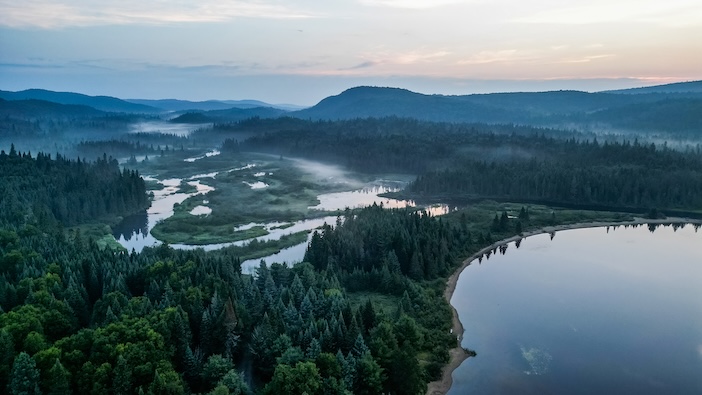
From the vibrant streets of Montreal to the vineyards, rivers and farm kitchens beyond, Greg Machray discovers a side of Quebec that rewards curiosity over checklists — where flying bicycles, ice cider and a life-changing slice of kohlrabi prove the province’s greatest luxury is surprise…
Do you remember the last time you were taken by surprise?
I do.
It was a kohlrabi.
Yes, a kohlrabi.
A single slice of raw kohlrabi.
I don’t count myself as easily surprised, certainly much less easily surprised by a vegetable. To be honest, I can’t remember if there has ever been a time? A purple carrot, a romanesco cauliflower? Maybe an assault by an anthropomorphic habanero at Halloween?
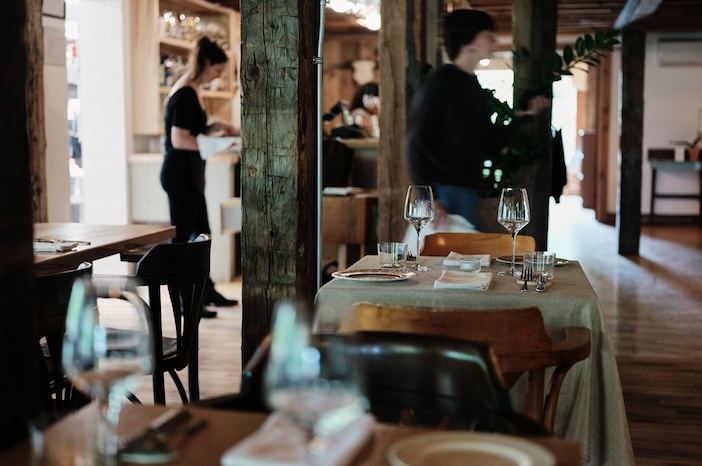
But let me tell you, this one came out of nowhere, hidden in plain sight on a plate of crudités at a farm restaurant an hour from Montreal. Juicy. Almost creamy, savoury, a little sweet, salty. A kohlrabi! I’d have been less surprised if it had been launched at my head.
We’re at Espace Old Mill, a farm-to-table restaurant in Stanbridge East, about an hour from Montreal. It’s an unassuming place, and chef Eric Gendron’s tour of the garden brings the limitations of the Canadian climate into stark relief. It’s the end of the growing season, the final throes of abundance from the garden, and they’re beginning to bring in the highlights of the extended season that the greenhouse tunnel brings. Grown, foraged, sometimes hunted ingredients are the star here – comprising almost everything that the restaurant serves, including a commitment to use as few preserving techniques as possible, to let the ingredients shine, unmolested by pickling, preserving, or storage.
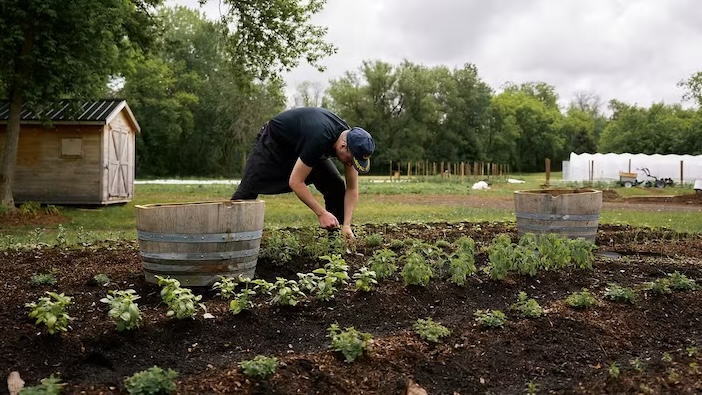
And it’s not the only local-focused, product-led restaurant that’s a highlight of Southern Quebec. The Indian cooking of acclaimed Sri Lankan chef Joe Thottungal (of Ottawa’s Coconut Lagoon & Thali restaurants) was exceptional at a one-night-only, albeit annual, pop-up at Les Cocagnes farm in Frelighsburg. Bringing a subcontinental voice to local produce, his trout Moilee with its soft Keralan spice was a particular delight. Les Cocagnes itself is a cooperative farm – and a wonderful setting for pop-up events with outdoor seating around an idyllic pond which made for a memorable evening.
We stayed nearby at Gîte La Maison Bleue in Dunham – a delightful blue house hotel in the heart of Quebec’s wine country. I can confirm that employee of the month, resident Basset Hound Lily, is a consummate host, giving a very warm welcome echoed by owners Eric and Martine. A rested night for sure, and a breakfast that’s a revelation: homemade granola with fresh strawberries and blueberries, topped with nasturtium flowers from the garden. It’s the kind of place where comfort and hospitality meet authenticity.
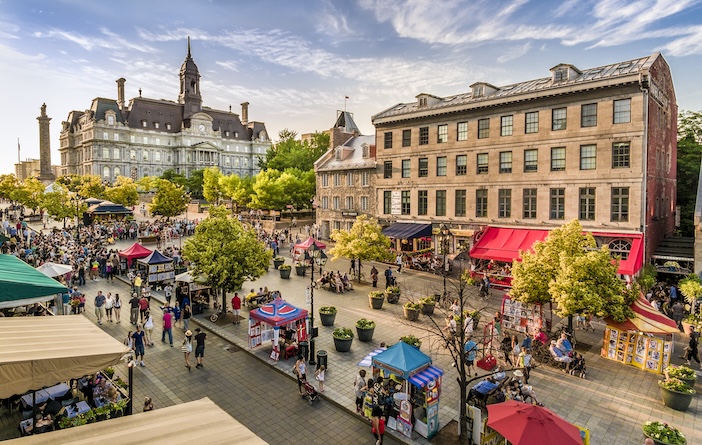
But I’m getting ahead of myself. We had kicked off this trip in Montreal, belligerent capital and home to the proud Quebecois. We got to know the city by electric boat cruise on Le Petit Navire around Montreal’s Old Port, taking in its patchwork architectural mix of old-town charm, industrial warehouses, and modernist cultural plazas.
Montreal is a year-round festival city, and chances are any visit will coincide with something exciting. Your author visited during the Just for Laughs Festival, one of many events in a summer programme designed to put the city on the cultural map. Festival or not, Cirque du Soleil’s Luzia under the big top was a spectacular Mexico-inspired show that showcases why Montreal remains the global home of contemporary circus.
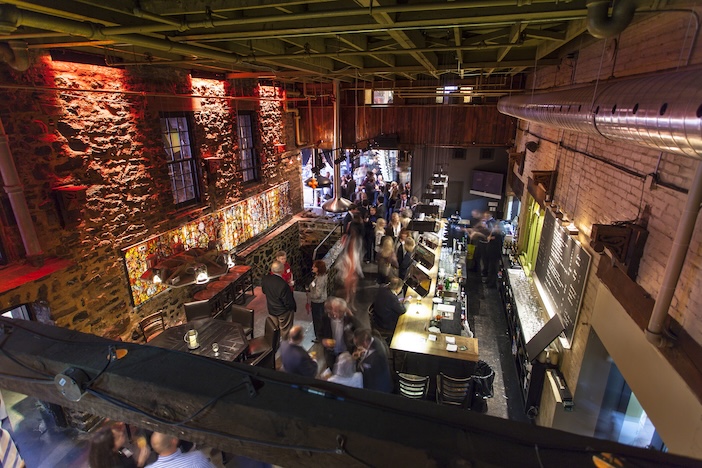
Montreal’s restaurant scene is formidable, from quick bistro lunches to high-end dining. Internationally outward-looking establishments sit cheek-by-jowl with traditional favourites like the Greenspot cafe – a Notre-Dame Street institution since 1947. Yes, your author had to try the poutine, which is hard to argue with. It’s proper wintertime fuel, viscous gravy poured over hand-cut fries and the curious mozzarella-adjacent, squeaky cheese curds. Well worth the visit, although I’d plan to either smash out a gym visit before, or take a quiet afternoon after.
Montreal is excellent. But Quebec’s real treasures lie beyond the city limits. Step outside the city and you’ll find yourself in proper adventure territory – the kind of outdoor pursuits that remind you this is Canada, after all. For something truly unique, there’s the VéloVolant at Au Diable Vert in Glen Sutton – a “flying bicycle” experience where you pedal suspended high in the treetops, the highest of its kind in the world.
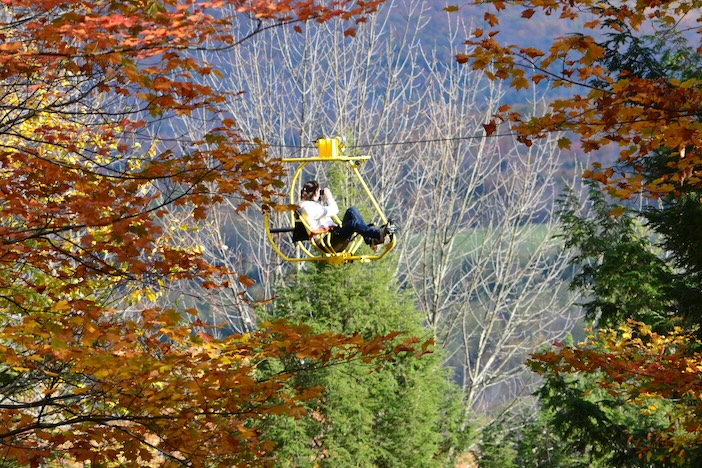
Anchored to century-old maple trees, the route winds along the mountainside, crossing ravines with tree-top views (and precipitous drops) that take your breath away. Nearby, we paddled down the Missisquoi River – a real-life lazy river experience, although after strict warnings not to cross the border into the United States, one with a small element of risk for the unaware paddler. Nothing says ‘relaxing float’ quite like the looming threat of an international incident.
For those seeking outdoor activities without the border-crossing anxiety, there are other options. A walk up the Sentier des cimes Laurentides in Mont-Blanc gives panoramic views across the canopy from a 40-meter-high observation tower. The nearly kilometre-long raised wooden pathway blends seamlessly with the environment and provides a great family-friendly stop-off to view the squirrels and birds.
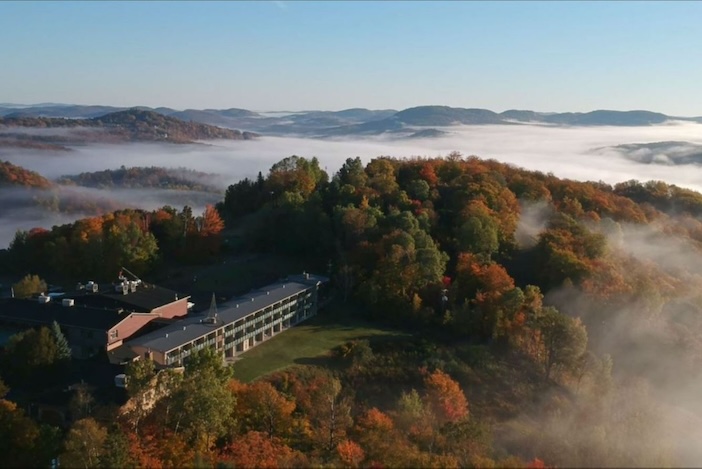
Speaking of trees and mountains, there’s accommodation to match. Hôtel Mont Gabriel, west of Montreal in the Laurentians, is an oasis of calm and relaxation. With its old hotel segment that’s straight out of Twin Peaks, it’s a secluded four-season getaway with a great on-site spa. Travel yet a little further and you’ll find yourself at Lake Tremblant, alpine centre of the rich and famous in Canada. And what a place. The Fairmont Tremblant makes an iconic centrepiece to the ski-in-winter, play-in-summer pedestrian village, and an ideal place to base yourself for some R&R away from the summer heat of Montreal.
We took a cruise on nearby Lake Tremblant, which extends over 12 kilometres – a pleasant way to sneak a peek at waterfront estates lining its shores. Come evening, there’s Tonga Lumina, a sensory night walk experience weaving through the forest with illuminated pathways and projections that bring indigenous stories to life.
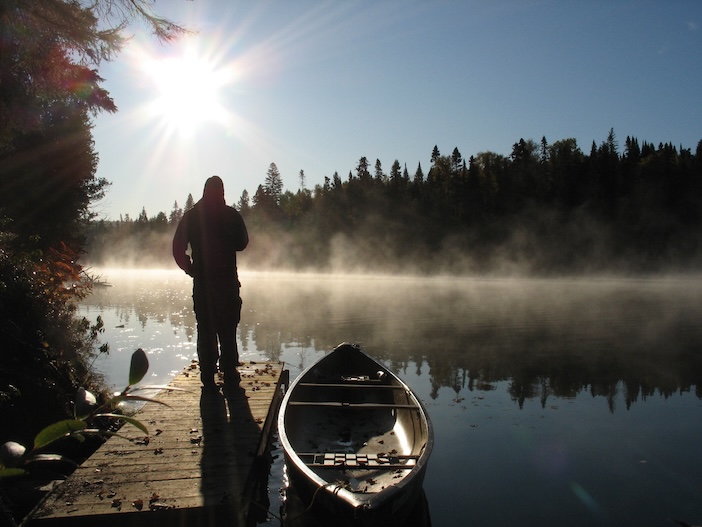
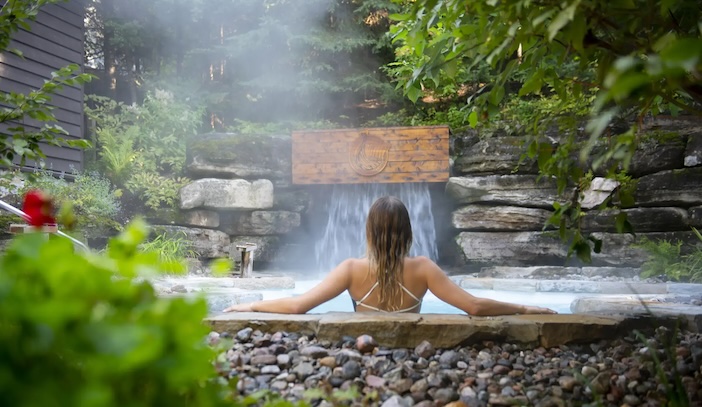
For those looking to balance those activities with some relaxation, there are some impressive spas. Your author can recommend Bota-Bota spa-sur-l’eau, a contemporary spa magnificently fashioned in an old ferryboat, docked at Montreal’s Old Port. It takes on the allure of a chic liner with minimalist décor, and the water circuit offers a genuinely unique floating spa experience. Or there’s Scandinave Spa Mont-Tremblant in the Laurentians, ideal for those who may have had a little too much fun the night before.
There’s a bracing swim in the Devil River (Rivière du Diable), natural and invigorating, set amid complete luxury in idyllic surroundings. The paths are even heated to make winter visits comfortable – because luxury is all well and good, but nobody wants to contemplate mindfulness while their feet are freezing. That said, a December dip in the Devil River would be a very different proposition than summer.
After all that, you’d think Quebec had exhausted its capacity to surprise. You’d be wrong. This is also wine country. Due to the high latitude, local grape varieties are selected for early ripening and frost-resistance, and the resultant wines are fresh, zippy, and light. Don’t expect the heavy reds of a more southerly clime here – these wines are delicate and aroma-forward. Much like that kohlrabi, Quebec’s wines sneak up on you – unassuming at first glance, but with a complexity that catches you off guard.
We visited Château Ste-Agnès in Sutton – a magnificent 173-acre estate nestled among thousands of vines, with multiple terraces overlooking the Appalachian Mountains. I’d also recommend a lunchtime stop for a tasting in the pleasant surrounds of Vignoble Rivière du Chêne in Saint-Eustache, established in 1998 on the Chemin du Terroir in the Lower Laurentians.

Château Ste-Agnès, Sutton
Quebec’s got you covered on other beverages too. Cider is particularly popular here – the climate’s perfect for apples. Now, if you’re looking for West Country scrumpy, I’d suggest you look elsewhere. Carbon-neutral producer Domaine Héritage in Frelighsburg is making some of the finer types, with fine bubbles and a balanced palate reminiscent of champagne, where their organic approach extends from the apple orchards through to the finished product.
It’s what scrumpy would taste like if it went to finishing school. We also visited Michel Jodoin, where a dizzying array of apple products are made – in particular it’s worth trying the ice cider, a local Quebecois speciality made from frozen apples and further concentrated by freeze-distilling cider up to 12% ABV.
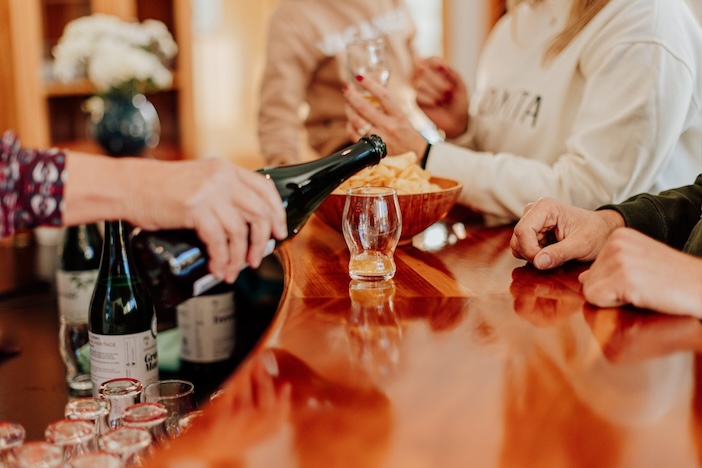
Domaine Héritage in Frelighsburg
And maybe that’s the point: stop hunting for Instagram moments and let Quebec surprise you. Yes, Montreal is a vibrant, artistic, exciting city (although the less said about the sad demise of the Expos the better – some wounds are still too fresh, even after 20 years), but the real Quebec – the taste of it, the soul of it – isn’t found in the guidebook highlights. Skip the observation wheel, ignore the festival calendar, and instead let yourself be ambushed by a kohlrabi, charmed by a Basset Hound, and day-drunk on ice cider while floating down a river that might accidentally take you to Vermont.
That’s where the real Quebec lives. Not in Montreal’s cultural plazas, but in a farm chef explaining why he doesn’t pickle, or at a blue house in Dunham where breakfast comes with flowers. I came to Quebec expecting to be impressed. I left having been ambushed by a kohlrabi, seduced by squeaky cheese, and convinced that the best surprises are the ones you never see coming.
For more information about Quebec, and to start planning your trip, please visit the official tourism website at www.bonjourquebec.com.