Where beer completes a full circle, vegetables arrive with a sense of purpose, and even the ghosts appear to have settled in for the long term, Douglas Blyde discovers that The Crown in Bildeston is less a pub with rooms than a gently persuasive argument for doing things properly…
There are country pubs, and then there are those which seem pressed from their surroundings by weather, appetite and time. The Crown is one of them. I arrived after two and a half hours on the road from London during an escalating petrol crisis, the sort of drive which makes one suspect the country may soon run not on fuel but on grievance. Then came a pint of Mauldons Moletrap, and the mood righted itself. Some houses know how to do that.
‘The Crown is a late medieval, early Tudor inn tied into a brewery, edible gardens, a new deer butchery, wetlands, and a broader Suffolk ambition which gives the whole thing unusual heft. Plenty of chefs talk earnestly of connection to land. Here, one can follow it in practical terms, from barley field to pint glass, from polytunnel to plate, from old stable to butcher’s bench.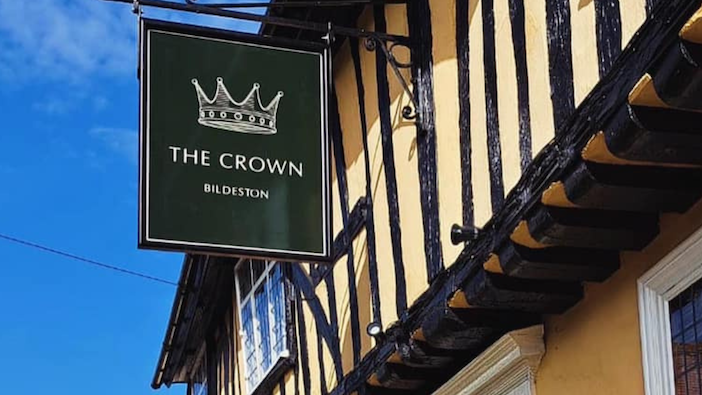
Bildeston, once a wool town of standing, now trades in the sort of beauty which would be unbearable if it knew how good it looked. Timber-framed houses lean at companionable angles. The pace is slower, though not vacant. Then there is the local footnote that the Krays once had a foothold here, at The Brooks, giving the village the faintest brush with East End notoriety.
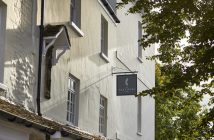
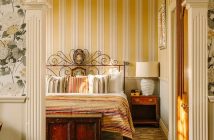
The Crown itself dates to 1495, first as a merchant’s house, later, as an inn. The Buckle family bought it in 2002, then undertook major works, including relocating the bar and kitchen, before reopening in 2007. Yet is still has the ease of a building which has ceased to care what century it is in. Deer of the day are chalked above the inglenook. The corridors tilt as though still weighing up the Reformation. Yet upstairs, the room held itself admirably. The bedding was high-quality cotton, the shortbread properly brittle, and the morning coffee exactly as morning coffee ought to be.
Estate Barley to Moletrap
To understand The Crown, you have to widen the frame. It sits within the Nedging Hall Estate, bringing together The Crown, The Lindsey Rose, The Brewery Tap, Mauldons Brewery, and Nedging Hall itself. In January, Charles and Harriet Buckle also acquired The Angel in Lavenham, now being worked on ahead of its next chapter. Blushing in Suffolk pink, Nedging Hall, meanwhile, is offered on an exclusive-use basis, giving the whole operation the air of a Suffolk world rather than a single address.
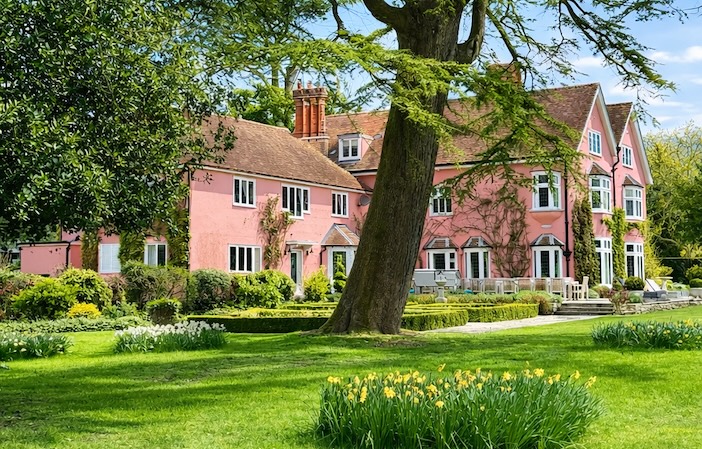
The important thing is not the list of holdings, but the fact that the links are real. Mauldons brews with malt barley grown on the estate, and the spent hops go back into the soil at Nedging Hall. The loop is not decorative.
Charles Buckle, a former jockey whose trophies still gleam inside the pub’s Paddock Bar, is central to this wider shape. So too is Harriet Buckle, whose nous for interiors gives the house warmth without letting it slip into rural fancy dress. Too many country inns now look as though they have been assembled by people whose knowledge of rural life has been acquired at a distance which leaves their wellies immaculate and their Range Rovers innocent of mud, mileage, or purpose. Harriet’s hand is better than that. During our stay, she was shifting nudes around to replace a mirror felled by an earlier guest, proof that even in Suffolk, culture occasionally meets gravity.
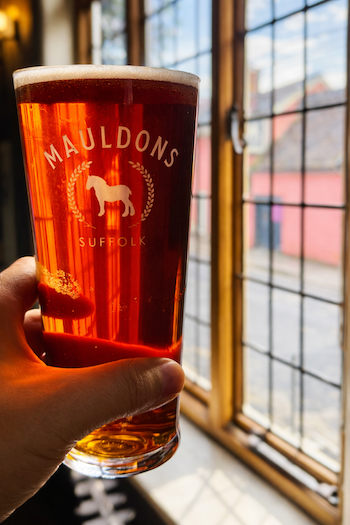 The beer makes its case with very little help. After that drive, Moletrap felt less like refreshment than rescue. The Pilsner and Silver Adder underline the point. Mauldons remains Suffolk’s oldest brewery, and its beers have the enviable assurance of drinks which know perfectly well what they are.
The wine list is another matter. We began with Burnt House Bacchus, brisk and dutifully local, before moving to Château Beau-Site, served too warm and, in an ungainly yet oddly effective manoeuvre, revived by my own hand – stirred back into life over ice. During dinner, it became the principal topic between an older couple nearby – she unwavering in her allegiance to France, he more ecumenical. From where I sat, the evening’s most persuasive pairing was taking place not on the table, but between them.
Gardens First, then Deer on The Plate
Before dinner, we toured the edible gardens at Nedging Hall, Charles Buckle’s grandmother’s former house. This is not scenic acreage with a kitchen garden attached for flattering photographs. It is a working Suffolk organism. The polytunnels are full of things grown because they cannot easily be bought – a waxier bok choi, the so-called beef and onion plant, Japanese aubergines for chutney, Roscoff onions at varying stages, sweet peas, forced rhubarb, dwarf broad beans for leaves. Pears line one wall, nectarines another. There is an orchard of crab apples, quince and apples. Magnolia flowers carry a haunting, candied ginger note. Rose petals go into jams, pickles and vodka. Harriet mentioned having begged chef Greig Young to spare some roses for their wedding flowers last year, a detail entirely in keeping with a house where the edible and the decorative are in constant negotiation.
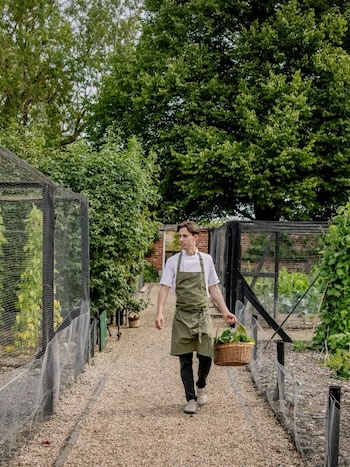
My gastronomic daughter, Lyra, took to both chef and countryside at once. She picked a white asparagus spear in the raised beds, Later, that same asparagus returned to the table as off-menu homemade pasta parcels with cauliflower, striped with charcoal. Lyra told Greig that he should put it on permanently, and I saw no flaw in the argument.
Then there are the details taking a place from interesting to convincing. Shiitake and hen of the woods have been drilled into trunks brought down by Storm Eunice. A new on-site deer butchery has been created in part of an old stable. Fallow and muntjac, both partial to helping themselves to whatever they can reach in the gardens, are stalked on the estate, then returned to the kitchen with admirable directness. Game birds are fully traceable. Estate-to-plate is often a phrase in search of evidence. Here, unfortunately for the deer, the evidence is ample.
Meanwhile, forty varieties of daffodil seemed intent on stealing the afternoon. Trees are being planted. Only the occasional Apache aircraft, Charles noted, breaks the Suffolk spell.
Then we began the walk back to the pub. The estate opened out further. Beyond the gardens are wetlands begun by Buckle’s father, James, now rich with birdlife. Egrets moved overhead while lambs stood beside their newborns below. We crossed back over enough gates and stiles to make dinner feel properly earned
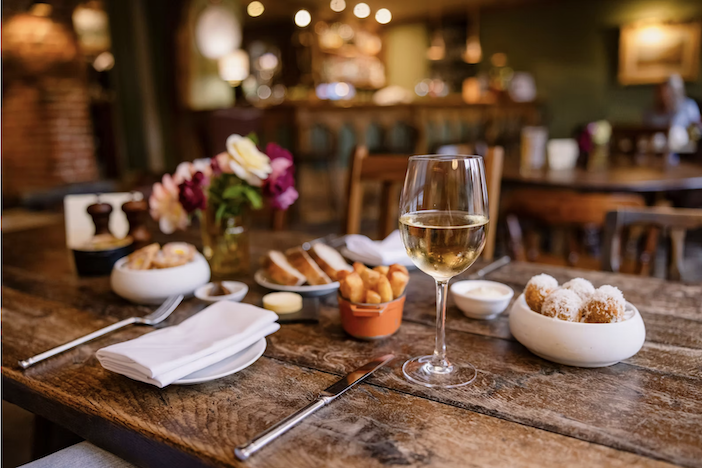
At the bar beforehand came a quail’s egg Scotch egg with aubergine pickle, admirably free of grease, and mushroom arancini with garlic mayo, both excellent with the Moletrap. Dinner itself opened with a slender of pastry cured salmon tart with rhubarb, yoghurt and wild garlic flowers, then a superb pork and date terrine with pickles.
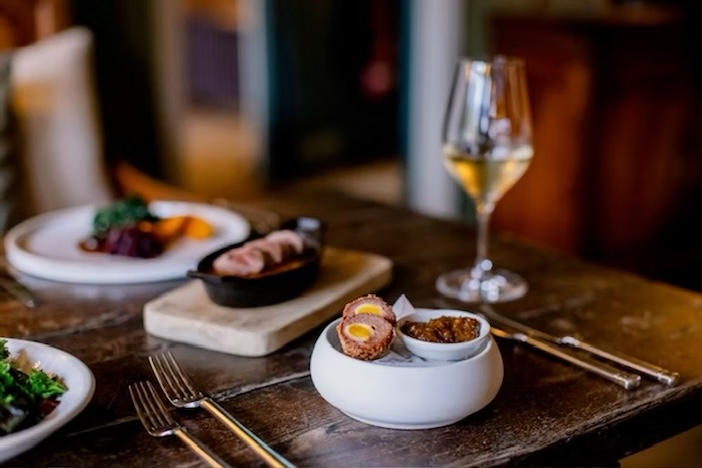
Mains brought muntjac haunch with peppercorn rösti and very good chips, then lamb rump with wild garlic gnocchi. Earlier there had also been a fallow sausage made with pork fat and cranberry, served with horseradish cream, succulent rather than weighty. Dessert was a Burnt Basque cheesecake, followed by a neat Neapolitan ice cream slice.
Jackie Ha, the general manager, formerly of The Unruly Pig, has brought polish to the operation, though the food here is lighter on its feet than one might expect from that lineage. Greig, a Scot with time spent in Australia and New Zealand, understands that produce of this calibre requires judgement rather than overwork. Though he is fastidious, having reportedly broken an oven five times in pursuit of the best baguette, exactly the sort of obsession a guest can get behind.
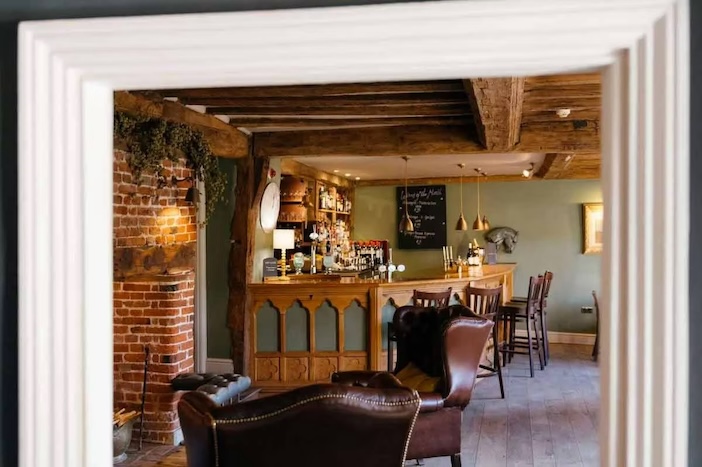
A work titled ‘Psychedelic Skate’ helps stop the room becoming too pleased with its own age. The building is handsome, certainly, but not trapped by ancestry. That balance, again, comes back to Harriet’s hand.
Then there are the resident spirits. A grey lady. Spectral children. A tricorne-hatted regular still attached to his stool. None made themselves troublesome. If anything, they improve the internal logic of the place. A house this old, this settled in itself, would seem under-occupied without a few unseen regulars.
What stays with you is not one dish, one pint, or one view, but the fact that everything belongs to the same Suffolk circuit. Beer, barley, bedding, butchery, wedding roses, asparagus, venison, mushrooms drilled into timber which had the grace to fall – none of it feels bolted on. The Crown does not rely on novelty. It succeeds through coherence, and that is far harder to fake.
In an age of so much staged welcome, what counts as genuine hospitality? Perhaps simply this: a house which means what it serves.
The Crown, 104 High St, Bildeston, Ipswich, IP7 7EB. For more information, including details of Nedging Hall Estate, and for bookings, please visit thebildestoncrown.com.