Sake brewing, steamy onsen, snow monsters – Estella Shardlow explains why winter makes a more enchanting (and savvy) time to visit the Land of the Rising Sun…
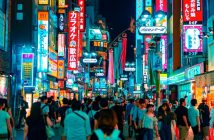
Japan has a cherry blossom problem. It’s just too darn popular, you see. Eager to see the country’s shrines, parks and palace gardens painted prettily pink during the springtime sakura season, a whopping 3.9 million foreign visitors descended in April 2025 – a 28.5% year-on-year increase. Residents of one town near Mount Fuji have even grown so fed up with droves of badly behaved tourists that they’ve cancelled this year’s sakura festival.
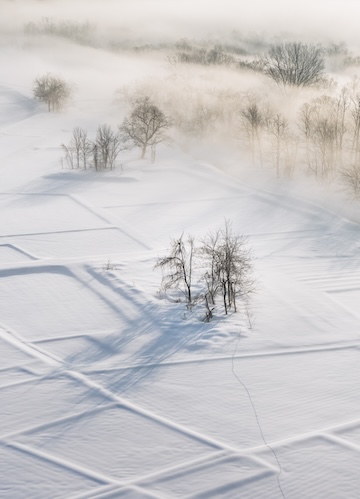 While I can certainly see the appeal of seeing Japan in its sun-dappled, pastel finery, there is, in my humble opinion, a better time to visit: the depths of winter. During these months, it’s the levels of snowfall that break records rather than tourist numbers. Dodging crowds and bagging better prices are only part of the motivation, though. The Japanese are true cold-climate connoisseurs, having cultivated no end of rituals, crafts and cuisines to keep the cockles warm and spirits bright. As if to reward their resilience, some of their most celebrated produce is at its peak in the, erm, off-peak season, too.
To be more specific – after all, the Japanese famously tend to place a high value on precision – I’m talking about visiting Yukiguni (Snow Country), a region that runs from Nagano Prefecture on the central island of Honshu up to the northerly island of Hokkaido. And this isn’t any old snow; ‘Japow’ is the fluffiest stuff on the planet, the result of freezing air currents sweeping in from Siberia, gathering moisture over the relatively mild Sea of Japan, then dumping their soft white cargo when they meet the Japanese Alps. Even ‘winter’ is arguably too vague a term, considering the Japanese calendar divides the year into a grand total of 72 kō (micro-seasons).
Unsung Cities
When I land in Aomori City, it’s Daikan, which aptly translates as ‘Greater Cold’, late January blizzarding into early February. Pavements are a distant memory; instead, deep trenches have been carved through mounds of snow six-feet high, shopkeepers toiling with chunky plastic shovels to clear their doorways, and it’s along these channels that I follow local guide Fukuoka Fumiho on InsideJapan’s private walking tour. Our first stop is an unassuming haberdashery shop, where owner Aoki Kanoko gives me a lesson in kogin embroidery. Stitching these white geometric patterns onto indigo-dyed linen fabric may look purely decorative, but as Aoki explains, the technique originated back to the seventeenth century as a way to make farmers’ clothing warmer and more durable.
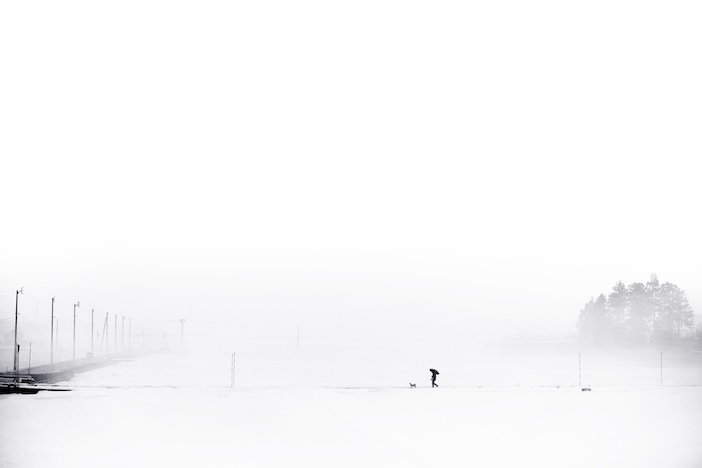
Photo courtesy Shoko Takayasu © SHOKO
For a more obvious and immediately gratifying way that Aomori’s citizens keep the cold at bay, that evening Fumiho takes me to a couple of his favourite traditional taverns, or izakaya. We tuck into hearty regional dishes like Ginger-Miso Oden, a hot pot of daikon and fish cakes with a fiery kick, and Kaiyaki Miso, in which eggs and scallop meat is simmered table-side in the shell, like a fishy take on fondue, followed by nightcaps in a whisky den.
Another unmissable foodie pitstop is the covered seafood market Aomori Gyosai Center. Pops of bright orange and pink glisten tantalisingly from every stall: sea urchin, salmon roe, tiny, sweet shrimps, giant red snow crabs and slabs of tender, marbled Ōma tuna. Visitors can buy a set of coupons to build their own sashimi bowls, a welcome way to sample from as many vendors as possible.
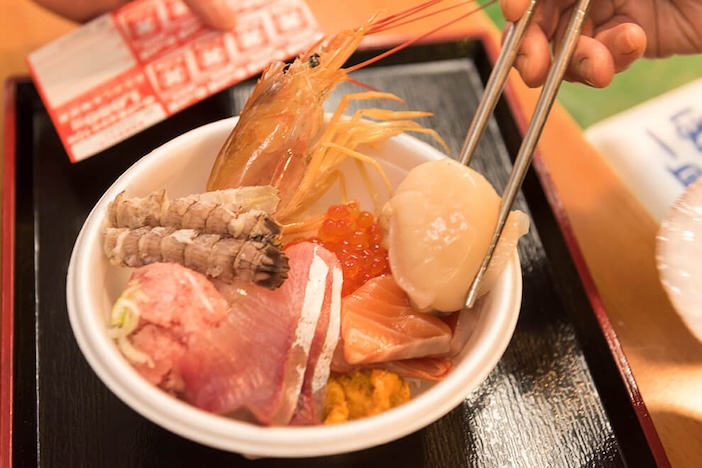
Nokke Donburi (photo courtesy Aomori Gyosai Center)
With Japan’s bullet trains seemingly impervious to snowfall, 48 hours later I’m hurtling along the Pacific Coast to Hachinohe. Another port city, another friendly guide, another seafood market. It’s the cold, treacherous, nutrient-dense waters of the Tsugaru Strait that make this region’s fish so tasty, Naoko Machida tells me as the sun rises over Tatehana Wharf. “The fish grow ōtoro – these thick layers of fat – to survive, especially in winter. So you’re tasting everything at its best.” Skewers of mackerel and abalone sizzle tantalisingly on charcoal grills, and the squid’s so fresh it’s eaten raw, shredded into sweet, tender translucent slivers. I even gamely sampled the cod semen tempura and fermented sea cucumber intestines.
Snow Monsters & Hot Springs
Inland from Hachinohe and Aomori, the landscape folds into woodblock print-worthy scenes: waterfalls, hot springs and forested mountains. This is where you’ll find one of Japan’s strangest seasonal spectacles: the juhyo, or “snow monsters”. Moisture-heavy winds blowing in from Siberia coat and sculpt the region’s fir trees in layers of ice. Reaching them is half the magic. A ropeway glides silently to the summit, where these wind-carved figures loom through the mist like a gathering of ghostly sentinels. Skiers weave between them on powdery runs, while photographers shuffle through waist-deep drifts trying to capture their strange personalities.
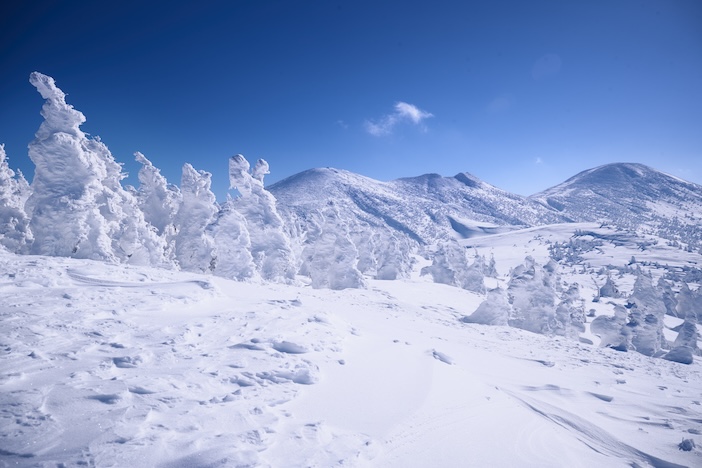
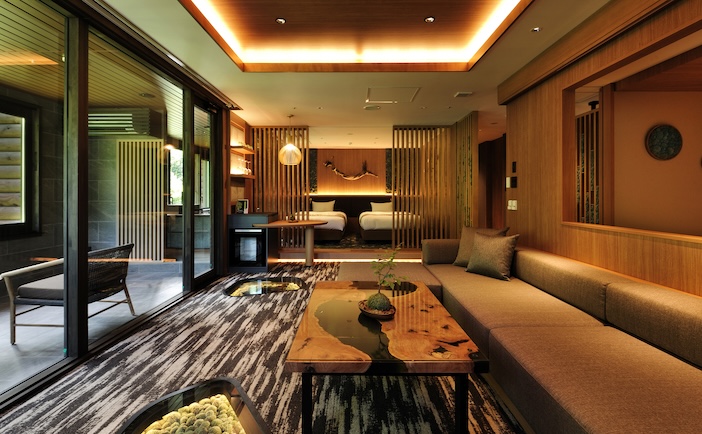
Winter’s sculptural magic continues in Oirase Gorge. All along the river valley, waterfalls have frozen mid-cascade, forming delicate curtains of ice suspended like chandeliers from the basalt cliffs, while the stream is an ink-black slick against snowscape – the stroke of a calligrapher’s pen on pale parchment. Happily, there’s a luxurious spa resort from which to savour the serene surroundings. Hoshino Resorts Oirase Keiryu Hotel’s cavernous lobby bowled me over at check-in, with its floor-to-ceiling glass windows and a monumental bronze chimneypiece by artist Taro Okamoto hovering above a central fireplace.
After a few nights in functional city crash pads, my sprawling, cedar wood and slate-clad suite was a sight for sore eyes, and I wasted no time hopping into the deep onsen bath on my private terrace. There are surely few greater pleasures in life than sinking into steaming water on a chilly winter’s day; this blissful contrast just wouldn’t hit the same in summertime.
With a whopping 25,000 volcanic hot springs nationwide, the Japanese have strict etiquette for how to wallow in a dignified way – that is, quietly, completely naked, thoroughly scrubbed. Tattoos, smartphones and submerging your head are all verboten. As terrifying as the prospect of public nudity may be to a prudish Brit, I later brave the communal female baths in the name of research. Thankfully, it turns out nobody is staring at me given the snowy gardens and water features frozen into glittering stalactites provide a far prettier backdrop.
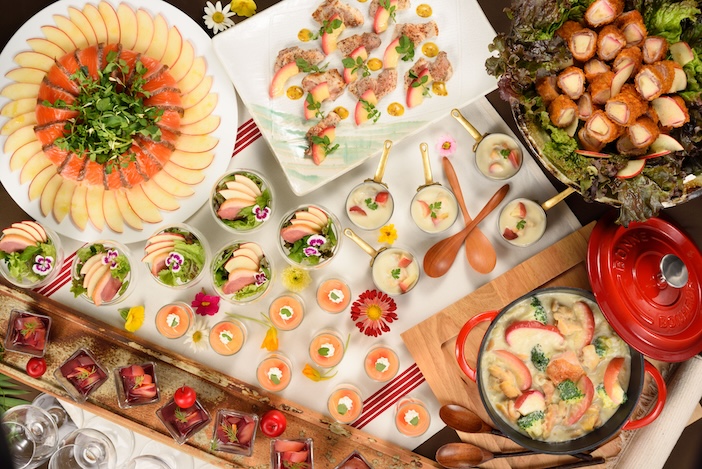
While spa sessions are the main draw for guests during wintertime, it’s a pleasant surprise to discover wholesome crafting activities – moulding a moss ball, for example, or carving your own table lamp from a dried pumpkin – on offer at the hotel’s ‘Keiryu Base’ activity centre. As for the resident restaurant Aomori Ringo Kitchen, ‘gourmet’ and ‘buffet’ were two words I never thought I’d utter in the same sentence, but that’s before I saw these showstopping sushi platters, steaming miso soups and seared-to-order scallops. The menu goes big on the region’s celebrated apples; I can confirm they’re just as delicious stirred into a tuna sashimi salad as they are encased in buttery puff pastry and topped with soft-serve vanilla ice-cream.
Where Sake Meets Arty
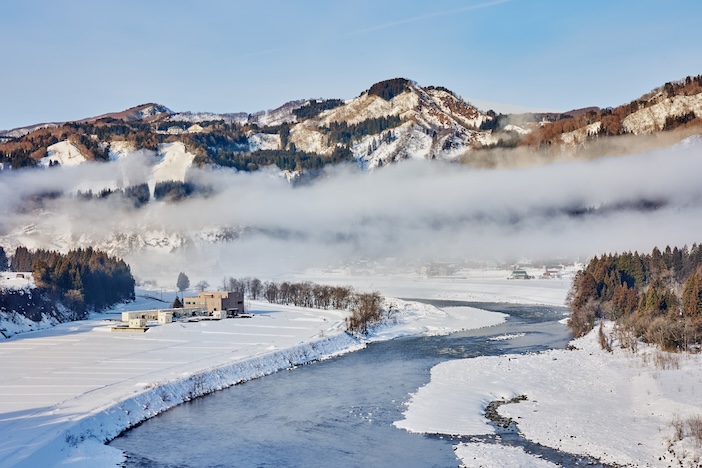
Finally, I make my way south-west to Niigata Prefecture. The region’s famous for producing some of Japan’s best rice and, by extension, sake, yet surprisingly few visitors realise how much these delicacies are indebted to wintertime. This is the traditional sake brewing season. Lower temperatures allow for slower, more stable fermentation, while using mineral-rich snow meltwater results in a cleaner taste. The raw ingredients are also at their best then, following the autumn rice harvest. And in the days before refrigerators, freshly brewed bottles were buried in snow cellars, called yukikura.
Despite its sleek, state-of-the-art machinery, Shirataki in the resort town of Yuzawa is among the sake breweries keeping this method of natural, eco-friendly kind of cold storage alive – hundreds of tonnes of fresh powder were being shovelled into their warehouse during my visit – while at the same time introducing innovative, customer-centric experiences such as blending your very own bottle under the guidance WSET Level 3-certified sake sommelier Kumi Takano. After a generous tasting of their varietals, I measure out my own recipe and proudly christen this warming, mineral-rich tipple ‘Onsen’. With Kumi’s help, I ink the name as a kanji character onto the label. As souvenirs go, it might be even better than the pumpkin lamp.
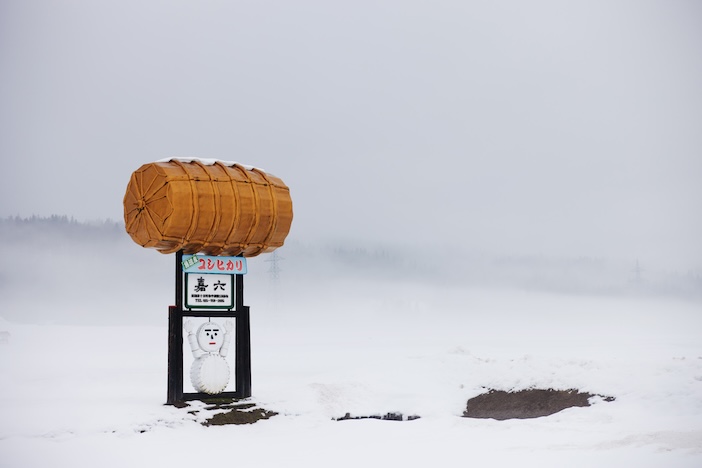
Photo courtesy Shoko Takayasu © SHOKO
It’s not only sake and rice that benefits from snow storage: Niigata’s farmers and chefs swear by burying vegetables in the white stuff, a 200-year-old technique known as yukimuro, to enhance their sweetness and texture. Coupled with a bounty of springtime foraged mountain vegetables that have been dried or salt-pickled to preserve their flavour, Yukiguni cuisine is refreshingly plant-forward in a country where vegetarians often struggle. Think: tiny matsmaitake mushrooms and udo (mountain asparagus) stir-fired in miso and sesame paste, chunks of daikon radishes simmered in hotpots, and pickled turnip greens. All served with plenty of fluffy, pearly rice, of course.
Cookery classes with local grandmothers are a highlight at both of the places I stay in Niigata: first, Kome Home, a charming farmhouse turned roomy private rental, followed by luxe inn Ryogun, a sprawling complex that reconstructs a 19th century residence around a courtyard garden, adding bespoke, modern furniture pieces that nod to Yukiguni’s climate (an igloo-shaped seating to cuddle up in, slanting headboards evoking wind-blown drifts, and snowball-inspired floor cushions). These properties are elegant examples of the local vernacular, with their blackened cedar beams, sliding paper screens, sunken irori stoves and tatami-matted floors, over which guests softly pad about in slippers.
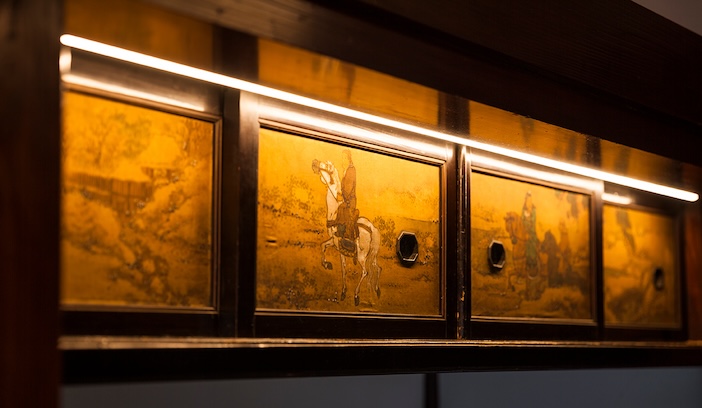
After a cosy night’s slumber on a traditional futon, I lace up a pair of traditional kanjiki snowshoes and explore the countryside around Tokamachi with local tour company Kome Home. The circular bamboo frames, the kind that Niigata’s foragers and hunters have been donning for centuries, feel impressively lightweight and manoeuvrable, letting me glide over the fluffy powder and follow the paw prints of elusive woodland creatures, with my guide Maiko pointing out the difference between a hare’s hopping gait and a fox’s steady, linear tracks. I’m conscious that in the surrounding mountains there are skiers gleefully hurtling through the ‘japow’, but I’m pleased to have found a gentler, more contemplative way to explore the winter-locked landscape as well as a newfound appreciation for the ingenuity required to thrive in such conditions.
Wintertime travellers who are prepared to slow down the pace and go a little off-piste will also find Niigata has a surprising abundance of galleries, which are welcome sanctuaries even in the harshest of weather. Echigo-Tsumari Satoyama Museum of Contemporary Art – or MonET to use its catchier shorthand – takes full advantage of its courtyard pool freezing over by commissioning a seasonal installation for the vast space. This year’s centrepiece is a winding, rice-straw and thatch tunnel inspired by hon’yara-dou structures made by locals to socialise in during heavy snowfall, alongside Ihara Koro’s resin casts taken from footprints in the snow.
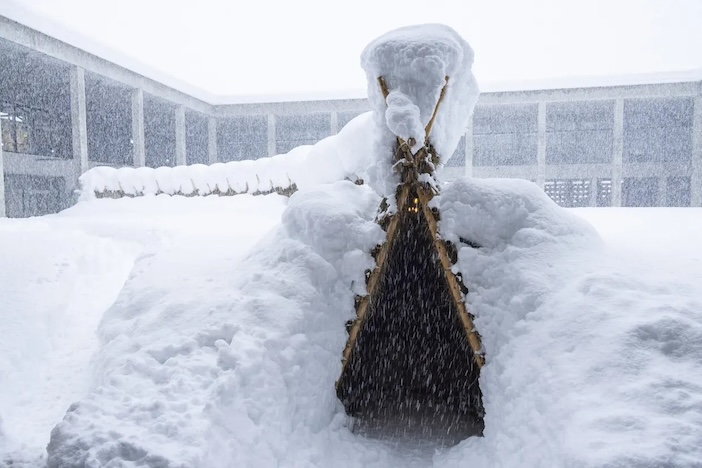
Honyaradou Snow Meeting at MonET (photo by Nakamura Osamu)
Then there’s the gleaming Tomioka White Museum, dedicated to the work of 20th century Japanese painter Tomioka Soichiro and his lifelong pursuit of the perfect shade of white. Applying this hue as a thick topcoat to his canvases, he’d then rub or scratch away areas of paint to depict trees, rivers or rocks, a technique that perfectly captures the blurred, shadowy appearance of forms glimpsed through blizzards.
Visiting as I did in the depths of ‘Daikan’, these meditative, monochrome landscapes seem to expand beyond the edges of the canvas and merge with the mountain scenery framed by the gallery windows. Like Tomoika, my imagination has been well and truly ensnared by the quiet beauty of Japanese winter and the resourcefulness of the people who’ve learned to thrive within it.
Estella was a guest of Niigata Tourism Board (discover-niigata.com), Hoshino Resorts Oirase Keiryu Hotel, and InsideJapan Tours (insidejapantours.com), which specialises in group tours, tailormade travel and cultural experiences across Japan.
Header image: Shoko Takayasu © SHOKO