Last Thursday, I walked through Holland Park on my way to watch Così fan tutte. That was the plan, at any rate — an evening at the opera. What I hadn’t fully reckoned with was arriving to a glass of Gusbourne pressed into my hand, being shown to a perfectly dressed table under canvas on the Oak Terrace, and finding that dinner — a proper, plated, three-course dinner — was rather more central to proceedings than I’d anticipated. Not a pre-theatre menu grabbed in the forty minutes before curtain up. Not a hastily wolfed sandwich. But dinner as a considered, composed part of the evening itself, paced around the performance. It was, I think, the most intelligently structured evening I’ve had at the opera all year — and the opera was only half the story.
This is Opera Holland Park’s thirtieth season, and if that anniversary calls for a moment of reflection, it’s worth considering quite how far it has travelled from its scrappy, deckchairs-and-good-intentions origins. OHP has always punched above its weight: founded in 1996, it has become one of the great summer fixtures of the London cultural calendar, building a canopied open-air theatre on the terrace of Holland House — a Grade I listed Jacobean mansion — and filling it with an audience of over 900 a night, surrounded by the park and famously photogenic Kyoto Garden. What’s changed, increasingly, is the recognition that an evening here isn’t just about the music. It’s about the whole arc of the evening — and OHP has, in the last few years, become genuinely brilliant at choreographing that arc.
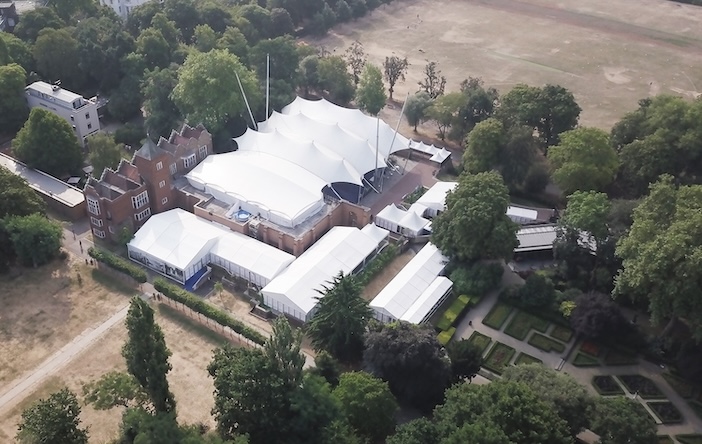
Anyone who has done the rounds of country house opera knows the format: arrive early, claim your patch of lawn, eat a range of Waitrose-bought bounty during a marathon interval, watch the second half slightly drowsy from the rosé. It’s a wonderful tradition, and OHP still does versions of it brilliantly — there are picnic tables bookable in advance, with hampers available from three excellent local partners; Il Portico, OHP’s long-serving neighbour on the high street; Honey & Co, whose Middle Eastern feasts are new to the picnic offering this year; and Belvedere, whose wicker hampers arrive personally delivered.
But what’s struck me most this season — and what genuinely sets OHP apart — is the Supper Nights series, new for the thirtieth anniversary and curated in partnership with Daisy Green, the boutique brasserie group with an outpost just along the road. This is not “food before the opera.” It’s food interwoven with the opera, and the difference is enormous.
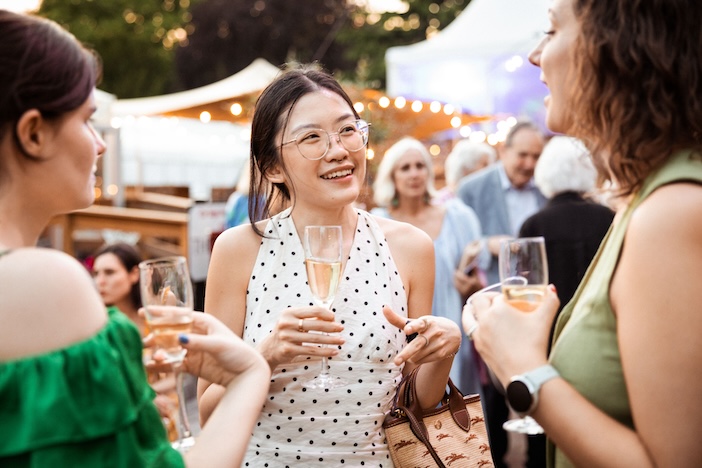
Here’s how it goes. You arrive with time to spare — the bars open two hours before curtain, which is itself an invitation to wander the gardens, watch the light change over the park, and generally decompress from whatever the rest of your day involved. A glass of Gusbourne sparkling (the kind of English fizz that’s stopped needing to apologise for not being Champagne) is poured on arrival under the supper marquee on the Oak Terrace.
Then: dinner, properly. From Daisy Green’s menu for the evening, there was gin-cured trout on a potato gratin, alongside a rack of Sussex lamb with a summer salsa verde that tasted like it had been cut from the garden that morning, and their famous fire-roasted carrots served on confit garlic hummus — very possibly the best thing on the table. Mains brought roasted corn-fed chicken with charred leeks and a glossy truffle jus, slices of Hereford T-bone, and miso aubergine with candied walnuts — a combination that sounds like it shouldn’t work and absolutely does, all umami and caramelised edges.
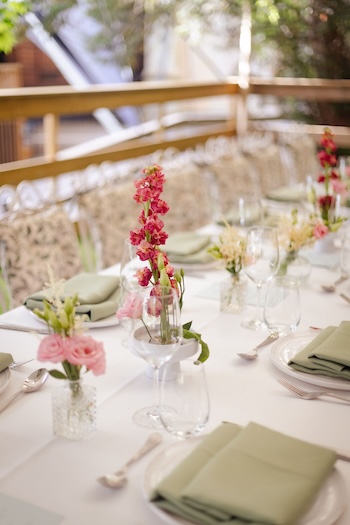 And then the masterstroke; you take a glass of wine in with you, of course, watch the first half, and come back to the marquee at the interval not for more savoury food, but for dessert. A summer pavlova, in this case: crisp, pillowy, topped with macerated strawberries. It sounds like a small thing. It isn’t. Every other open-air summer opera I can think of front-loads the meal and then breaks the evening with a long, food-heavy interval that can leave you sleepy for act two. OHP’s structure does the opposite: it paces you. The savoury courses happen before you’ve settled into your seat, and the interval becomes a genuine pause. By the time the second half begins, you’re not stuffed; you’re simply ready.
It would be remiss not to mention that this is curated by Angela Clutton — food writer, chef, and erstwhile contributor to these pages. Catching up with her over dinner (and, in a moment of spectacular tactlessness on my part, mentioning a certain other Sussex opera house), what became clear is that this isn’t really a ‘food offer’ bolted onto an opera season. It’s a programme in its own right, with its own dramaturgy.
That OHP has access to this level of thinking about pacing and atmosphere is, perhaps, less surprising once you know that Angela’s husband, James, is OHP’s director (who, incidentally, gives a welcome address as we sit down to supper). There’s an obvious advantage to having someone who understands a libretto’s structure married to someone who understands a menu’s structure — and the result is an evening that feels less like “opera, plus catering” and more like a single, considered piece of theatre that happens to include excellent lamb.
All of which is not to undersell the actual point of the evening — which, happily, OHP delivers in spades. Così fan tutte, Mozart and Da Ponte’s sharpest comedy of disguise and self-deception, suits this venue perfectly: intimate enough that every raised eyebrow lands, open-air enough that the early summer evening becomes part of the set.
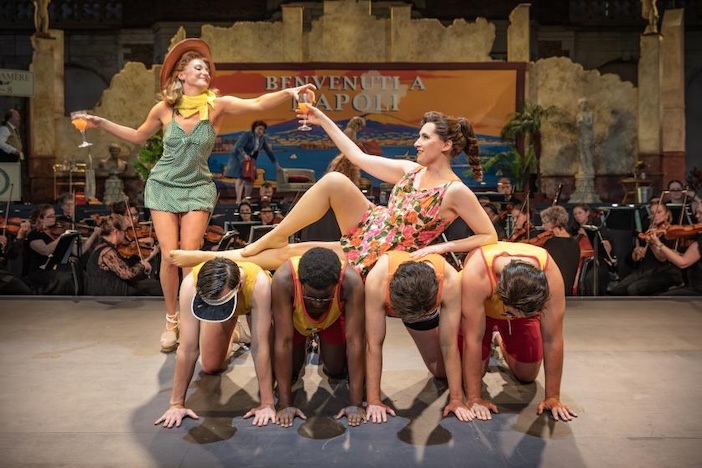
Elizabeth Karani as Despina in Cosi Fan Tutte (photo byCraig Fuller)
The orchestra here (in the very capable hands of the City of London Sinfonia) isn’t tucked into a pit but placed almost centre-stage, with a thrust runway wrapping around it that pulls the singers out toward the audience — there’s a directness to the storytelling that a conventional proscenium arch simply can’t offer. As dusk falls during the performance, the canopy and the trees beyond become part of the lighting design, whether anyone planned it that way or not.
This thirtieth season is a genuinely formidable one for repertoire — Mozart’s Così fan tutte opens proceedings, Puccini’s Turandot gets a rare concert staging to mark three decades of the company’s deep relationship with the composer, Verdi’s Un ballo in maschera returns in Rodula Gaitanou’s celebrated production, and Strauss II’s Die Fledermaus promises exactly the kind of fizzing, farcical comedy that pairs improbably well with a glass of something cold. There’s even Will Todd’s family-friendly Alice’s Adventures in Wonderland, for those wanting to introduce younger audiences to the format.
What’s remarkable, looking back over the years we’ve covered Opera Holland Park, is how the ambition has shifted. This was never an institution short on artistic confidence — OHP’s commitment to Puccini rarities and proper repertoire depth has always punched well above its modest origins. But the dining programme — the hampers, the bar partnerships with small independent producers (Gusbourne, Hepple Spirits, London Cru, Round Corner Brewing, and a roll-call of others that reads like a who’s-who of Britain’s best small drinks producers), and now the Supper Nights — represents something more ambitious still: an understanding that a great night at the opera is made of dozens of small decisions, most of which have nothing to do with the music itself.
Thirty years in, Opera Holland Park isn’t just staging operas under a canopy in west London. It’s staging evenings — and doing so with the kind of confidence that comes from genuinely understanding what an audience wants, long before the overture begins.
Opera Holland Park’s 2026 season runs from May to August. For more information of Supper Nights, picnic tables and theatre bar menus – and, of course, details of the 2026 season and performances – please visit operahollandpark.com.