Fresh from Button House’s big-screen outing, a tour of the Surrey Hills’ other residents include highwaymen, hand-wringing lords and a poltergeist with a taste for cutlery…
Surrey does not, on the face of it, invite the supernatural. This is a county that prides itself on well-clipped hedges and the middle-aged menace of a strongly worded email from the residents’ association. And yet the nation has lately decided that the place is rather good for ghosts.
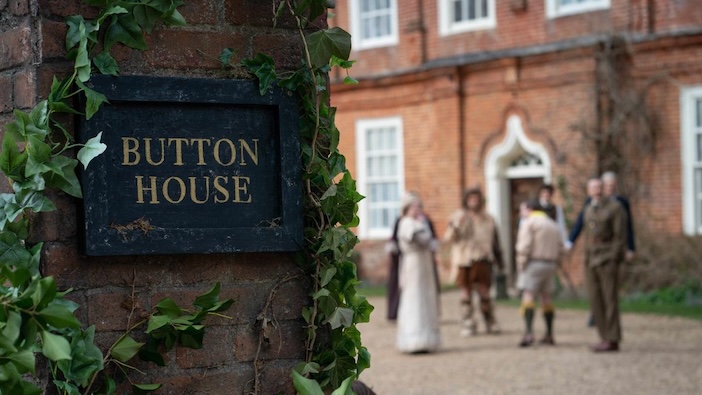
The BBC sitcom Ghosts, shot at West Horsley Place, the country manor near Guildford that stands in for Button House, has made a hit of the idea that the dead make irritating but lovable housemates, and the big-screen outing, Ghosts: The Possession of Button House, reached cinemas on 23rd October. With Halloween upon us and the wind turning pointed, it seems only fair to introduce eight more haunted corners of the Surrey Hills, all within an hour of London, and all rather less likely to end in a punchline.
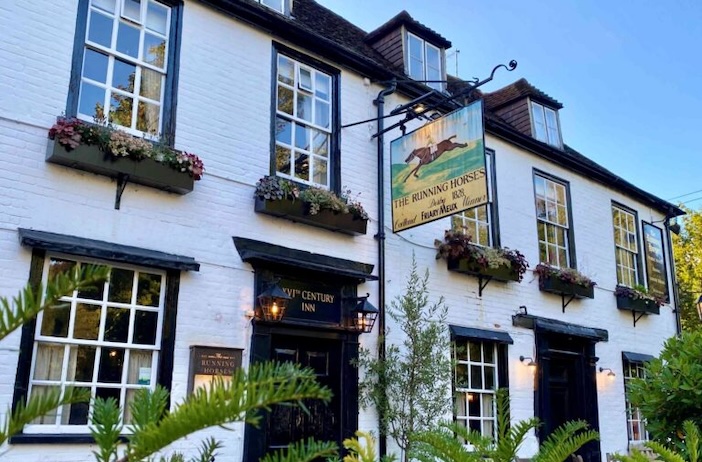
Start with The Running Horses at Mickleham, a coaching inn of more than four centuries’ standing that once served the main road from London to the south coast and, by extension, the highwaymen who worked it. The ladders found hidden in the upstairs bedrooms are thought to have been the getaway method of choice, which tells you something about the clientele and rather more about the building’s fire regulations. The resident ghosts are a 19th-century farmer who died in mysterious circumstances and is said to tramp the land around the pub, and a servant in 1920s domestic dress who glides silently through the rooms. Both suggest a house where nobody has quite finished their shift.
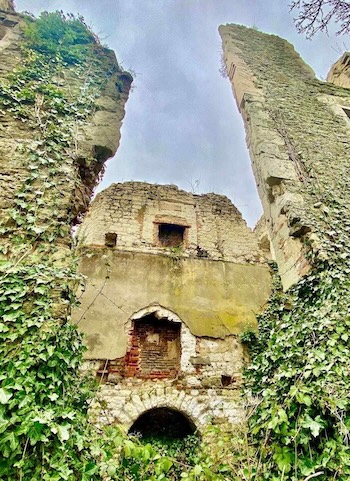 Down the road at Betchworth, the ruins of the castle offer the sort of tragedy Victorians adored. Thomas Hope bought the place in 1834 as part of the Deepdene estate and set about making it a deliberately romantic ruin, a project in which he was apparently a little too successful. Legend has it that he chased an escaped prisoner through the dark and, mistaking a figure in the shadows for his quarry, killed his own son. His spectre is said to wander the crumbling walls still, wringing its hands, which seems the least a man could do.
In Dorking, Pippbrook House, a gothic confection by George Gilbert Scott of 1856–58, now works as a creative hub, which is presumably why its ghosts are so well adapted to the modern office. There is a butler who stares from the upper windows at passers-by, and a grey lady on the staircase. The poltergeist is a more intemperate colleague, given to rearranging books in the library, stacking pens and pencils in the middle of rooms and, rather less endearingly, throwing knives down the stairs.
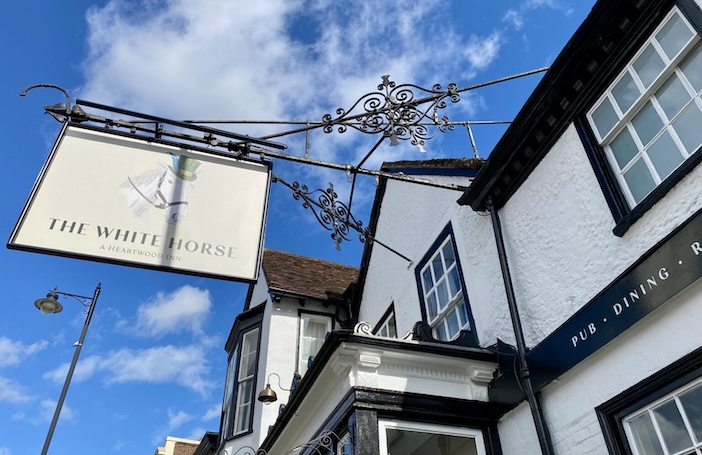
Further along the High Street, The White Horse, among the oldest coaching inns in England, has hosted Dickens, who worked on The Pickwick Papers during a stay. Its better-known spectre is the ninth Duke of Norfolk, Edward Howard, who is said to have enjoyed the hospitality so thoroughly that he could not bring himself to leave either the inn or, strictly speaking, the land of the living. We have all known the type.
Leatherhead’s ghost has the poorest of the bargain. A young woman killed by a car in 1930 at the junction of Bridge Street and the High Street is said to have stepped out in front of motorists for decades, only to vanish as they braked. The pedestrianisation of the area has, rather wonderfully, reduced the sightings. It is probably the only ghost in England made redundant by a traffic scheme.
For concentrated spookiness, make for The Punchbowl Inn at Okewood Hill, a 16th-century pub with a fair claim to be Surrey’s most haunted. There is a former landlord who died upstairs and now bangs the pipes, a lady in a grey crinoline who drifts through the restaurant, and a ghostly dog that lies by the fire on cold evenings and growls at guests. Add the moving stools, rattling door handles and unexplained taps on the shoulder, and a quiet pint takes on a certain edge.
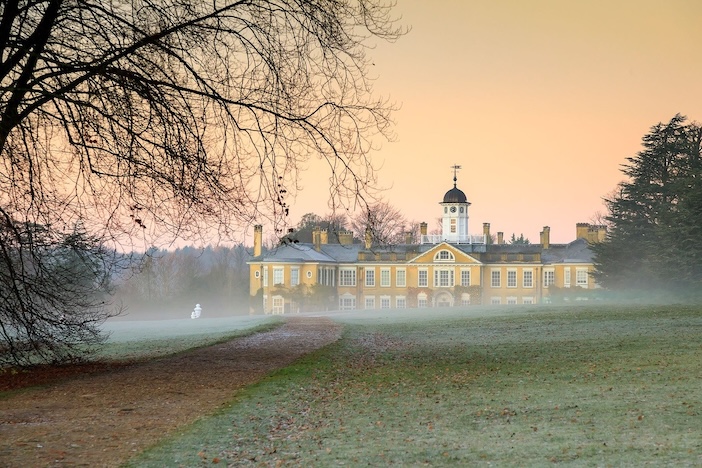
Then there are the larger apparitions. On the lower slopes of Leith Hill, 294 metres of the Surrey Hills, the West Saxons and the Danes are said to be forever marching toward the battle they fought in AD 851, no one quite agreeing where. Polesden Lacey, Margaret Greville’s Edwardian retreat near Great Bookham and now in the care of the National Trust, is best known for its roses and its views. When fog settles over the grounds at night, however, a hooded monk in a long brown cloak is said to take his own turn about the estate.
What is striking about all this is how thoroughly the dead of Surrey have refused to leave. A ghost can go anywhere it likes, and these have chosen a pub with a good fire, a gothic house, a view from a hill. Button House’s residents would surely approve. So come this weekend, with a torch and a sense of occasion. But the better lesson of the Surrey Hills’ hauntings is that the haunters are onto something, and the place is every bit as appealing in spring sunshine, minus the knives. Take it from the permanent residents: you won’t want to leave either.
For more ideas of places to visit and things to do in Mole Valley, visit visitmolevalley.co.uk and follow @visitmolevalley on both Instagram and Facebook.
Photos courtesy of Visit Mole Valley. Header image courtesy of Visit Surrey.