Once the lifeblood of British broadcasting, the BBC licence fee now looks increasingly regressive, resented, and out of step with modern media habits. As the Royal Charter review invites public response, our ‘on screen’ correspondent Paul Joyce draws on personal experience, cultural memory, and hard numbers to question whether the fee can survive — and invites readers to decide for themselves…
I grew up in an age when there were basically three TV channels: BBC1 and 2, and ITV. There something intoxicating about the hiss of the dial, the glow from an elderly valve radio, and the human voice breaking through the night — a world far removed from algorithmic playlists. Steam radio wasn’t just sound; it was companionship, curiosity, and the thrill of discovery all at once. And yet, in the age of on-demand streaming and global media platforms, the BBC licence fee — the very lifeblood of much of Britain’s broadcasting tradition — is showing not just signs of strain, but of permanent fractures.
Over the last decade people illegally avoiding paying the BBC licence fee has increased from 1.6 million to over 3 million today. The loss in monetary terms to the BBC has grown to hundreds of millions annually, now approaching £1.1 billion. This is over 1% of the entire defence budget and could cover, for example, all recent plans for increase in provisional and additional special needs education.
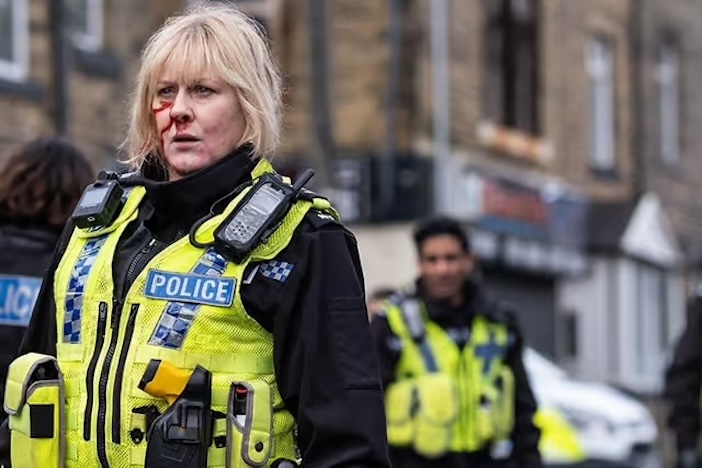
Sarah Lancashire in Happy Valley, one of the most-watched BBC shows in the last 10 years
More and more viewers are opting out and either not declaring that they have a TV or lie about its usage. Some happily state that they do not watch ANY live tv or watch or stream anything on BBC iplayer (other catch up devices such as ITVX, Channel 4, My 5 are exempt). The BBC are not responsible for policing who is paying and who is not, but evasion can attract a hefty fine and therefore a criminal record. Prosecutions for evasion have dropped from 82,000 in 2020 to 28,000 in 2024. To be clear then, if you watch or record live TV either on a TV, laptop, phone, tablet or games console without paying the BBC licence fee, you are breaking the law.
The reason for the drop in prosecutions involves a measure of speculation and includes Covid19, a serious reduction in BBC enforcement, the move from live TV to digital consumption, and a public mood shift against the BBC. This change of attitude means the government fears a result, leading to a campaign of open rebellion amongst those liable to pay. The revoking of free licences for over 75-year-olds was a disaster as a PR exercise and lost the BBC hundreds of thousands of viewers.
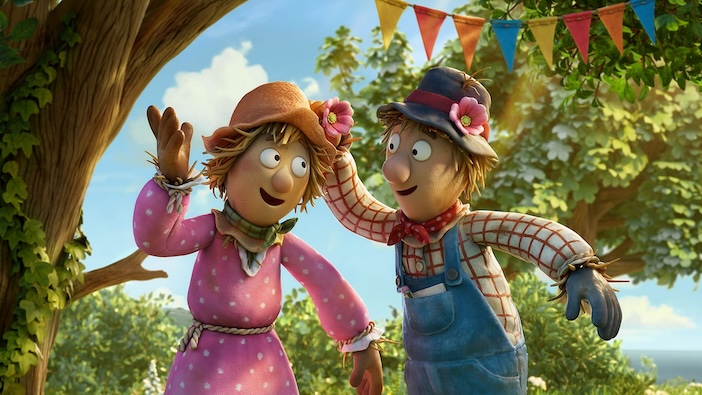
(Image: BBC/Magic Light Pictures)
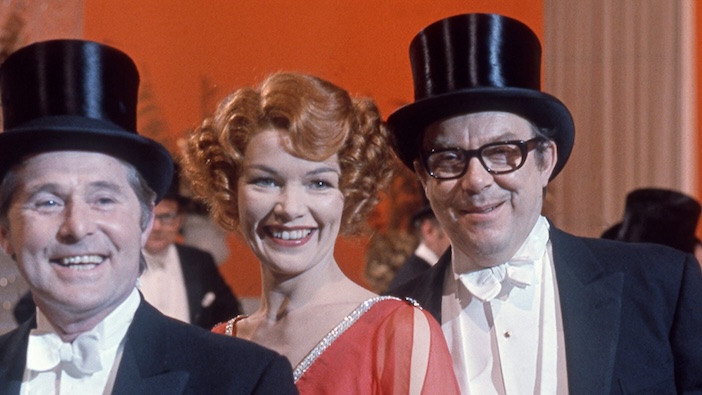
The 1977 Morecambe and Wise show (main image) attracted an audience of 28 million, compared to 4.3 million this Christmas who tuned into a cartoon, The Scarecrow’s Wedding, the seemingly new annual staple of the latest Julia Donaldson rendition. It is becoming increasingly clear that this fee – basically a compulsory levy, like income tax – is not only running out of support, but oxygen, at a fundamental level: in other words, the BBC itself no longer believes that the fee is tenable in the longer term.
The arguments against keeping the licence fee are increasing in strength and dissemination; unlike council tax (another hated legal means of governmental extortion) there is a fee paid by low and high income households alike; compulsory flat fee, once seen as unremarkable, now feels regressive and misaligned with modern media consumption; enforcement disproportionally affects women and low-income households (women are frequently named as licence holders, and poorer household simply can’t pay); and that the BBC is biased, and hides corrupt practices – and, indeed, people – seems endemic and widely acknowledged as fact, no longer hearsay.
By return, the arguments for are looking increasingly feeble; independence from government (while the BBC seems to many to be precisely an arm of government propaganda); the impartiality of its news (see previous point); freedom from advertising (its own notwithstanding); a diversity of culture (accessible widely elsewhere; Sky Arts, Amazon, Netflix et al); fund-raising staples (something the licence fee itself could fund?); game shows, quiz shows et al (vehicles for overpaid celebrities, basically), to name but a few. And, of course, the BBC might trundle out its old saws in self-defence: their long-term investment in high-end drama (massively overtaken in the last 5 years by Netflix and Apple); World Service journalism (with objectivity currently under multiple assaults, as mentioned), and minority and regional content (the audience for which diminishes daily).
So, what can those of us who hate the fee and all it stands for do – have I declared my own interest at this point, ahem – apart from donning striped pyjamas?
Well, there is a public consultation currently open (until 10th March 2026). This will be to an official review of the Royal Charter (which underpins the legality of the fee itself), ultimately leading to a Green Paper. It seeks input from the public as well as industry workers and covers a wide range of topics including licence fee reform, governance, editorial responsibilities (Panorama, anyone?) and the BBC’s public purposes. In the notes issued together with the dates released above, it makes clear that an alternative to the licence fee such as general taxation of a streaming levy are NOT in the frame. Whyever not? Surely the licence fee itself will be the primary subject of most people’s response to such a consultation? Talk about spiking a gun before it has even been loaded!
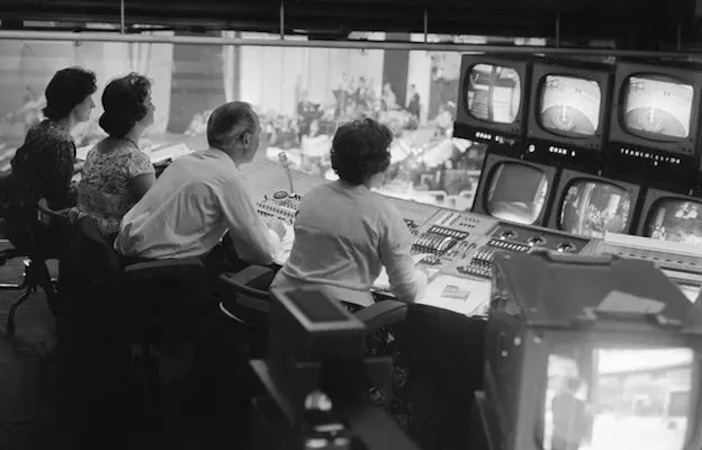
In the gallery for the opening night broadcast, ‘First Night’, from the new BBC TV Centre on 29th June, 1960
The UK licence fee currently stands at £174.50 for a colour TV. And this funds about two-thirds of the BBC’s total income. Amongst those European countries still gathering a broadcasting licence, ours is the highest, with the average sitting at £116. Even so, the BBC is in trouble with a £500 million “funding hole” due to its current licence fee freezing. A 2022 survey found 71% of adults rated the fee “very bad value” and 63% favoured abolishing it in favour of an optional subscription model. Reform’s Nigel Farage has campaigned to scrap the fee, whereas in November 2024 Lisa Nandy (then Culture Secretary) stated that “the Government is committed to upholding the licence fee until the end of the current Charter period”, namely 2027.
Perhaps you would like to know my response to the questions I am raising about the BBC and its fee? Well, I have a love-hate relationship with the corporation having been employed by them in a freelance directorial capacity over the years (on Dr.Who, Play for Today, and many arts documentaries). As with any similar monolithic organisation they like to think of themselves as self-sustaining, but as a direct result run the risk of internal collapse from indiscriminate inbreeding, like the Spanish Hapsburg Dynasty. In other words, you must sign your allegiance to them (like the Masons) ideally in secret, if not in blood itself, and thereafter as long as you keep your hands off the junior staff, you will rise majestically through the ranks – the late Sir Alan Yentob would be an excellent example in my own particular field.
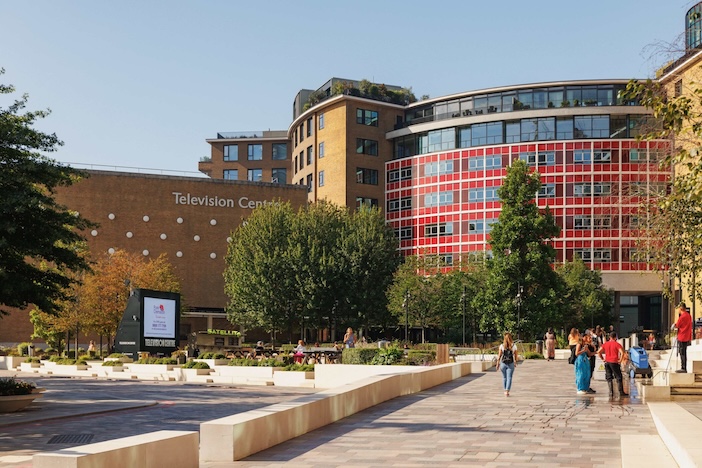
BBC Television Centre today, combined work space, restaurant and lifestyle destination
Personally, I would be happy enough to pay a peppercorn rent to continue to enjoy Radios 3 and 4, but in fact I can listen to them quite freely anyway. Yes, even now. In the words of Steve Allen, “Radio is the theatre of the mind; television is the theatre of the mindless.” Perhaps we should all go back to the good old steam-powered radio.
Yet, there remains a human, cultural dimension that statistics alone cannot capture. Steam radio reminds us of the intimacy, unpredictability, and warmth of curated broadcasting — a shared, almost sacred experience that modern media struggles to replicate. As Marilyn Monroe once quipped, “It’s not true I had nothing on. I had the radio on.”
How to respond to the consultation:
The UK government provides an official survey covering:
- BBC funding and the licence fee
- Scope of services
- Advertising and subscription options
- Concessions and fairness
- Governance and public trust
You’ll find the online survey link on the consultation page on GOV.UK:
“Britain’s Story: The Next Chapter – the BBC Royal Charter Review, Green Paper and public consultation.”
Responses are recorded directly by the Department for Culture, Media and Sport (DCMS) and help shape policy for the next Charter. The consultation takes around 20–40 minutes.
And, yes, if you wish to respond to Paul’s article, please feel free to add to the comments, below.
Images courtesy of BBC Publicity