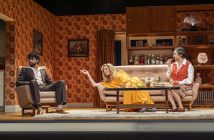
Despite The Marquise (1927) approaching one-hundred years since it was first performed at London’s Criterion Theatre, you never have to do much to ‘revive’ a Noël Coward play; his writing is as fresh and witty as it always was, although that’s not to take anything away from this skilful and vibrant Bill Kenwright production, directed by Philip Wilson. Honouring the playwright’s primary intention to keep the audience constantly intrigued and amused throughout, this is probably as fine a revival of The Marquise as you’re ever likely to find.
Premiering at Theatre Royal Windsor last month, The Marquise is currently on tour at Theatre Royal Bath where it was extremely well received during last night’s press performance. Successful Coward productions rely on chemistry, and the cast, led by Juliet Aubrey as Eloise de Kestournel, the ‘Marquise’ of the title, is clearly having enormous fun. Despite The Marquise not being as well regarded as Coward’s hit plays such as Hay Fever (1925), Private Lives (1930) and Blithe Spirit (1941), it is nonetheless well worth seeing, for no 20th century playwright ever captured the elegance of the interwar years better. This is brought to the forefront of the production with elegant costumes and a visually appealing Art Deco-inspired set by Colin Falconer in which all the action takes place. It also benefits enormously from the decision to stage it in the 1930s (originally 18th century France), enhancing its glamour tenfold.
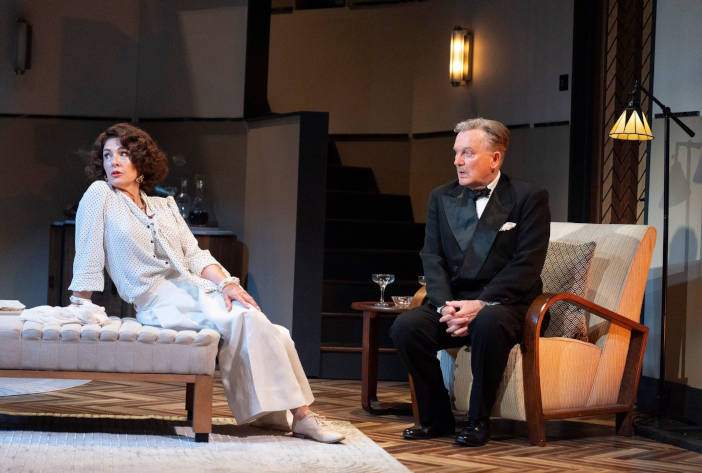
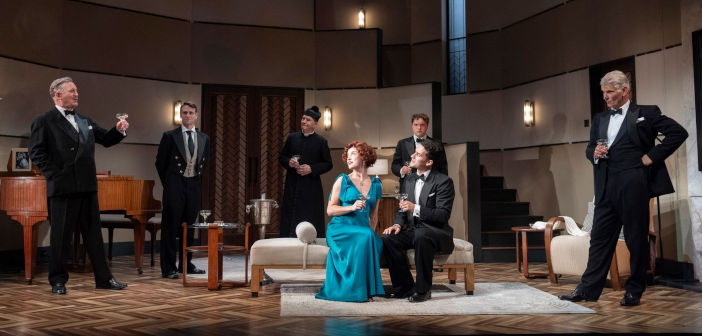
Simon Shepherd is superb as Raoul de Vriaac, a widowed count intent upon his daughter, Adrienne (Eva O’Hara) marrying the son of his wealthy friend and neighbour, Esteben el Duco de Santaguano (Tristan Gemmill), and the curtain opens on a cocktail party scene in which the two proud fathers celebrate the betrothal of their two only children. Presided over by Father Clement (Martin Carroll) due to Raoul’s deep religiosity following the death of his wife, Shepherd conveys the hollowness of the character’s existence through arrogance and irascibility; a disguise for his deep dissatisfaction and unhappiness which the audience will see gradually peel away as the play evolves.
Never considering the wishes of the young couple who are both in love with other people whom they know their fathers would consider unsuitable – not least because Miguel (Barnaby Tobias) is homosexual – the future bride and groom confess all to one another when the party breaks up. But Coward is only teasing us with this introduction and offers Adrienne and Miguel as an example of the grave mistake of caving in to societal pressures and failing to follow our hearts during our youth. The Marquise is not a play about the young – who eventually untangle themselves from the mess – this is a play examining middle-aged regret and second chances, which Coward suggests we must not pass by due to wounded pride.
Everything becomes clear when Eloise de Kestournel, the Marquise of the title finally makes her appearance, and Juliet Aubrey is terrific as the middle-aged widow who, having decided to sell up, puts a spanner in the works by suddenly reappearing at the chateau after sixteen years. It is here that Shepherd really comes into his own; lending Raoul’s display of outrage a touch of the sensitive schoolboy and reasserting his pompous Lord-of-the-Manor attitude until he later breaks down in shock. Insisting that Eloise depart, it’s highly amusing to see how she relishes running rings around her former flame, remaining entirely unfazed by his tantrums.
But it isn’t just Raoul that she has come to see and we learn that Eloise is the mother of Adrienne, whom she is determined to glimpse despite the young woman having been raised to believe that the stern figure in the portrait over the mantle was her natural mother. Exiting through the door to the terrace and re-entering with her entourage of maid and chauffeur through the front, Eloise succeeds in gaining admittance to the chateau when Adrienne falls for her claim that her Bugatti has broken down. A character as glamorous as she is feisty, with highly theatrical movements which verge on farcical, Aubrey’s comic timing is something to behold, while her diva attitude and over-emphasised posturings (reminiscent of Joan Collins in Dynasty) are all part of the comedy.
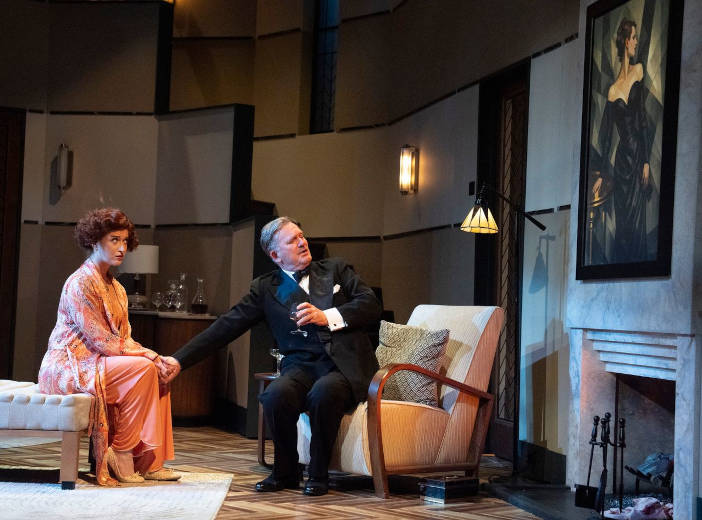
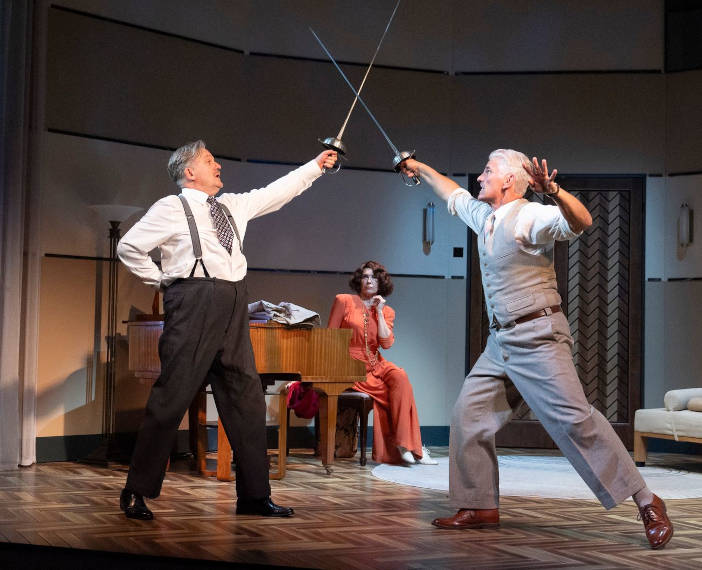
The play continues with more revelations and occasions for laughter, not least when Esteban is also revealed to have had a romantic relationship with The Marquise – cue a delightfully pathetic attempt at a sword fight between the two men. As with all Coward romantic comedies, the plot is easy to follow and only ever accidentally touches upon philosophical matters, something which keeps the tone light and frothy with plenty of opportunity for admiring Coward’s brilliant dialogue, peppered with his trademark repartee and lines that you’ll want to memorise so as to drop into conversation. When produced to this level, it is easy to understand Coward’s continuing fan base; not only are you bound to want more when the curtain falls, but you’re almost certainly going to feel more cheerful leaving the theatre than when you arrived.
The Marquise at Theatre Royal Bath, Saw Close, Bath, BA1 1ET, until 20th June 2026. Running time approximately 2 hours 15 minutes including one interval. For more information and tickets please visit the website.