Jane Wilson travels to Umbria to discover a former Benedictine monastery that has reinvented itself as a boutique retreat, with a sympathetic nod to its past…
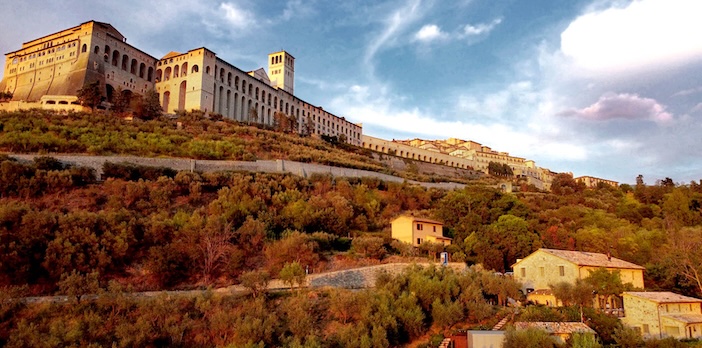
In the lush Umbrian countryside, where cypress trees stand guard over rolling hills, the Basilica of Saint Francis of Assisi sits gloriously on the skyline, radiating its timeless presence across the valley below.
The Basilica dominates every view. My eye was continually drawn to its changing ochre palette and Italian Gothic elegance as sunlight shifted throughout the day. Perched on the slopes of Mount Subasio, Assisi is one of Italy’s most important pilgrimage destinations. Its rich religious heritage has earned it UNESCO World Heritage status, attracting visitors from around the world — but it is in the shadow of this spiritual giant that I discovered a different story, one rooted in medicinal gardens, Benedictine wisdom and the art of slow living.
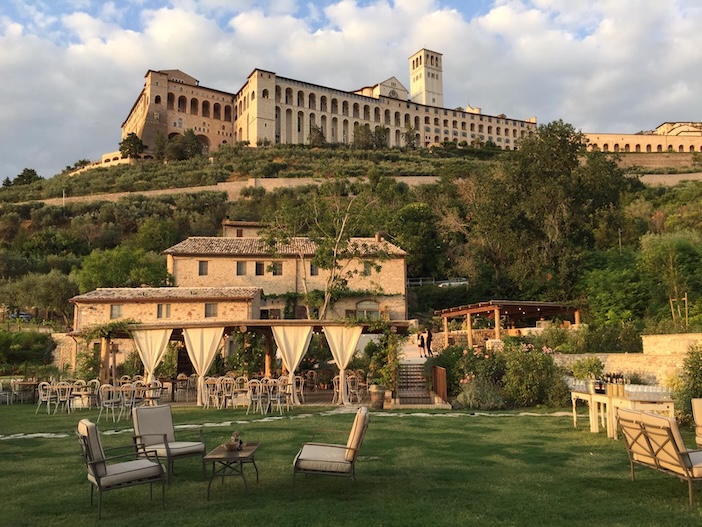
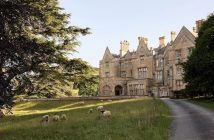
But beneath this celebrated monument, another former religious sanctuary shines in quieter fashion. Borgo Antichi Orti, once a Benedictine monastery and now a boutique retreat, has been transformed — embracing its monastic past and reinterpreting it for modern travellers.
Sitting on the lawn at Borgo Antichi Orti beneath its watchful gaze, I found myself reflecting on the contrast between the sacred and the everyday. My thoughts were interrupted by a member of the hotel team carrying a freshly picked sprig of Cedrina from the Hortuli gardens. “It was picked this morning,” she smiled. The lemon-scented medicinal herb has been cultivated here for centuries and remains central to the property’s philosophy. It was a simple gesture, but one that captured the personality of Borgo Antichi Orti perfectly. Hospitality here is thoughtful.
Built in 1444 by Benedictine monks just outside Assisi’s walls, the monastery became a centre of hospitality, study and herbal medicine. While Saint Francis and his followers embraced poverty and worked among ordinary people, the Benedictines focused on contemplation, learning and self-sufficiency. The monastery provided refuge to pilgrims travelling to the Basilica of Saint Francis. Alongside their religious duties, the monks cultivated medicinal herbs and prepared remedies using ancient botanical knowledge. Their terraced gardens supplied both the monastery and surrounding communities. Today, those traditions continue in modern form.
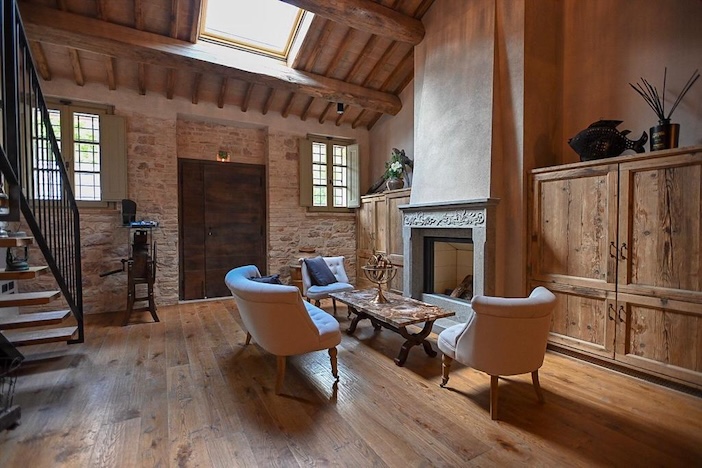
The property was purchased and restored by Andrea Ranocchia, the former Inter Milan and Hull City footballer who grew up in Assisi. Rather than eradicate the building’s past, he chose to celebrate it. Original materials have been repurposed throughout while historic features remain in place where possible. Old windows have been transformed into mirrors and reclaimed materials appear throughout the interiors. The result feels authentic rather than fashionable, retaining the soul of the monastery while creating a stylish retreat.
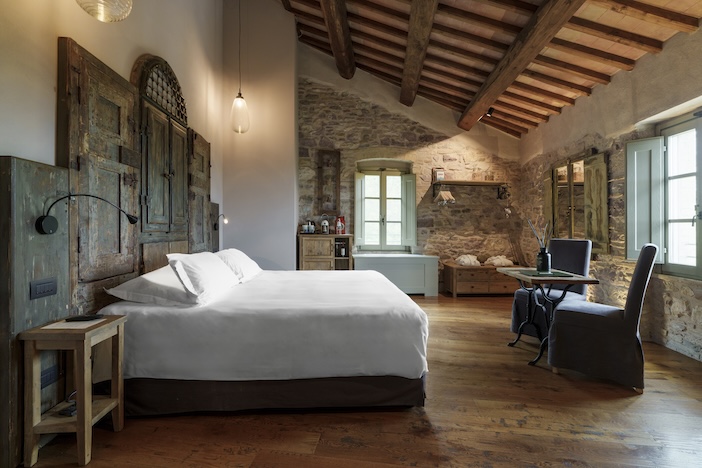
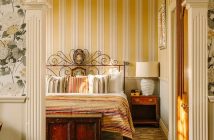
There are just twelve guest rooms, each enjoying sweeping views across the Umbrian landscape towards Assisi. My room retained hints of monastic simplicity — functional and cosy, yet boutique in style, oozing with history behind thick stone walls that could tell centuries of stories. Iron coat hangers, cartwheel taps and reclaimed furnishings reflected the building’s respect for its past. Stairs led to my own private garden centred around a solitary tree. I woke each morning to birdsong; at night, a nightingale warbled a different tune. During the day, bees and butterflies drifted between lavender and rosemary bushes as dappled sunlight waltzed across the gardens.
 At the heart of the estate lies the Hortuli — the botanical and kitchen gardens originally cultivated by the monks. Divided according to the medieval elements of earth, water, air and fire, they continue to provide the herbs, fruits and vegetables used throughout the property. Garden tours prove a feast for the senses. Chard, celery and lemon verbena flourish alongside pumpkins, tomatoes and potatoes. Apricot and fig trees stand among blackberry bushes and passion fruit vines. Decorative sage, rosemary and jasmine perfume the warm afternoon air. We learn how laurel and sage were traditionally used to aid digestion, while mint, wild fennel and chives continue to flavour infusions, dishes and signature cocktails. The gardens are so productive that city residents from Rome and Milan are able to rent plots and receive seasonal produce throughout the year, reconnecting urban life with the rhythms of the countryside.
Inspired by Benedictine traditions, spa treatments combine medicinal herbs with contemporary techniques applied with natural almond, sesame and olive oils — all rooted in heritage rather than driven by trending brands. Even the small swimming pool carries a story: now a tranquil place to cool off, it once served as a water trough for animals when the property operated as a working farm. Yoga sessions take place amidst the gardens, too, finishing in child’s pose as the sun sets on nature’s repose.
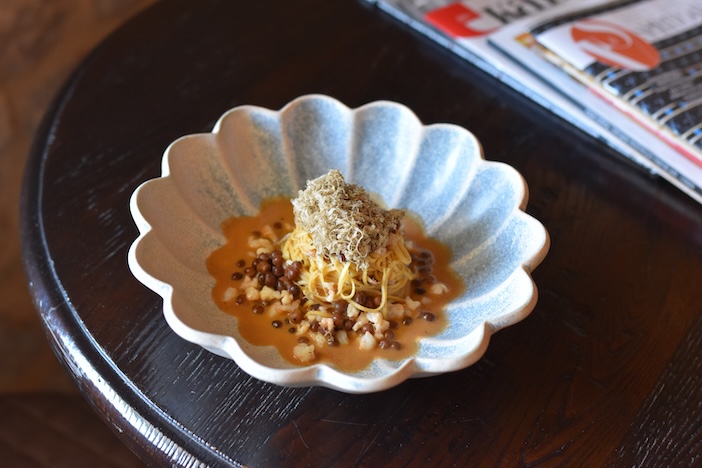
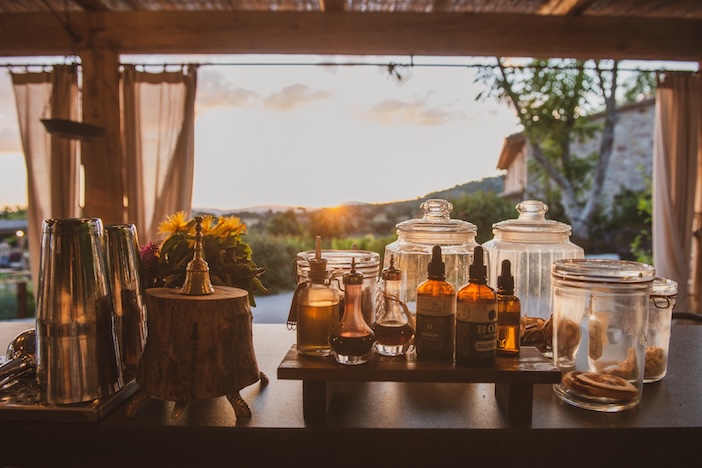
Food forms another important connection to the land. At Lab Botanico, the hotel’s airy bar, local cheeses, Umbrian cured meats and vegetables harvested from the gardens appear alongside workshops exploring herbal infusions and botanical mixology. Re Tartù, the hotel’s elegant restaurant, is dedicated to one of Umbria’s greatest treasures: the truffle.
Before dinner, several large truffles were placed in the centre of the table. Dark, knobbly and rather unattractive, they appear unworthy of their luxury status. Yet these subterranean fungi command eye-watering prices and are so prized that trained dogs are required to locate them beneath the soil. The hotel offers truffle-hunting excursions for guests keen to discover this region’s culinary treasure first-hand. At dinner, truffles appeared shaved over dishes and even paired with ice cream — their earthy aroma transforming even the simplest ingredients into something memorable, if an acquired taste.
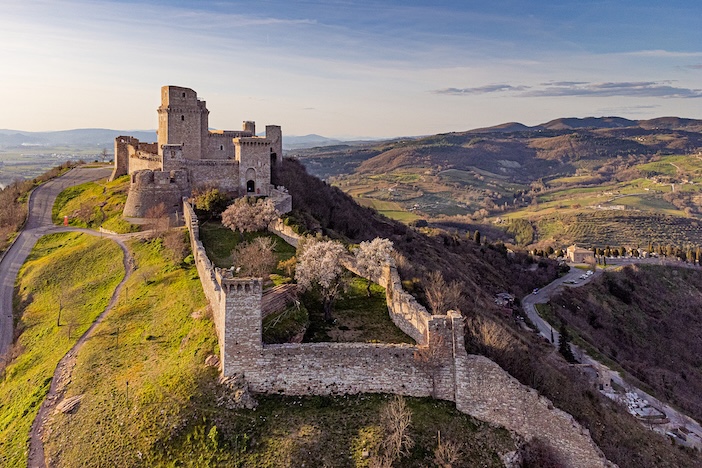
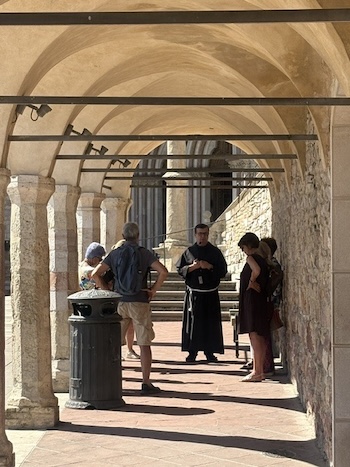
Beyond the Borgo, there are plenty of opportunities to explore the surrounding region. Guided walks reveal Assisi’s layers of history through the Basilica of Saint Francis, the Basilica of Saint Clare and the Roman-era Piazza del Comune. It was here I witnessed a nun queuing patiently for an ice cream beneath the June sun, while a monk led a group of pilgrims in prayer and chant outside the Basilica. Saints and stained glass, cobbled streets and ancient stones: Assisi remains a place where faith, history and everyday life still interconnect.
Tasting the produce of the land is a popular pastime here. Olive oil tastings at Decimi present Umbria’s finest, revealing the bitterness, spice and complexity of premium oils — and how they can transform the flavour of a simple tomato. Wine tasting with SAIO, meanwhile, proves how the experience becomes more intense when you pair local wines with vineyard views.
Long after the views of Assisi fade, it will be the small moments I remember most: the scent of freshly picked Cedrina, a nun enjoying a vanilla ice cream, the distant sound of pilgrims singing outside the Basilica, butterflies hovering over rosemary and lavender. Beneath the watchful presence of Saint Francis, Borgo Antichi Orti offers something rare — a genuine sense of place where history, nature and wellbeing coexist in harmony, and where sustainability means the continuation of centuries-old practices.
In a world obsessed with speed, this former monastery reminds us that there is value in slowing down. It is not simply a hotel stay but a chance to reconnect with the land, with tradition and, hopefully, with ourselves.
For more information about Borgo Antichi Orti, including details of its history, and activities on offer, please visit www.borgoantichiortiassisi.it.