From murder in Oxford to espionage in occupied Rome and mystery in the south of France, Philip Cottam recommends three very different novels for the autumn evenings…
A Voice in the Night by Simon Mason
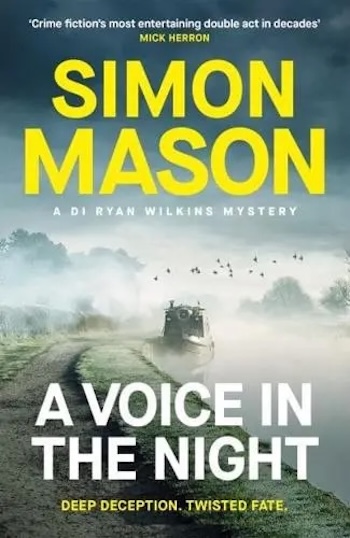 I came across A Voice in the Night by chance in a railway station bookshop, and what I took for a conventional crime novel turned out to be nothing of the kind. Witty and well plotted, it is set apart by its two very different detectives, who share a surname. Detective Inspector Ray Wilkins is highly educated (Balliol College, Oxford, no less), always dressed as if for a red-carpet entrance, middle class and black. Ryan Wilkins is ill-educated, puffa-jacketed and tracksuited, benefits-street white. Unsurprisingly, their approaches to policing differ. Add two more Ryan Wilkinses, the detective’s father and son, and confusion looms.
The device may seem arch at first, but this is no music hall double act. Set in Oxford and the Thames Valley, the story begins with the arrival of a young, modernising Chief Superintendent, just before a security guard is murdered in an armed robbery. Wary of the Wilkins, she puts a safer pair of hands in charge and sends the pair off to find a missing professor, only for his body to turn up and a second murder hunt to begin.
Mason brings his characters to life, cops and robbers alike, and captures the scenery, rural and urban, in clear, unfussy prose. The double act works: it supplies professional and personal tension, occasional humour and arguments about how policing should be done. Beyond the investigations there are the developing relationships of the key officers, Ryan Wilkins’s family situation and a completely unexpected bombshell. Only some way in did I realise this was the fourth book in a series, so there is clearly a rich back story to explore.
A Voice in the Night by Simon Mason is out now, published by riverrun. For more information, visit www.quercusbooks.co.uk.
My Father’s House by Joseph O’Connor
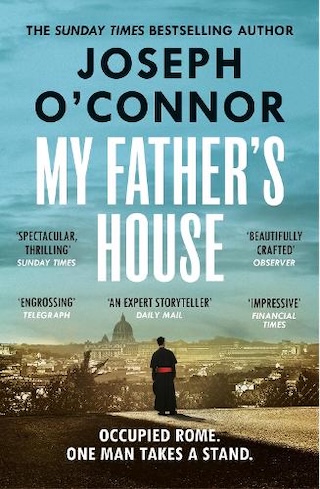 The Vatican’s independent, politically neutral status within Italy has long made it a centre for espionage, secret diplomacy and intrigue, and a refuge for those fleeing enemies of every kind. This was never truer than in 1943, when Germany occupied Rome but respected the Vatican’s neutrality. My Father’s House, the first in a planned trilogy, is based on the true story of the escape line set up by Monsignor Hugh O’Flaherty, a member of the Vatican curia, for Jews and Allied soldiers and airmen. He is credited with saving at least six and a half thousand people.
Joseph O’Connor, an award-winning Irish novelist and brother of the late singer Sinéad O’Connor, has two powerful real-life antagonists to work with: the brave and resourceful Monsignor, architect of the escape line, and the cruel, ruthless Obersturmbannführer Paul Hauptmann. Hauptmann is an alias; his real name was Herbert Kappler, but O’Connor has said he was so horrified by Kappler’s behaviour that he could not bring himself to use it.
What follows is a deadly game of cat and mouse. Failure costs the Monsignor and those he shelters imprisonment, torture and often death; for the Obersturmbannführer it means mere frustration and another attempt. The Monsignor survived, as did most of those he helped, earning him the nickname ‘The Scarlet Pimpernel of the Vatican’. O’Connor makes the most of the duel, but he also brings to life the courage involved, the inevitable betrayals and their consequences, and the strain on personal relationships when choices are impossible. Above all, he recreates the tense, threatening atmosphere facing anyone who took on the German security services in Italy. Happily, there are two more volumes to come.
My Father’s House by Joseph O’Connor is out now, published by Harvill Secker. For more information, please visit www.penguin.co.uk.
The Artist by Lucy Steeds
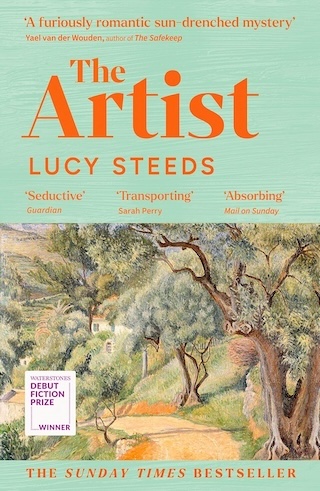 The Artist is very different in style, subject and tone from the other two books here. Set in Provence after the First World War, it is part mystery, part examination of art and artists, part reflection on the complexity of human relationships, and above all written in lyrical, expressive prose. The landscape of Provence, glimmering in the summer heat, has seldom been better conjured, and the shadows cast by the war are delicately drawn. Unsurprisingly, this fine book was Waterstones Book of the Year 2025, and Lucy Steeds won the Waterstones Debut Fiction Prize.
At its heart is an unusual trio: Joseph Adelaide, a young English journalist and disappointed artist; Edouard Tartuffe, a tyrannical, reclusive painter known as ‘the Master of Light’; and Ettie, his quiet, downtrodden and enigmatic niece. Joseph has come to write an article about Tartuffe, but his welcome is chilly, and he may stay only if he sits as the model for Tartuffe’s latest painting. Uncle and niece both seem to harbour secrets, and unpicking them soon preoccupies Joseph far more than the article. Why has Tartuffe become a virtual recluse, and why is he so unkind and dictatorial? Why does Ettie put up with being bullied, and is that the only reason for her reticence?
Steeds also uses the unpleasant but clearly talented Tartuffe to ask whether artistic talent justifies the exploitation of others. All of this is enveloped in the sights and sounds of Provence in unyielding summer heat, and in their influence on the characters of this entrancing, delightfully written novel.
The Artist by Lucy Steeds is out now in paperback, published by John Murray. For more information, visit www.johnmurraypress.co.uk.
Header photo by anotherxlife (courtesy of Unsplash)