Art, love and politics collide at the London Coliseum as the ENO reimagines Tosca as a study in resistance. Larry is gripped by a production that pairs Puccini’s cinematic score with a finale nobody will forget…
There’s been some noise about this Tosca already. If my neighbour’s reaction to the ending is anything to go by, it will be dinner-party fodder for some time to come – though Annilese Miskimmon’s new staging, billed as an opera about ‘the art of resistance’, has plenty to talk about before we get there.
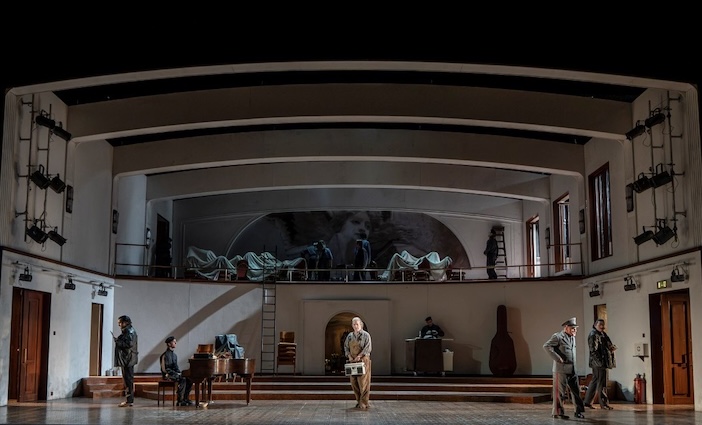
As the audience files into the auditorium, the cast are filing onto the stage. We’re in a concert hall, indicated by the grand piano, with a mural in progress on the back wall as artists and staff go about their day. Almost imperceptibly, a hush sweeps across the stalls, as if some unspoken instruction has been given. There’s no sweeping overture, just three sudden, discordant orchestral chords, and we’re thrust into a dark and tense political thriller. Those chords, incidentally, are from Scarpia’s theme – in Tosca, the villain announces himself before anyone has sung a note.
The story is simple enough. Floria Tosca, a celebrated singer, is in love with the painter Mario Cavaradossi. When he shelters an escaped political prisoner, he attracts the attention of Scarpia, the chief of police, who has designs on Tosca, and no scruples about how to realise them. Over a single night, the lovers must fight for their love, their honour and their lives. It’s a story that feels like genuine dramatic narrative, not the whimsical, implausible plot lines that opera is often known for.
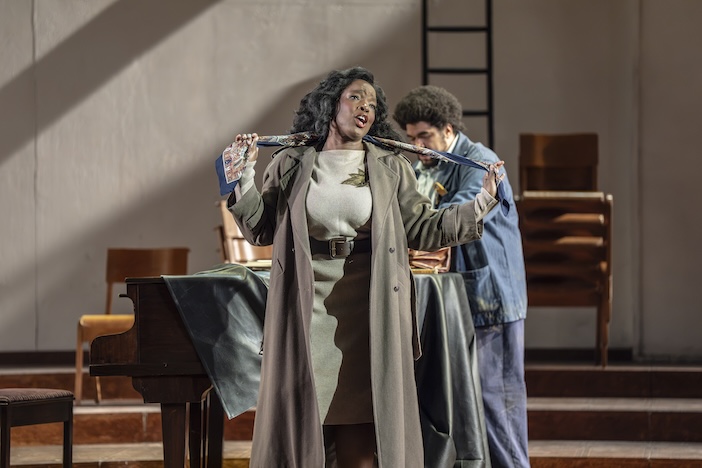
Adding to that setting, Miskimmon moves the action from Rome to a concert hall in Eastern Europe in the 1980s – costume designer Evie Gurney clearly relished the oversized leather jackets and gaudy sweaters – and it’s a canny move. A society fracturing in the dying days of the Soviet era mirrors the disruption and destruction of the characters’ relationships.
That relationship is principally driven by Tosca and Cavaradossi. Making her ENO debut, Axelle Fanyo’s Tosca has a rich tonality and ripping coloratura, and the roar of approval at the curtain call certainly matched her talent. Chaz’men Williams-Ali’s Cavaradossi is equally crisp and emotionally powerful; their passion beautifully flowing through their harmonies in the first Act’s tryst.
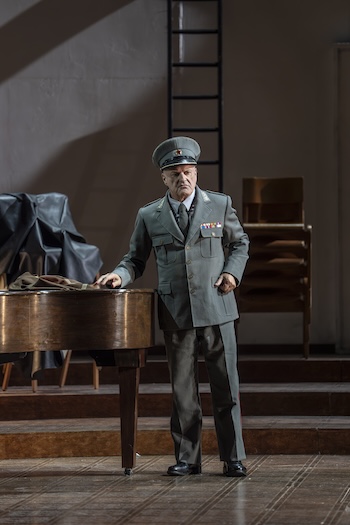 Then Scarpia arrives, and the grip tightens. It’s one of opera’s great prizes for a singer, shared across the run by two bass-baritones, and Scarpia has to be one of the most duplicitous villains in the canon: by Act II he has had Cavaradossi tortured, and he promptly makes Tosca a proposition. On the night, Christopher Purves seemed more avuncular than menacing – though his musicianship and commanding stage presence warranted the affectionate boos at the curtain call.
As Act II escalates, it’s also where Puccini is at his best. He never lets the pressure drop: the drama doesn’t pause for applause or stop for a showpiece but tightens, scene by scene, with the score doing as much of the storytelling as the singers. Tosca is through-composed, flowing continuously rather than lurching from number to number, so even its best-loved arias, Vissi d’arte and E lucevan le stelle, feel like pauses in the drama rather than interruptions of it. Scarpia is underpinned by timpani and brass, and rising pulses of drums and sweeping strings drive the mounting tension. It feels cinematic, the music adding emotional context and narrating the drama in its own right. Ben Glassberg, fast becoming one of the most sought-after conductors on the global stage, brings out those cinematic tones beautifully.
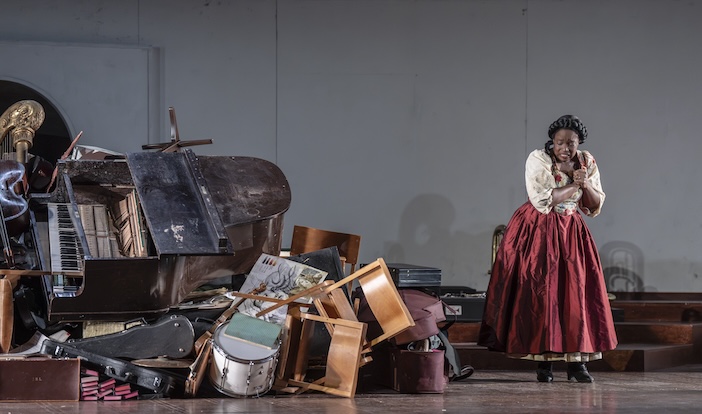
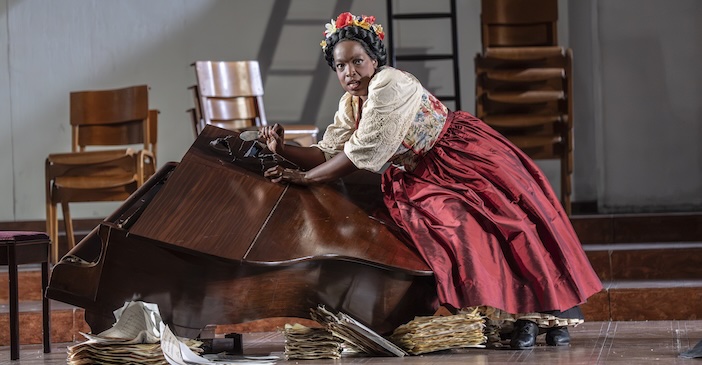
By Act III, the destruction promised from the opening has arrived. Rosanna Vize’s set opens with the hall in ruins, a pyre of smashed detritus centre stage, and as Cavaradossi faces his final dawn, the emotion that comes through Williams-Ali’s voice in E lucevan le stelle is genuinely wrenching. And it’s here that Miskimmon’s ‘art of resistance’ motif pays off. Tosca is a singer and Cavaradossi a painter, and in a hall built for music and now reduced to rubble, their art is the one thing the regime can’t quite stamp out. Even as everything around them is smashed, the music keeps on playing.
But there’s one thing this production will be remembered for: its ending. It’s no spoiler to say Tosca dies – it’s the point, after all – but how it happens elicited a “F*king hell” from my neighbour as the curtain fell. If you’re lucky enough to get a ticket, you’re in for a memorable night.
Tosca runs at the London Coliseum until 11th December. For more information, and for tickets, please visit www.eno.org.