Morocco’s third-largest city is known for its brilliant craftsmen, but combine it with a visit to fellow imperial city Meknes for wine tasting and Roman ruins, writes Nathalie Bonney…
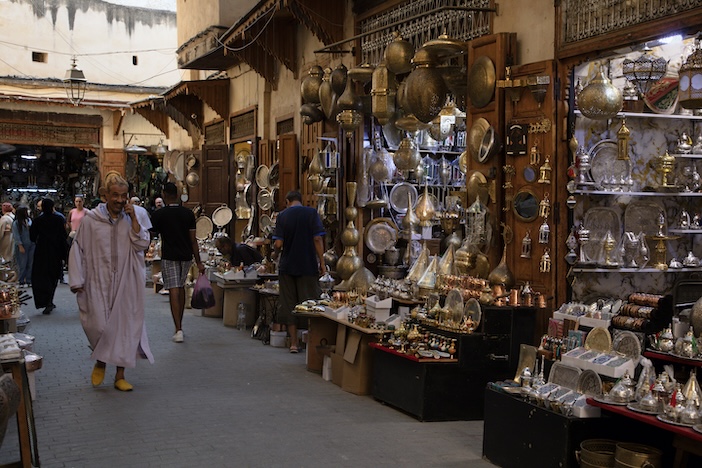
Traders yell ‘belek belek’ as they push carts through the narrow paths; the cry warns passersby to get out of the way. I tread carefully over the puddled streets where tendrils of threads are dyed and hang along the walls and across walkways to dry out.
In Fes el-Bali (or old Fes), the 9,000 walkways get narrower, and the shopping options increase. Old Fes is home to the historic 11km-long walled Medina, with origins dating back as far as 808 CE. There’s the usual array of Moroccan arts and crafts and tanneries hiding in plain smell behind leather shops. One shopkeeper encourages me to buy ‘Moroccan Adidas’ aka embroidered slippers, ’10km guaranteed’. Here you can also see (and smell) women rolling dough then frying msemmen, Morocco’s flaky flatbread, over large spherical stoves.
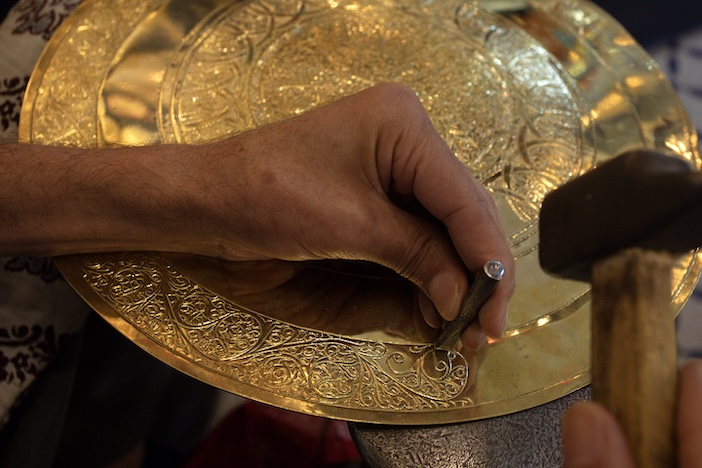
At Place Seffarine, the city’s metalworkers seemingly converge, hammering and welding their materials into pots, pans and ornaments. My favourite alley is home to a row of wooden carts selling sticky nougat, fragrant with orange blossom and stuffed full of nuts. Clothes, jewellery, ceramics, silverware, cosmetics, leather, kilims and carpets, it’s all here.
For a break from the sensory overload that is Fes Medina, head to the Art de Poterie ACH, a tile and pottery factory on the city outskirts. Visitors can pre-book workshops, but you can also just turn up and you’ll still be shown around and maybe even get a mini pottery lesson from Aziz, who’s manned the potter’s wheel for 30 years now (still using his feet to push the flywheel and SIM cards to smooth the clay).
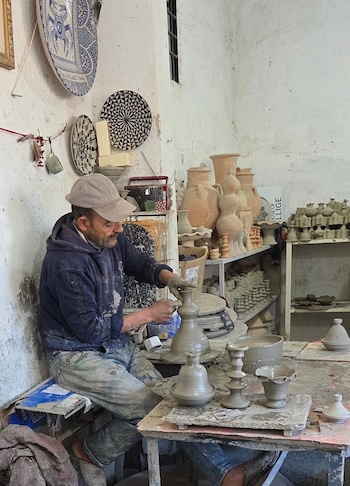 Starting in a low-roofed building where labourers slap and cut the clay into at least 200 tiles a day, we’re guided through the whole process. Watching the craftsmen chip away to create thousands of zellige tiles is fascinating. To then see craftsmen painstakingly place the zellige pieces into patterns on the floor that will eventually become tabletops (imagine doing a jigsaw puzzle where you can only see the back of the pieces) is highly impressive. Of course, there’s a two-floor showroom at the end, and prices are higher than in the souk, but there’s the guarantee your item is made in Morocco, and I can personally vouch for the packing service ensuring my ceramic tray arrives intact.
Fes is the third-largest city in Morocco. Except it’s in effect made up of three separate cities: modern Fes or La Ville Nouvelle, the Jewish quarter or middle town, behind the royal palace, which dates back to the 15th century, and of course Fes el-Bali.
Despite its name, the architecture of the Jewish quarter is Moorish in design, and modern and old sit in close proximity. We pass streets of shops all selling wedding favours and shiny tableware, the usual array of spice shops, fruit and veg stalls and football jerseys hanging from the doorways. One small door in the thick walls opens onto a cupboard-sized room with an abandoned sewing machine in it; another similar cubbyhole frames two wizened men talking, two glasses of amber tea set before them. There are also kittens everywhere, with plastic ice-cream tubs filled with water and kibble placed at regular intervals to sustain Fes’ feline population. While I might not find anything to buy in this quarter, I love walking around it.
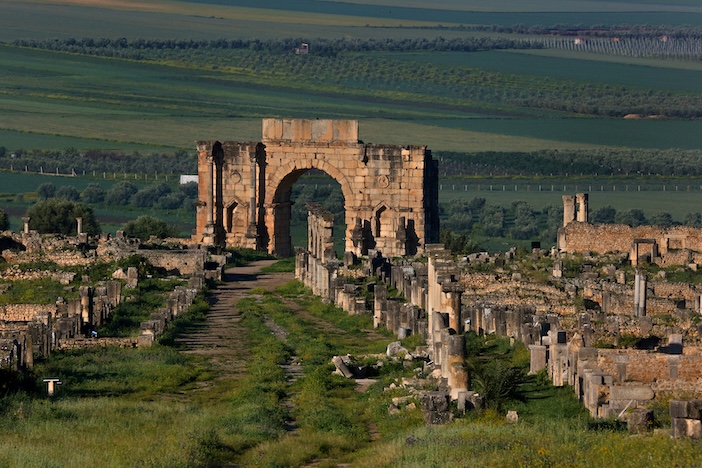
On day two, we rise early to drive just under an hour to Meknes, another imperial city. It’s only 30 minutes on the train, but we are heading outside of the city to the Volubilis ruins, where mosaics peek out amid the Roman rubble. From June onwards, head early or end of day to avoid the heat.
Regarded as one of North Africa’s best-preserved archaeological sites, highlights include the Triumphal Arch of Caracalla, originally erected between 216-217 CE in honour of the emperor of the same name, and the floor mosaics, which are remarkably well-preserved.
Field after field of vines surround Meknes; unsurprising given it’s one of the country’s main wine regions. For lunch we stop off at Château Roslane where, thanks to the hotel’s 750-hectare wine estate, guests and visitors alike can enjoy a three-course lunch and wine pairing. Take note: you can’t swim in the hotel’s inviting pool that you’ll be sat next to though. The food and wine are pleasant enough, but it’s the peaceful setting and beautifully tended gardens that impress the most.
Back in Fes, foodie highlights include lunch at Palais Mnebhi, a former palace built at the turn of the 20th century, turned French consulate. Now firmly re-establishing its Moroccan roots, the space is available for lavish functions befitting its decor or book-ahead traditional Moroccan lunches. It’s the antithesis of the Instagram small-plate aesthetic, and all the better for it. Though after visiting, I see reviews range from 1 to 5 stars, so I’d recommend liaising via your accommodation or a guide to book ahead.
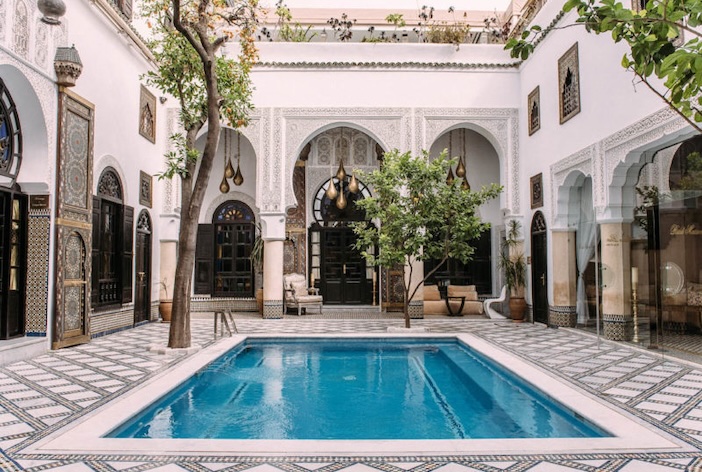
Speaking of accommodation, we stay at the Riad La Maison Bleue. Staying in a riad is so ingrained in the experience of visiting Morocco, and for good reason. Like any Fes riad with its msemmen, the restaurant here offers beautiful sunset views and delicious dinners. The pool in the central courtyard is surrounded by palm and mandarin trees and is shady most of the time.
Another evening, we eat at Dar Tazi restaurant’s roof terrace, a guest house itself. One by one, the muezzin’s call to prayer starts up in Fes’ mosques, just as the sun is setting. Immediately below Dar Tazi, vendors sell sodas and bananas while mums and sisters sit talking on their phones and to one another as kids play catch or wheel around on bikes. It’s 10.45pm on a Thursday. Moments like this I enjoy just as much as seeing all the official sights. Fes may have just trumped Marrakech.
Direct flights to Fes operate from London Stansted with Ryanair. For more information about Fes and Meknes, including details of suggested tours, visit the official tourism website at www.visitmorocco.com.