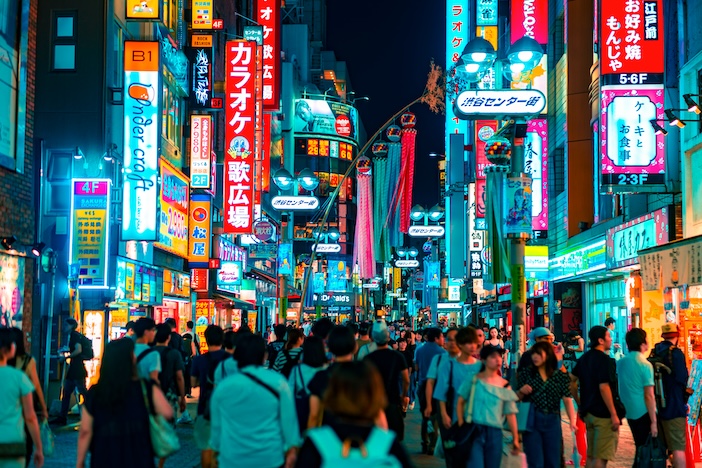
Samurai swords, snow monkeys, tea ceremonies and a son with a better eye for the road: Sarah Tucker on a week in Japan that refused to stay in its box…
I have always been a good traveller. Or at least I have had plenty of time to become one. I know how to navigate airports, read a map and organise a trip without needing to be rescued by a 27-year-old.
Tom, my grown-up son, has a different approach. He is quicker with technology, less interested in being right and considerably more willing to investigate something he does not understand.
I discovered this shortly after midnight in Tokyo.
Our Cathay Pacific flight was two hours late. I wanted an Uber. Tom wanted two trains and a ten-minute walk. I went with the trains.
He was right.
This was becoming a theme.
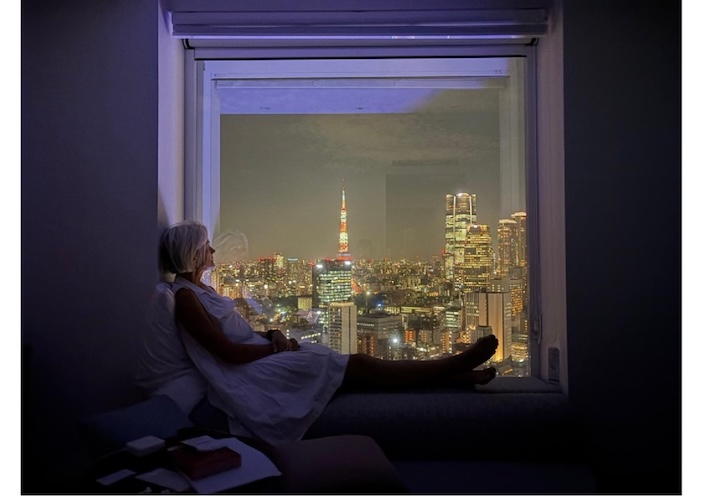
Tokyo seemed to operate according to the principle that nothing needed to remain in the category I had assigned it. Our hotel, Park Hotel Tokyo, had turned rooms into works of art. Toilets had more technology than some cars. Even the distinction between ancient and futuristic seemed unnecessarily rigid.
At the Studio Ghibli Museum, the instruction is ‘Get lost together.’ It seemed particularly appropriate for travelling with a grown-up son.
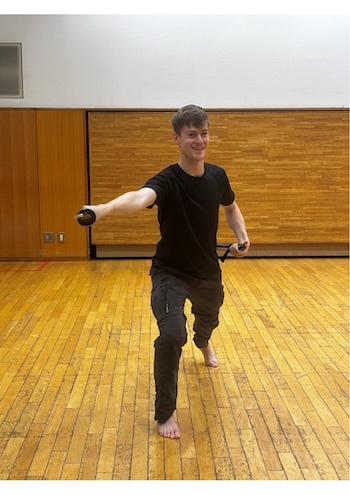 We also had a private samurai sword lesson. We learned to draw, pose and swing wooden swords before practising in pairs. Tom, having spent years at drama school, was a natural. Give him a sword, a stance and an audience and he was, frankly, in his element. I was still trying to remember what my feet were doing.
The lesson was connected with Tetsuro Shimaguchi, sword artist and choreographer associated with Kill Bill. It had a pleasing seriousness to it, although pretending to be Uma Thurman was difficult to resist.
Then came Shibu Onsen.
Here I encountered what I can only describe as Crouching Tourist, Hidden Shopkeeper.
I wanted a Japanese knife. The shopkeeper was crouched behind the counter. The other potential customers and I stood outside, peering in. He peered back.
We were all waiting to discover whether the shop was actually open. Nobody seemed prepared to be the first to find out. He stayed crouched. We stayed outside. It was a Mexican standoff, Japanese style, with tabi socks at stake.
Japan was proving to be brilliant and bonkers.
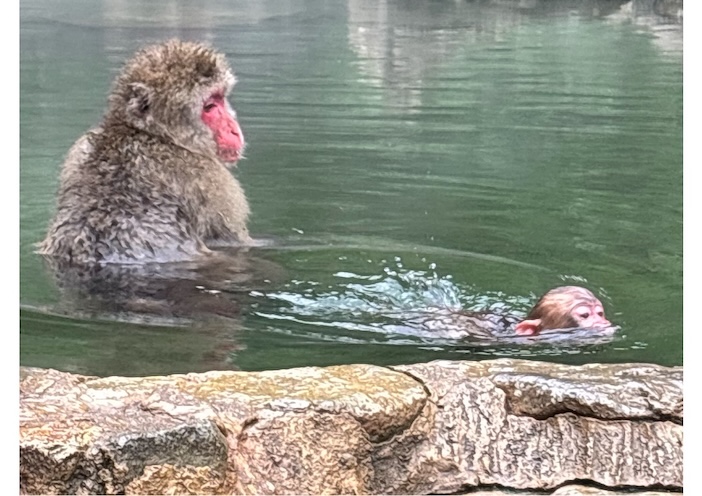
The snow monkeys were less complicated. They live in the mountains above Shibu Onsen and have apparently perfected the art of ignoring tourists, which is probably the healthiest possible attitude towards tourism.
By the time we reached Osaka, my categories were becoming distinctly unreliable.
Our food tour took us through Tenma, where Tom tried everything. Miso walnuts, yam croquettes, chicken stuffed with crab meat and an astonishing assortment of dishes I would never have ordered simply because I would not have known what they were.
Tom did not need to know what something was before deciding to taste it.
I preferred to establish the ingredients, consider the implications and decide whether the dish belonged in one of my existing categories.
Our guide also corrected my pronunciation of arigatou gozaimasu after several increasingly inventive attempts.
I had travelled thousands of miles to discover that I apparently could not manage four syllables.
There was more ritual in Japan than I had anticipated. At our tea ceremony in Kyoto, every movement had a purpose. The preparation was as important as the tea. There is a Japanese concept, ichigo ichie, roughly meaning one life, one meeting. The idea is that each encounter is unrepeatable and therefore deserves attention.
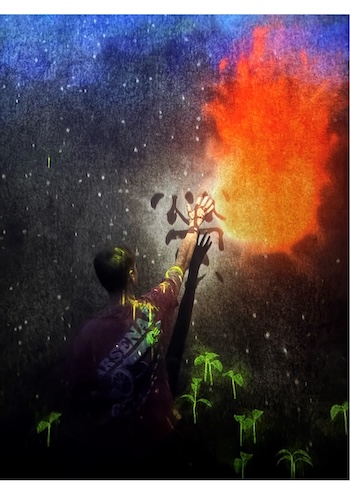 I liked that.
I also liked the fact that the Japanese had apparently managed to turn paying attention into an art form.
At teamLab Biovortex Kyoto, Tom was less interested in whether what we were experiencing qualified as an art gallery than in what it might become. His verdict was simple.
‘It’s the future of art galleries.’
He had no particular need to put it in the right box.
Neither did Nintendo, which started out in Kyoto as something considerably humbler than the global gaming company it is today. Tom was fascinated by the distance between the company making playing cards and the company making worlds.
Then Hiroshima.
The Peace Memorial Museum did not simply remind us what we must not forget. It confronted us with what we had already forgotten.
Tom commented on that, too.
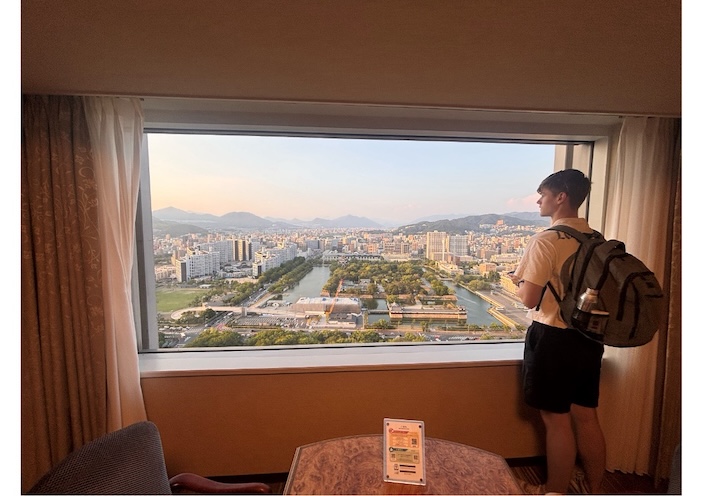
We both found it frustrating and disturbing. How can something so terrible become something we know about, remember in outline, and yet have somehow already forgotten in any meaningful sense?
As we left the museum, that question stayed with us.
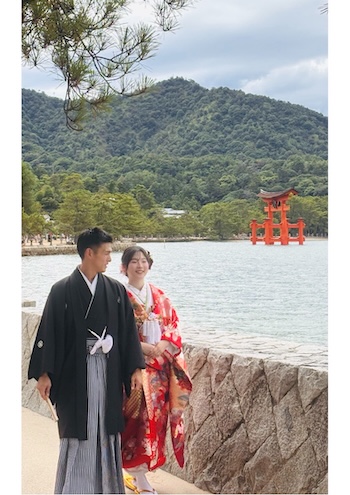 Outside, people went to work. Children went to school. Trams moved through the city. Ferries carried passengers to Miyajima, where a couple were getting married.
That coexistence was difficult to absorb.
Later, in the rain, Tom noticed several older Japanese men without umbrellas and offered them his.
I was concentrating on staying dry.
He was concentrating on somebody else.
He had simply noticed something I had not.
It was an irritatingly good lesson.
I had spent years becoming good at travelling. I had learned how to plan, navigate, book, anticipate and avoid unnecessary disasters.
Tom had retained something experience can quietly erode: the willingness to look again.
Perhaps that is why Japan suited him.
It is a country where a toilet can have a spirit, a playing card company can become Nintendo, a tea ceremony can contain an entire philosophy and a 27-year-old can look at a room full of digital art and simply ask what comes next.
I had arrived thinking I knew how to travel.
I left wondering whether that was quite the same thing as knowing how to look.
Sarah (and Tom) flew with Cathay Pacific. For more information, and for bookings, please visit www.cathaypacific.com. For more information about Park Hotel Tokyo, please visit www.parkhoteltokyo.com.
Photos by the author. Header image: Tokay at Night by Jezael Melgoza