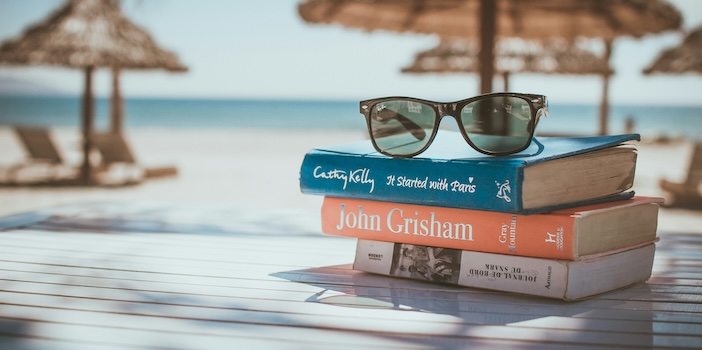
Whether you’re reading poolside, on a delayed train, or hiding from the heat with the curtains drawn, Philip Cottam’s summer selection has range: espionage in Cold War Berlin, small-town America unravelling, a river fighting for its life, and one extraordinary woman’s journey through revolution and war…
The Predicament by William Boyd
Gabriel Drax, travel writer and part-time spy at the centre of The Predicament, first appeared on the scene in Gabriel’s Moon, first published in 2024. The Predicament sees Gabriel well and truly embedded in the secret world, caught between his two employers, MI6 and the KGB, as well as the internal politics of the CIA. To make matters even more complicated he becomes involved in an intense but somewhat on-off relationship with his MI6 handler. Gabriel certainly confronts several predicaments both personal and professional. It all makes for a heady mix that William Boyd handles deftly.
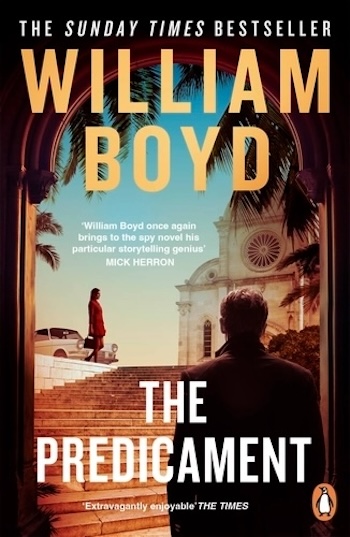 The main thread of the story centres on a rogue element in the CIA and the build-up to the famous Kennedy visit to Cold War Berlin in the summer of 1963 and his subsequent assassination in Dallas later that year. Gabriel’s journey to Berlin starts with a dangerous mission to violence ridden Guatemala City. What happens sets the scene for what follows in Berlin. The Berlin section of the story is cleverly plotted around the Kennedy visit. It also sees Gabriel, part-time amateur agent, starting to acquire the street-smart skills and situational awareness he really needs to survive.
With The Predicament Boyd has written a worthy successor to Gabriel’s Moon. Gabriel Drax is a more firmly established character and Boyd continues to make good use of his descriptive talents in creating the different atmospheres that surround Gabriel whether at home in London and Sussex or when in Berlin and Guatemala. Given the mention of a trip to Moscow by his Russian handler, it would seem that, having successfully navigated his way through the predicaments confronting him, Gabriel’s adventures in the world of espionage are not yet over.
The Predicament is out now in paperback, published by Penguin.
American Rust by Philipp Meyer
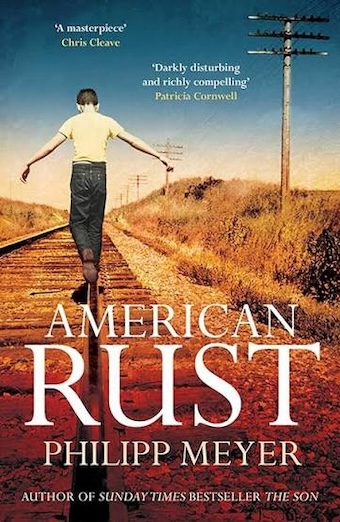 With the upcoming mid-term American elections and the emergence of divisions amongst both traditional Republicans and, perhaps more significantly, amongst the MAGA base of the electoral alliance that swept Trump to power for a second term it would seem a good time to read or even re-read American Rust by Philipp Meyer. Published to acclaim in 2009 it was subsequently turned into a TV crime drama in 2021. In the novel Meyer sets out to illustrate the decline of the American middle class through the impact of an accidental murder in a fictional town set in an area of Pennsylvania known for its run-down and economically depressed steel towns.
The narrative is driven by a series of relationships. The most important is that between two young friends and how they handle their differing responsibilities for the killing. There is then the old relationship between the mother of one of the young men and the Police Chief investigating the murder. The result is a series of conflicts of loyalty and integrity. All takes place in a community marked by declining prosperity and the accompanying tensions that arise when both aspirations and expectations have been damaged.
Meyer makes effective use of a stream of consciousness technique as the mechanism through which he narrates his story. His characters are closely observed with their behaviours well imagined and their moral conflicts well-constructed. As for his writing style it is sparse, gritty and atmospheric. When first published American Rust drew comparisons with Faulkner and Steinbeck from some reviewers. It certainly opens the door onto how the frustration and despair of once prosperous communities at being sacrificed on the altar of globalisation led to the attraction of the MAGA movement for many.
American Rust is published by Scribner UK.
Is a River Alive? by Robert MacFarlane
Robert Macfarlane first established himself as a master of the language of landscapes and mankind’s relationship with nature when he published Mountains of the Mind in 2003. Since then, he has gone on to publish several more looking at different aspects of those two themes, of which Is a River Alive? is the most recent. Is a River Alive? takes a journey, part elegiac and part an alarm call, to dying rivers and those trying to save them, in Ecuador, India and Quebec. 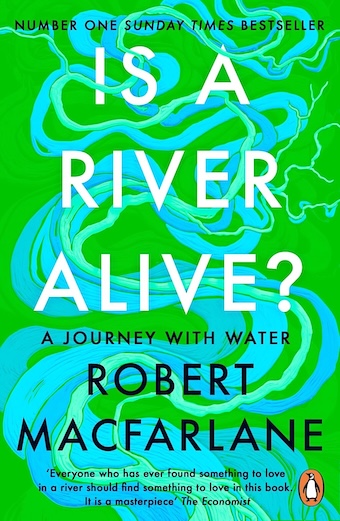 Like all its predecessors the book is thoughtful and intriguing and opens doors onto nature in unexpected ways. Given the increasingly angry outcry against the pollution of our rivers and streams it is certainly timely. It also includes, appropriately close to his home in Cambridge, the story of a spring that because of lack of care frequently dries up damaging the landscape it feeds.
In Ecuador MacFarlane visits a river and its tributaries in the cloud forest, a rain forest in the mountains where clouds linger amongst the trees. The river is threatened by exploitation of nearby mineral deposits. Damage to the purity of the water will also damage the virgin forest, its flora and fauna. The threat is underlined by MacFarlane’s companion, a scientist who has discovered previously unknown fungi. In India MacFarlane visits the three main rivers of Chennai which have been so damaged by chemical and other pollution. Here the fight for improvement is being driven by activists through the court system. In Quebec his river odyssey is completed with a canoe trip down the wild pure waters and rapids of one of the many rivers that flow through the province. It is an adventure that stands in stark contrast to the previous two journeys.
Does MacFarlane answer the question that is his title? The answer is a resounding yes. He shows how both landscape and humanity can become impoverished if the rivers that feed them become polluted and die through a combination of thoughtlessness and greed. His style is not polemical. It is subtle, elegant and thought-provoking. Above all he brings the landscapes that enthral him to life.
Is a River Alice? is published by Penguin.
I, Vera by Miranda Seymour
Miranda Seymour has written an unputdownable biography with I, Vera. She has certainly been helped by her protagonist and the turbulent times she lived through. Born a Lithuanian Princess in 1870 Vera Ignatievna Gedroits grew up to become the first woman in the Russian Empire to become a doctor at the Imperial Court, a battlefield surgeon and a professor of medicine. She was also a writer, both medical and literary, as well as an occasional poet. 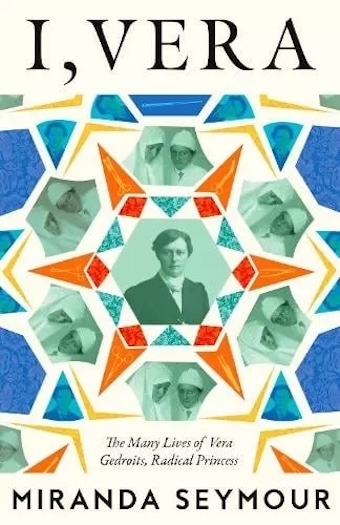 All this while living openly as a lesbian, getting arrested as a student political activist, surviving the violence of the October Revolution, although she did get wounded. She also avoided the frequent Bolshevik purges that followed the revolution until 1930 despite her connections with the Imperial family. Her eventful life ended two years later when she died of cancer while still in the company of her longtime partner the Countess Maria Nirod.
For all her privileged upbringing and her close connection to the Imperial family Vera was in no doubt that her commitment as a doctor was especially for those who needed her skills most. It was not a coincidence that during her first job as a qualified doctor in a hospital attached to a factory she was known as the ‘people’s doctor’. She never worried about danger and became a military surgeon during the Russo-Japanese War, the First World War and the civil war that followed the October Revolution.
As for her lesbianism she had to be discreet at first, especially when attached to the Imperial Court at Tsarskoe Selo (now usually called Pushkin). Her long relationship with the Countess Maria Nirod, which began during the time Vera was recovering from her wound in 1918, was more open. This was because of the more relaxed atmosphere towards social mores in the early years of post-Imperial Russia.
Miranda Seymour has produced a real page-turner while at the same time remaining true to the historical record even when it contradicts Vera herself. She did write five autobiographies. Seymour also puts Vera’s significant achievements in context, whether her contributions to medical science or just in navigating the very different social and political environments of Imperial and Revolutionary Russia. Above all the story she tells of this remarkable and praiseworthy woman makes for a life-enhancing read.
I, Vera is out now published by William Collins, available from Daunt Books.
Header photo by Link Hoang courtesy of Unsplash