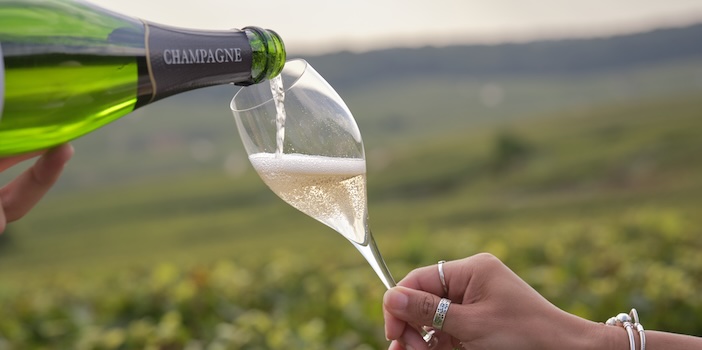
Umesh Patel goes on a Champagne tasting adventure in Reims, where he discovers how Champagne has evolved through the centuries and why his spittoon remains surprisingly dry…
Before the curtain rises on the first act of Rossini’s Il Turco in Italia at Glyndebourne, a bottle of Le Gallais Cuvée des Cèdres sits beside my homemade spinach and goat’s cheese quiche. Trying to open the bottle while fending off an uninvited wasp, who has decided to join our picnic, is no mean feat.
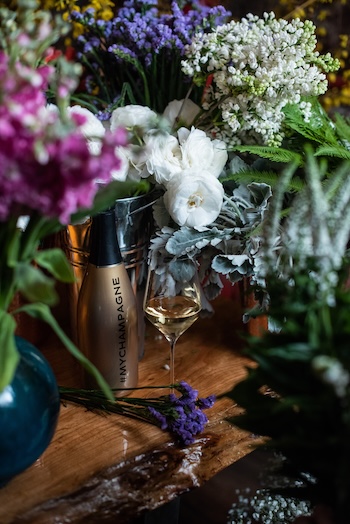 The Champagne has no added sugar, or ‘zero dosage’ as it’s known in the trade, preferably said with a French accent. Clean and dry, it cuts through the richness of the goat’s cheese and, to be honest, feels far better suited to lunch here on the Sussex Downs than, say, a wedding toast.
That tells you something about Champagne today. It’s been the drink of celebration, but it’s moving beyond the ritual of the toast and finding its place at the dinner table alongside food.
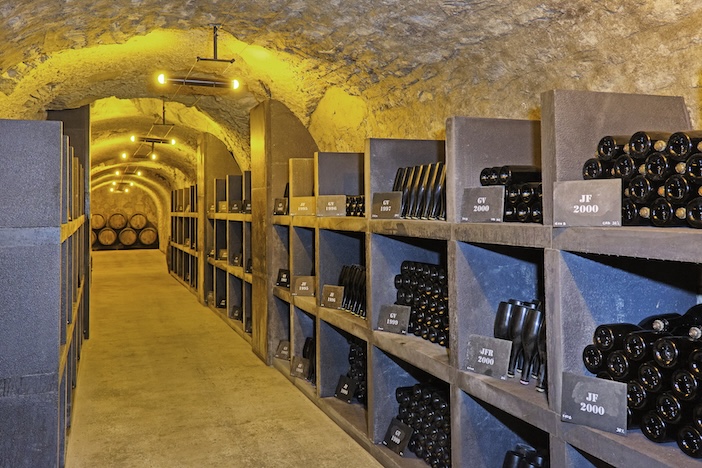
To understand how Champagne has evolved, you have to leave the manicured lawns of Glyndebourne behind and head beneath the north-eastern French city of Reims, where more than 200 kilometres of chalk tunnels hold millions of Champagne bottles slowly maturing in cool, dark cellars.
These tunnels have witnessed more than the ageing of wine; during the First World War, as Reims endured bombardment, they became shelters for families seeking refuge beneath the city, while above ground much of the surrounding vineyards were destroyed. In the Second World War, while the city lived under German occupation, it brought further disruption to Champagne producers and the wider trade.
Yet resilience is only part of the story – innovation has mattered just as much. Champagne’s history is full of people willing to question the way things had always been done, and some of its most influential innovators were women.
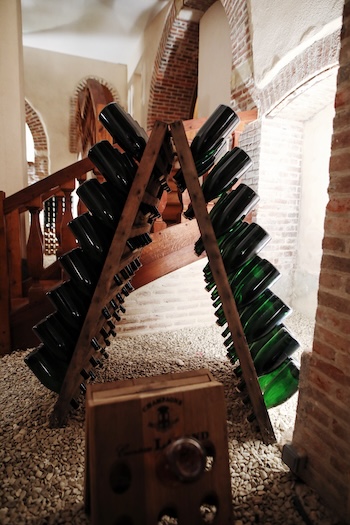
If you’ve seen the excellent Haley Bennett in Widow Clicquot, you may recall her portrayal of Barbe-Nicole Ponsardin turning her kitchen table into the unlikely setting for one of Champagne’s most important innovations. By perfecting the riddling process – slowly turning and tilting bottles until the yeast sediment gathered neatly in the neck, ready to be removed – she transformed a cloudy, unpredictable wine into the clear Champagne we know today.
 A generation later, Madame Pommery recognised that tastes were changing, particularly among British drinkers, one of Champagne’s most important markets. They had begun to tire of the sweeter styles of the day, often served alongside dessert. She championed a drier style that helped establish brut as the benchmark it remains today.
Charlotte Le Gallais of Les Cadres Le Gallais belongs to a new generation of grower-producers. Her vineyards, along with the charming turreted château she calls home, once formed part of the Veuve Clicquot estate. Two centuries later, it’s hard not to see a little of Barbe-Nicole in her: the same instinct to question convention and experiment. The challenges facing Charlotte, however, belong firmly to the present.
Before exploring the cellar, we stopped to watch a flock of Ouessant sheep happily grazing between the vines. Their role is simple: keep the grass trimmed and thereby reduce the need for machinery and return nutrients to the soil as they go.
Organic viticulture sits at the heart of Charlotte’s work, with a focus on biodiversity, soil quality and the health of the vines. While the grandes maisons continue to dominate exports, producing Champagne on a vast scale for markets around the world, growers such as Charlotte take a more intimate approach, working with smaller quantities and a closer focus on the vineyard itself.
Organic Champagne remains a relatively small but growing part of the region. Certified vineyards now account for just over 8% of the region, a small but telling sign of the wider move among growers towards more sustainable ways of working.
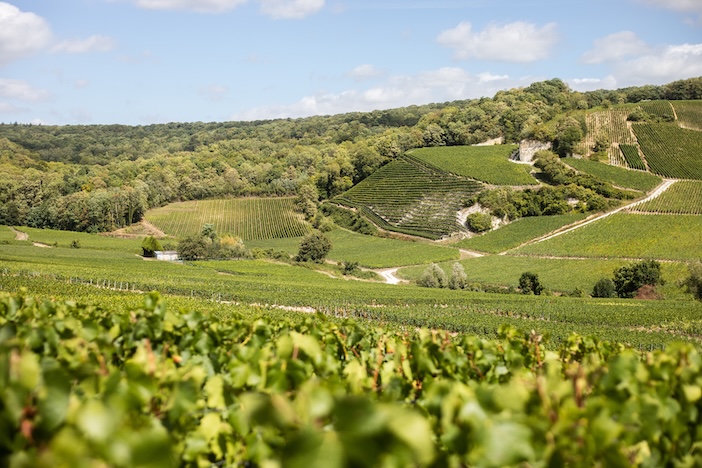
The problems Charlotte faces are very different from those confronted by Barbe-Nicole two centuries earlier. The question is no longer how to remove yeast sediment from a bottle, but how to care for the vineyard itself. The answer, as it has always been in Champagne, is adaptation.
Champagne’s ability to adapt has depended on people working together, and that’s where the Comité Champagne comes in. Bringing together growers, producers, cooperatives and Champagne houses across the region, it represents their shared interests while protecting what makes Champagne, well, Champagne. It defends the use of the name around the world, funds research and helps guide sustainability efforts. Perhaps most importantly, it gives family growers such as Charlotte and some of the world’s biggest luxury houses a seat at the same table.
It does, however, face one battle that, sadly, no amount of regulation can defeat: the dinner party guest who casually calls anything fizzy ‘Champagne’.
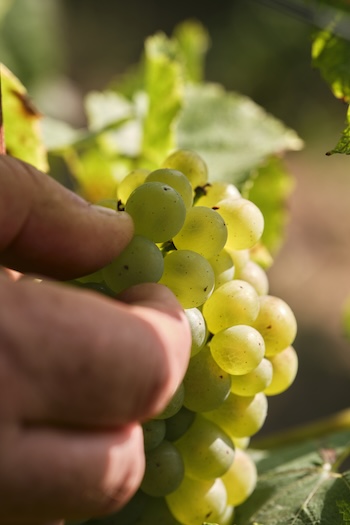 Climate change, however, presents perhaps Champagne’s greatest test yet. For much of its history, the region’s northerly position meant growers were waiting for grapes to reach the right balance of sugar and acidity. Warmer conditions have brought harvest dates forward, with grapes now reaching maturity earlier than before.
One response lies in the vineyard itself. Most people know the three main grapes used in Champagne production: Chardonnay, Pinot Noir and Meunier. What is less well known is that seven grape varieties are permitted under the appellation rules. Now, as the climate changes, new varieties better suited to warmer conditions and more resistant to disease are being introduced, including Voltis, developed to reduce reliance on chemical treatments while supporting more sustainable farming.
The changes are not only taking place among the vines. They are happening at the dining table too.
I discovered this over lunch at Le Réfectoire, the restaurant at Domaine Vranken-Pommery. A salmon tartare with Timut pepper and crisp vegetable spring rolls arrived with Pommery Apanage Blanc de Blancs, followed by a traditional lamb navarin en cocotte paired with Pommery Apanage Brut 1874. The blanc de blancs brought out the freshness of the salmon, while the fuller-bodied Brut 1874 had more than enough depth for the slow-cooked lamb. It was another reminder that the old rules about when and how Champagne should be enjoyed no longer seem quite so rigid.
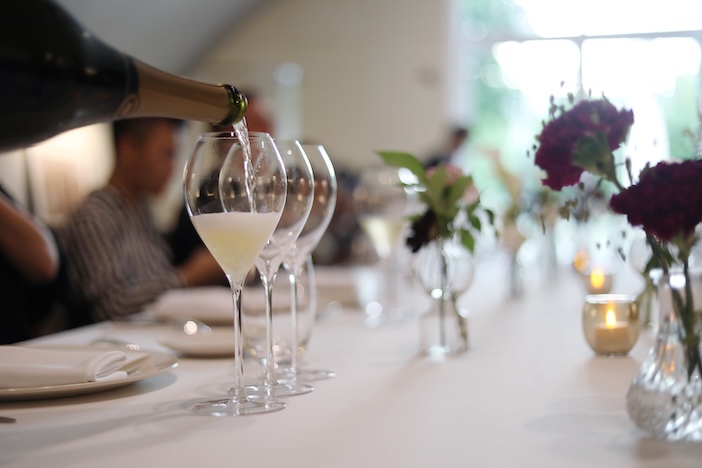
From Barbe-Nicole changing the way Champagne was made two centuries ago to growers such as Charlotte embracing organic farming today, the story has always been one of adaptation.
That willingness to look beyond tradition is now being reflected outside Champagne itself. Several houses have been investing in vineyards across the Channel, including in Sussex, where warmer conditions have created new possibilities for sparkling wine production.
As the first bell rings, signalling that it is time to leave the picnic lawns and take our seats for the opening act, we finish the remaining Le Gallais in our glasses. The bottle that began its journey in the Vallée de la Marne ends the afternoon on a picnic table in Sussex, which feels like a rather fitting place to end.
Umesh travelled to Reims by Eurostar from London St Pancras to Paris, then continued by SNCF to Champagne-Ardenne TGV. Please visit Comité Champagne for more information about Champagne and its history. For information about Charlotte Le Gallais and her vineyard, please visit Le Gallais. And for details about Le Réfectoire at Domaine Vranken-Pommery, please visit Le Réfectoire.