Rob Rees heads to Italy’s wild northern frontier, where ancient cheeses, high-altitude wines and new lifts serve up a ski and gastro feast forged in snow, sun and centuries of resilience…
Few Alpine ski resorts enjoy such an extraordinary setting as Pila. Perched on a broad, sunny shelf above the ancient city of Aosta, it is one of the very few places in Europe where you can wander Roman streets in the morning before gliding by gondola into a high Alpine ski area less than half an hour later. That union of history, landscape and modern mountain infrastructure has always made Pila distinctive. However, its recent €60m lift transformation has made it one of Italy’s most compelling short-break ski destinations, particularly if you use straightforward Turin Caselle airport.
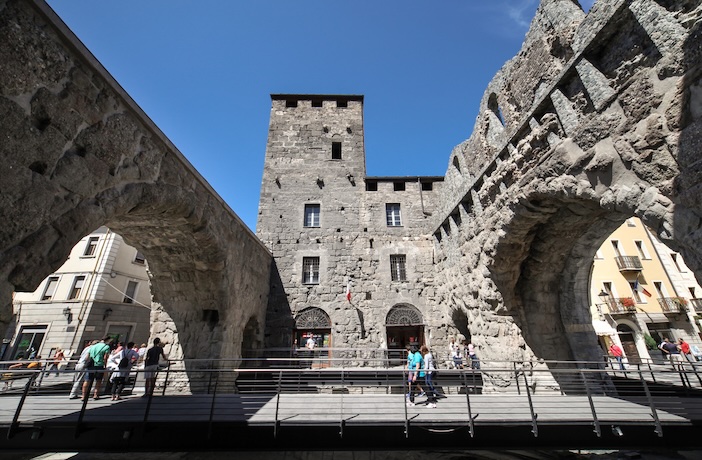
Stand in the middle of Augusta Praetoria and you get the feeling that this is more than a provincial capital. The Porta Praetoria – the best-preserved Roman city gate north of the Alps – slams into view. In 25 BC, Caesar Augustus’s legions marched through here to crush the Salassi tribes and seize control of the valley linking Italy with France and Switzerland.
Here the great Alpine routes converge: west over the Little St Bernard Pass into France, north through the Great St Bernard Pass into Switzerland, while the Mont Blanc Tunnel provides the modern route beneath the Alps’ highest peak.

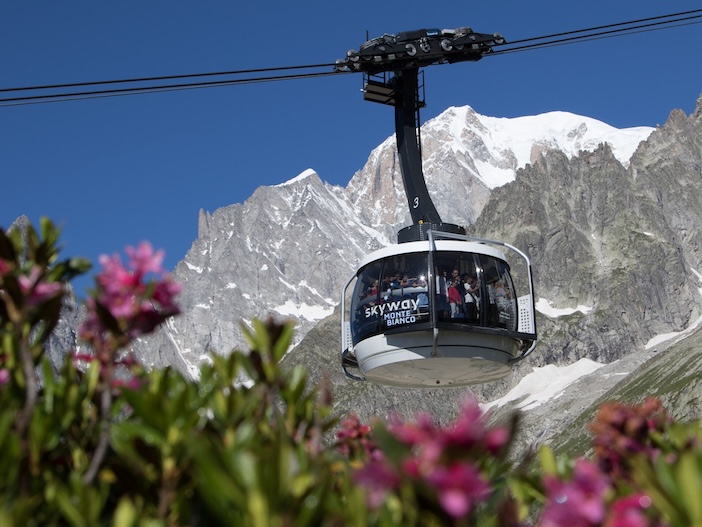
Valle d’Aosta Skyway (photo Sébastien Montaz, courtesy of lovevda.it)
Aosta has been a crossroads ever since. Burgundians, Lombards and Franks fought over it; Charlemagne thundered through on his way to coronation. In 1191, the Carta delle Libertà Valdostane helped establish the autonomous character the region fiercely guards today. That independence is evident in the food, language and architecture. The market overflows with Fontina, cured meats and wines that can more than hold their own against neighbouring Piedmont. Stone-roofed farmsteads, wooden balconies and medieval arcades sit beneath mountains that have dictated life here for centuries.
Our base is the Duca d’Aosta, on historic Piazza Narbonne, a thoughtfully curated four-star boutique hotel that marries mid-century Italian retro flair with crisp contemporary luxury. Restored with immaculate taste, it has warmth and personality rather than the faded glory of so many Italian Alpine hotels. Best of all, it sits just steps from Aosta’s pedestrian centre and around ten minutes’ drive from the Pila gondola.
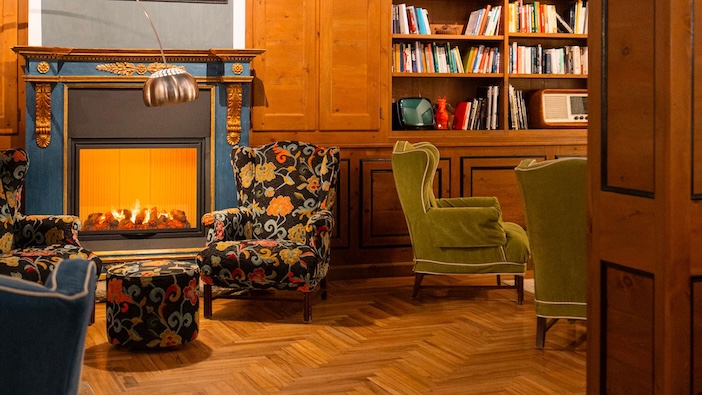
Breakfast is taken downstairs in the hotel’s patisserie: buttery pastries, artisanal cakes and rich Italian coffee, served as Aosta wakes around you. It is dangerously easy to linger – particularly when you have a whole day on the mountain ahead. Then it’s to the most unprepossessing ski hire shop – in a grubby car park by the train station, behind a hypermarket by the city bypass – and into the gondola. Enjoy the contrasting 1200m rise up into Pila’s snowy nirvana.
Up at the ski-in, ski-out Pila village, slopes rise from 1,800m to 2,700m, with around 70km of pistes spread across sunny, snow-sure terrain. The €60m investment has transformed the lift system, including the new eight-seater Colle Basset Express and the Pila-Couis gondola. The latter whisks skiers towards the summit in around 15 minutes, opening up spectacular views across Mont Blanc, the Matterhorn, Monte Rosa and Grand Combin.
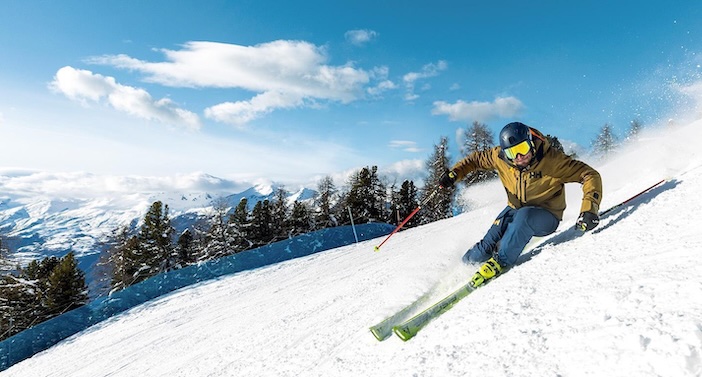
The skiing is Pila’s trump card. Beginners get beautifully groomed greens and blues through pine forest around Lago di Pila, while intermediates – the resort’s sweet spot – have a satisfyingly varied network of reds, with enough terrain to keep you exploring rather than repeating the same runs. Stronger skiers now have three new blacks – Serpentina, Cresta Bianca and Jolanda Extreme – adding properly testing terrain to the mix. Look left and Mont Emilius rises to 3,559m; ahead, Grand Combin and the Swiss peaks form a wall of ice and stone. This is big-mountain scenery without the big-resort attitude. And if you fancy exploring further, Pila is an excellent base for skiing across the wider Aosta Valley: a different hill, village and view almost every day.
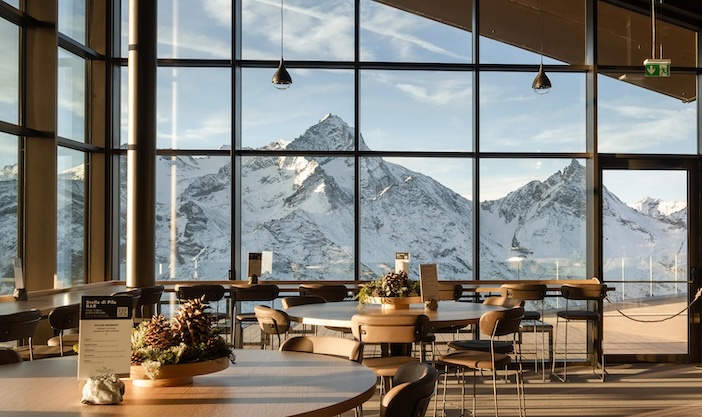
The mountain’s new showpiece is Stella di Pila, a glass-fronted restaurant at over 2,700m, which opened last season. Its floor-to-ceiling windows frame the peaks and the menu does the same for Valdostan cooking: carbonnade slow-cooked in local wine, pizzoccheri with cabbage and aged Fontina, and wild boar ragù. It is mountain dining without the usual clichés – serious regional food served in an extraordinary setting.
Back in Aosta, the eating continues. Fontina DOP cheese is the undisputed star, creamy and nutty, while Toma cheese brings a more rustic tang. Boudin – the valley’s traditional blood sausage – remains a staple of local rural cooking and can be found at the Saturday market in Piazza del Mercato, where farmers and butchers set up early. The wine is equally fascinating. Vines grow on steep, south-facing slopes, some reaching altitudes of 1,200m. Prié Blanc delivers crisp, mineral whites; Petit Rouge produces fresh, characterful reds; Nebbiolo from the valley provides the weightier option. These are wines made for mountain food rather than fashion, and they rarely leave the valley with the recognition they deserve.
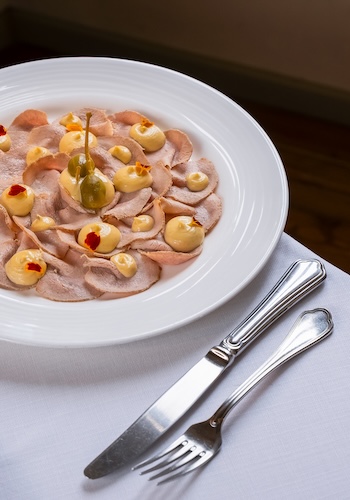 Dinner took us first to La Grenette on Via Porta Pretoria, right in the historic heart of Aosta. It proved a good introduction to the best veal cutlet on the bone I’ve ever enjoyed: La Valdostana – crisp grissini crumb, tender veal, molten alpine Fontina, smoky St Oyen ham and golden roasted grenaille potatoes.
The following evening we ate at Osteria Da Nando on Via Sant’Anselmo, an Aosta institution serving traditional valley classics and listed in the Michelin Guide. It has been a Scarpa family affair since 1957, when Ferdinando ‘Nando’ Scarpa and his wife Germana opened the original Taverna da Nando.
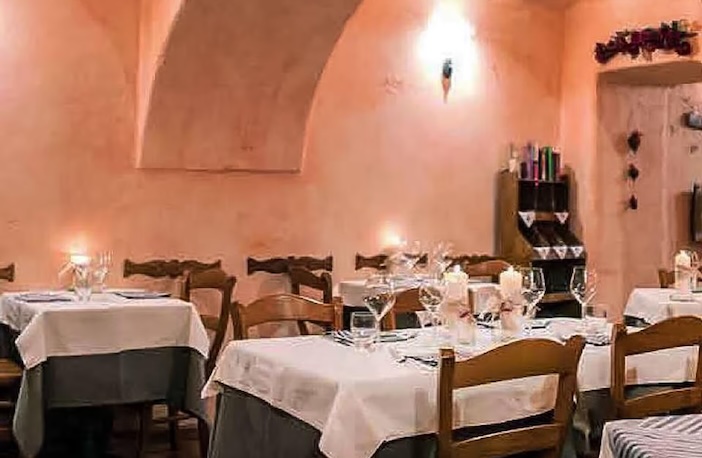
There is nothing remotely showy about the place. It is small, intimate and almost deliberately old-fashioned: a little corridor leading to a compact dining room, a handful of neatly laid tables, an open kitchen and the cellar tucked behind an arch. Polenta with fonduta, carbonada with boiled potatoes (the Valle d’Aosta version of beef braised in wine) and crespelle alla valdostana (classic buckwheat Alpine-style crêpes enriched with the region’s great cheeses) send us home as very happy guys.
That is ultimately Pila’s appeal. It has never tried to become another glitzy Alpine resort. Instead, it has invested intelligently in lifts, transport and the mountain experience while Aosta retains its Roman streets, independent character and formidable food culture. Few ski breaks offer this combination: breakfast in a stylish boutique hotel, Roman history before lunch, superb intermediate skiing in the afternoon and proper food at night. Pila is an unusually complete Alpine proposition – and, after its bold lift transformation, an underestimated one that may not remain a secret for much longer.
Fly to Turin Caselle airport, from where Aosta is an easy transfer by road. For more information about Pila, including the new Pila-Couis gondola and Stella di Pila restaurant, please visit www.pila.it.
Hotel Duca d’Aosta is at Piazza Narbonne 8, 11100 Aosta. For more information and bookings, visit www.hotelducadaosta.com.
For more information on the Aosta Valley, visit www.lovevda.it.
Header image: Valle d’Aosta Skyway (photo Antonio Furingo, courtesy of lovevda.it)