In which Larry heads into Switzerland’s lesser-known Simmental to discover a village that has kept its secrets close — hot springs, quiet pistes and a sense of authenticity that lingers long after the snow melts…
It’s quite something when you glance out of the window from the train and across the fields, dotted with chalet-style barns, the imposing black granite wall of the Bernese mountains staring back at you. They just seem to begin. No foothills, no undulating introduction, just – boom – mountains. They’re so lofty their meringue-capped peaks loom above the apartment roofs of Thun as the train continues on.
Look out of the opposite window and you’re greeted with the sun-dappled deep blue of Lake Thun, bordered by picture-book chalets and rolling meadows. Well, this is Switzerland. Perhaps definitive Switzerland. The title of this article may be ‘Lenk’, but I furnish the story with this for two reasons: first, because it takes a little time to get there and, secondly, because never was the old idiom truer that travel is about the journey. The four hours it takes to reach Lenk from Zurich, via Bern and Interlaken, are graced with some of the most delightful, absorbing views you could ever wish to see from a train.
Ask anyone – even some Swiss – where Lenk is and you’ll likely get a blank look. Officially ‘Lenk im Simmental’, it’s a small village in the Simmental valley in the Bernese Oberland. Its name comes from the hill it sits at the foot of, such that it’s referred to as being at Lenk, not in Lenk. While it has a population of a mere 2,300, similar to nearby Gstaad and Adelboden, unlike its loftier, more well-known neighbours that population is 95% Swiss. It’s their secret.

So, yes, it’s a small village, pleasantly explored (which you can do in about ten minutes), particularly if you start the moment you step off the train, armed with a coffee from the most exceptional café ever to grace a railway station – it puts the over-priced boutique London offerings to shame. But Lenk also holds another, less obvious secret.
The Lenkerhof Gourmet Spa Resort is 300 years old, which ordinarily wouldn’t sound odd, but given Switzerland has only really had tourism for the last 150-something years, you have to wonder who it first catered for. The answer lies in the natural sulphur springs – evident from the slightly odiferous stream that tumbles down the hillside behind the hotel – and it’s been known for its spa ever since. It has retained its historic charm yet feels tasteful rather than tired.
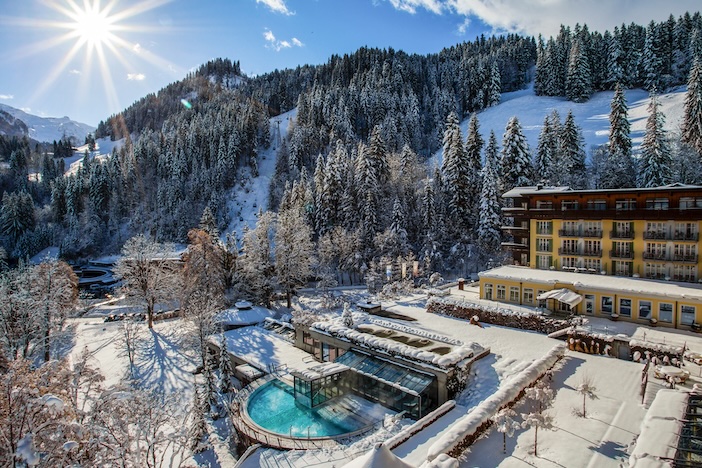
Its position, with views across the valley floor, features a heated outdoor pool – and sauna – that make full theatrical use of that vista, and the spa is comprehensive in the classic sense: a range of saunas and steam rooms, including an ice room at –10°C, rather than an encyclopaedia of esoteric treatments.
The restaurant, Spettacolo, is not too shabby either. The ‘gourmet’ soubriquet in its name is well deserved, its Swiss chef hailing international pedigree and testament to the hotel – and Lenk – that he should return to the village. A signature five-course menu is a blessed relief from lava flows of fondue and rösti, complete with amuse-bouche and the kind of quietly choreographed service where napkins magically reappear folded when you leave your chair.
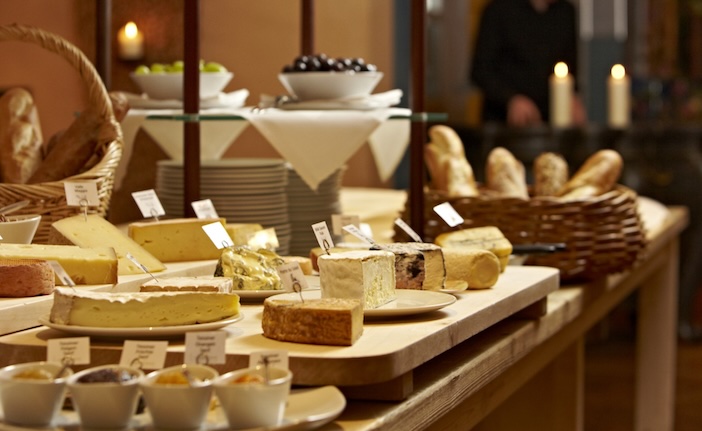
Perhaps the most memorable part of dining, however, is the extraordinary cheese buffet: some forty-five cheeses taking over the entire counter, most of them local. It becomes not just a course but an education – a deep insight into Swiss culture rendered in milk, salt and time.
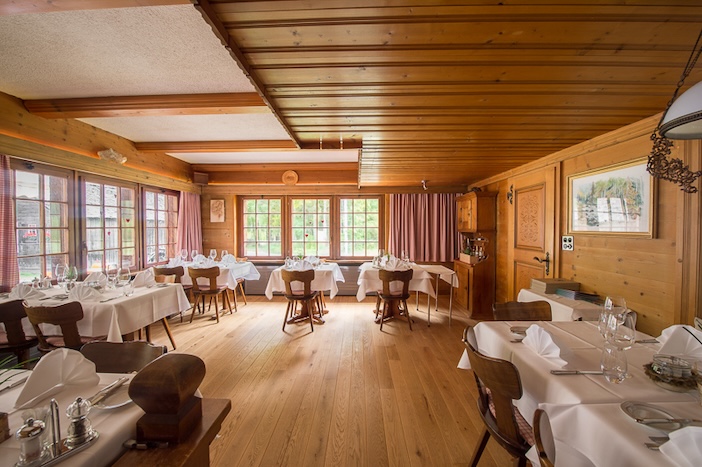
If the ‘classics’ are still calling, further up the valley the restaurant Simmenfälle sits in an almost impossibly picturesque spot below the Ammertenhorn, which harbours a glacier and lake, sending its namesake waterfall tumbling down at the end of the garden. It’s as rustic as you can get, cocooned in stripped pine, serving pots of fondue, making this a delightful immersion into traditional Swiss dining. It is also technically phone-free – electromagnetic-free, in fact, the hotel offers a ‘digital detox’ – encouraging you to surrender to nature rather than signal.
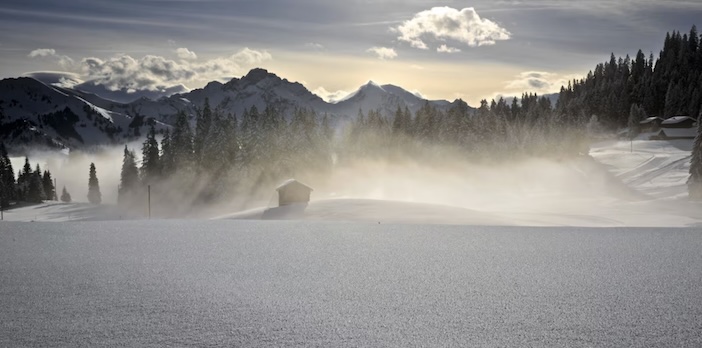
And what about the skiing? Here, too, Lenk keeps its character. Our guide tells us the area is famous for the care of its slopes, and you sense that because this is a largely Swiss destination, there is a particular pride taken in the pistes. These are not tourist-strewn slopes.
From the village, a gondola rises to Metschstand, affording sweeping views of the valley – keep an eye out for chamois punctuating the snow. Although the resort sits comparatively low, the surrounding meadows mean it doesn’t need excessive snowfall to be skiable. It’s the topography that does the work: the variety of valleys, aspects and contours making for a pleasing mix of piste styles. I spend the morning with my guide crossing over to Adelboden, saving Lenk’s side for after lunch.
More importantly, there are no crowds. It’s quiet, family-friendly and unpretentious; what it has in authenticity, it doesn’t lack in provision or amenities.
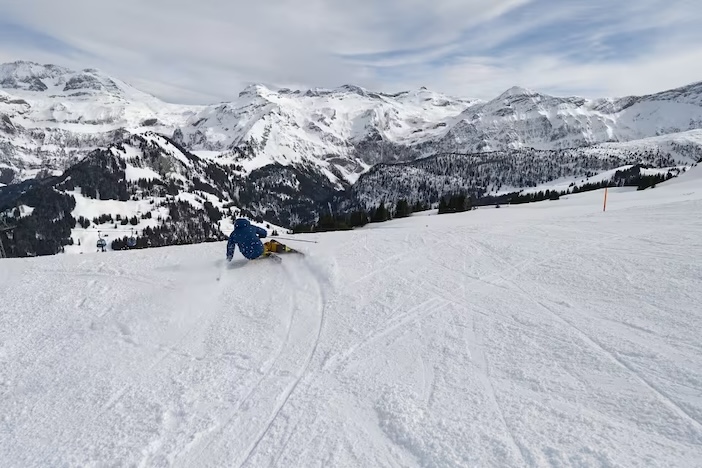
The slopes on the Lenk side are broader – our guide’s favourites. These are the little insights you gain from a local: which slopes catch the sun and which keep their snow, which stay smooth, which get busy, which don’t develop afternoon moguls. Behind the hotel, within walking distance, another gondola takes you up the opposite side of the valley; great children’s runs here, including a languid blue that glides gently past the hotel itself. Being relatively low, they cut through the tree line, adding texture and a sense of scale to the scenery.
Child-friendly, yes, but not only for children. There are sledging runs, too – for big kids as much as small ones. Traditional wooden sledges or modern ergonomic designs: there’s more technique than you might assume, steering and braking with your heels, but once you get the hang of it, it’s an absolute riot. Assuming you don’t come off while trying to film it, of course.
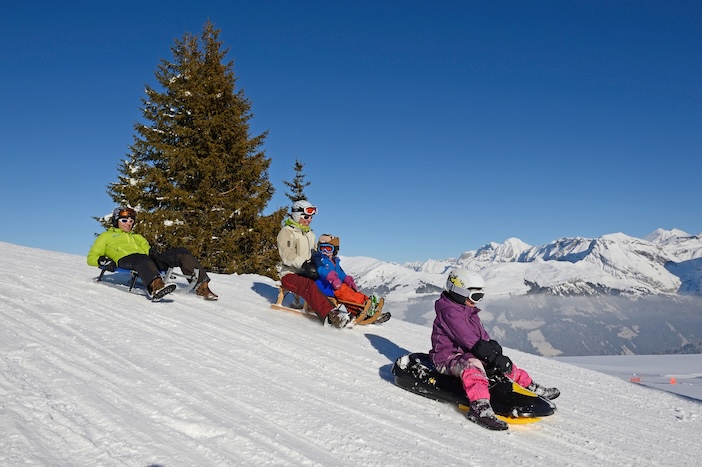
It’s all about authenticity here. In summer the pastures are alive with cattle and there’s even a Miss Lenk beauty pageant – for cows, that is. In winter the skiing feels like a pastime rather than an industry; families and school groups weave happily across the pistes, with plenty to explore yet nothing forced. If one is inclined to avoid the crowds, the queues and the raucous après-ski, then Lenk remains a most pleasant and rather precious discovery indeed.
Swiss International Air Lines (SWISS) connects Switzerland with the world, offering more than 160 weekly flights from London Heathrow, London City, Manchester, Birmingham and Edinburgh to Zurich or Geneva. One-way fares start from £76 to Zurich and from £54 to Geneva, and include all taxes, fees and surcharges. For more information, please visit swiss.com.
Travel Switzerland’s Swiss Travel Pass offers international visitors to Switzerland unlimited travel on consecutive days across the rail, bus and boat network, plus scenic routes and local trams and buses in around 90 towns and cities. It also includes the Swiss Museum Pass, which grants free entry to 500 museums and exhibitions. Prices start from £229 for a three-day second-class ticket. For more information, visit travelswitzerland.com
And for more information on Switzerland, visit switzerland.com.