In search of a slower-paced, more sustainable safari experience, Estella Shardlow takes to the Okavango Delta’s waterways – where the seasonal flood-pulse sets the rhythm and swamp-adapted species reign…
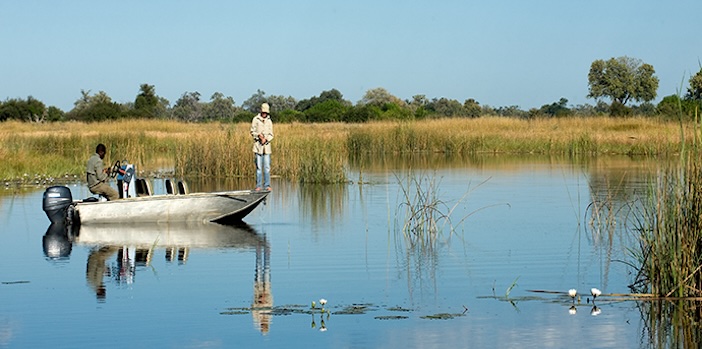
In the reed-lined waterways of the Okavango Delta, voices carry. Eerie whistles from swamp boubous, the wind-chime chirrups of Angolan reed frogs, a blacksmith lapwing’s metallic hammering call – all these species are hiding somewhere in the thick, spun-gold tangle of papyrus, pampas grass and bulrushes that rises on either side of us. I’m sitting in a mokoro dugout canoe, propelled forwards by poler Mike, who’s poised gondolier-like at the rear. At times the channels are so shallow that the hull slides over mud, or so narrow the foliage tickles my arms. Then another sound rumbles towards us: the deep, wheezing bellow of hippopotamus. “That’s a warning call,” Mike whispers, angling his ngashi – as these poles are called in his mother tongue, Setswana – to steer sharply left. “He’s telling us, ‘I’m big, don’t come any closer.’”
 Suddenly I’m questioning my dusk excursion into this marshy maze. Hippos are, after all, the world’s deadliest large land mammal. As we emerge into a lagoon, the setting sun a vivid drop of blood beyond the pampas grass’ feathery silhouettes, Mike points to the bloat of hippo (surely one of safari’s best collective nouns?) languishing in the deeper water. Eight females and a bull. The latter can weigh up to four tonnes. Most of his bulk is submerged, but the part that does protrude sends a shiver down my spine, despite the tropical heat: a gaping, pink mouth bearing 20-inch, self-sharpening ivory canines. Hippo are vegetarians, but notoriously aggressive ones, those formidable teeth used in clashes with rivals.
And the Okavango Delta, a vast inland oasis of freshwater lagoons, floating reed-beds, palm islands and grassy floodplains, is very much their territory. Instead of roads, the landscape is riven with “hippo highways” – trails trampled between favoured wallowing pools and foraging spots. That’s why generations of local villagers have used mokoro to do everything from fishing to reed-harvesting to transporting cattle. Asked when he learned to pole, Mike shrugs, “I was so young, I can’t even remember. That’s like asking me when I started walking.” These days, the vessels are made of fibreglass rather than the hollowed-out trunks of Jackalberry or sausage trees, but the poling technique hasn’t changed. “You need to relax, not be too stiff, otherwise you fall off,” he explains. “But most of all, you have to stay quiet, watch the surface and listen.”
This ethos is exactly what brought me to the far north of Botswana. With several of Africa’s big-hitter national parks struggling with overcrowding – I’ve seen first-hand myself the queues of 4x4s surrounding animals and big cats disturbingly habituated to selfie-stick wielding tourists – these lesser-travelled wetlands beckoned.
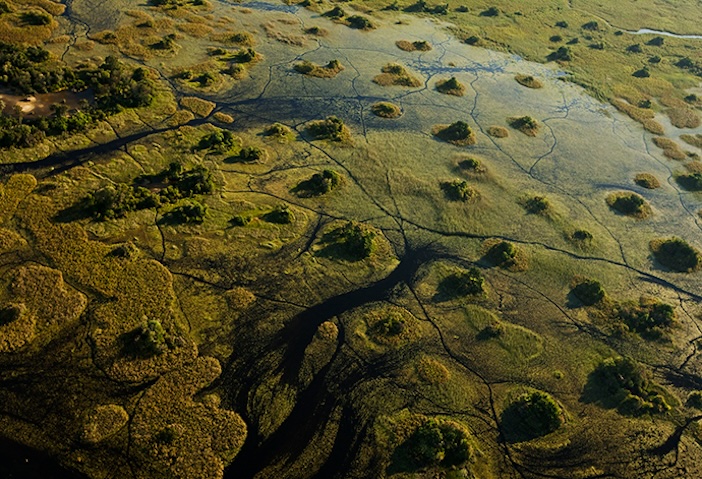
My base, Sitatunga Private Island, is so remote that it’s reached by helicopter. From this aerial perspective, the Okavango’s unique topography is revealed in all its majesty: veined with sinuous rivers that branch into countless capillary-like channels, pumping freshwater across the great green organ of the land. Elephants swagger through the shallows. Herds of Cape Buffalo gather on palm islands. And until we reach camp, there’s not a building in sight. This is testament to Botswana’s high-value, low-volume sustainable tourism strategy, which demands safari operators lease land from local communities and build concrete-free constructions capable of being entirely disassembled, no permanent trace left behind.
Sitatunga shows just how graceful this kind of low-footprint lodge can be, its three stilted, bamboo suites resembling monumental versions of indigenous fishing baskets, poised among towering Jackalberry trees at the water’s edge. References to the Okavango’s riverine heritage ripple through the interiors, from net-like woven chandeliers to soaring woodwork that nods to ngashi or perhaps the masts of wrecked ships, the core materials all locally sourced. When furnishings come from further afield, they’re salvaged or ingeniously upcycled: old railroad tracks for floorboards; carved antique doorways from Zanzibar.
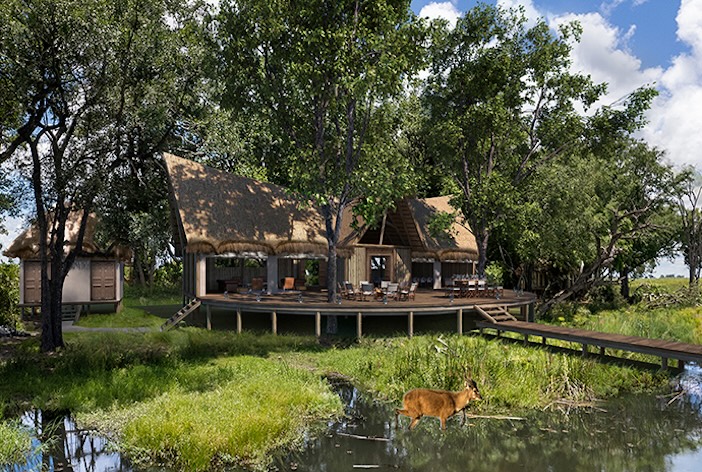
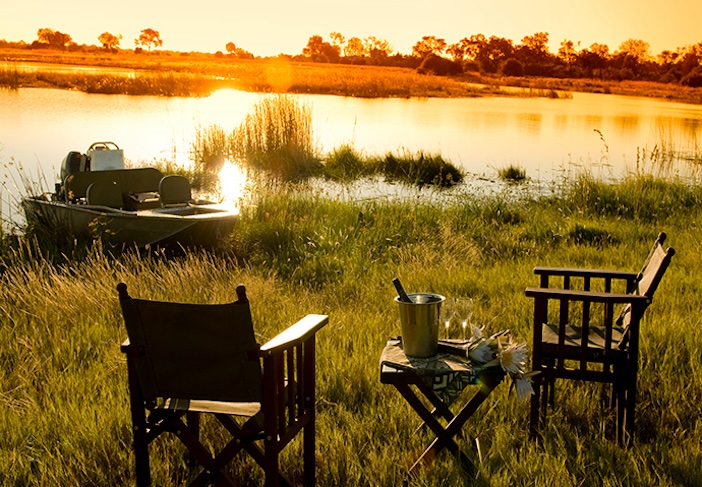
A long pontoon is the Sitatunga’s beating heart, doubling an evening gathering spot, complete with campfire, and a jumping off point for boating excursions by day. Aboard the double-decker motor launch, we cruise through lagoons spangled with water chestnut and lotus flowers; white stars in a liquid night sky. The riverbanks are punctured like Swiss cheese by the nest-burrows of white-fronted bee-eaters. Pied kingfishers hover and dive in monochrome blurs, a purple heron bursts startlingly out of reed-beds. Fish eagles patrol the water’s edge, where the surface churns and froths with catfish heading upstream.
Rather than huge herds sweeping across open savannah, wildlife sightings here feel furtive, hard-won and all the more rewarding as a result. Like the solitary Red Lechwe that observes us from its reedy refuge, its long curving antlers resembling a pair of archers’ bows. Turning down wider, deeper channels, we startle an eight-foot Nile crocodile sunning itself on a sandy bank; it instantly transforms from stone into a streak of scales as we pass, torpedoing itself into the depths. Bushwalks on the larger islands reveal fresh hyena tracks and a bleached elephant skull resting among the wild sage.
“The islands are a refuge for predators as well as herbivores and birdlife,” Mike tells me. “So many species find their niche here.” And just as mankind crafted makoro to survive in this liquid landscape, local wildlife has evolved some surprising, amphibious adaptations of their own. Delta lions will swim across channels in pursuit of prey. Varieties of antelope like the elusive sitatunga have wide, splayed hooves for running through marshy ground and shaggy, oily, water-repellent coats. “See how thick these reeds are?” Mike nods, seated beside the tiller. “Well, the sitatunga will go there to eat the new papyrus shoots. If threatened, it’ll jump right into the water with only its snout exposed.”
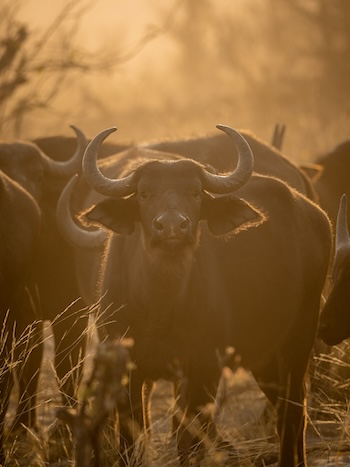 Classic game drives can be done in other parts of the Delta, including at Sitatunga’s sister property Okavango Explorers Camp. But even there, safaris have a distinctly aquatic spin. Set within a 130,000-hectare private reserve, the camp lines the banks of the Selinda Spillway, a channel connecting the Delta to the Linyanti River. It’s a popular bathing spot for elephants and buffalo. Theirs are the first faces I see each morning from my bedroom tent while I’m padding across the Persian rugs and brushing my teeth at the gleaming copper wash basin.
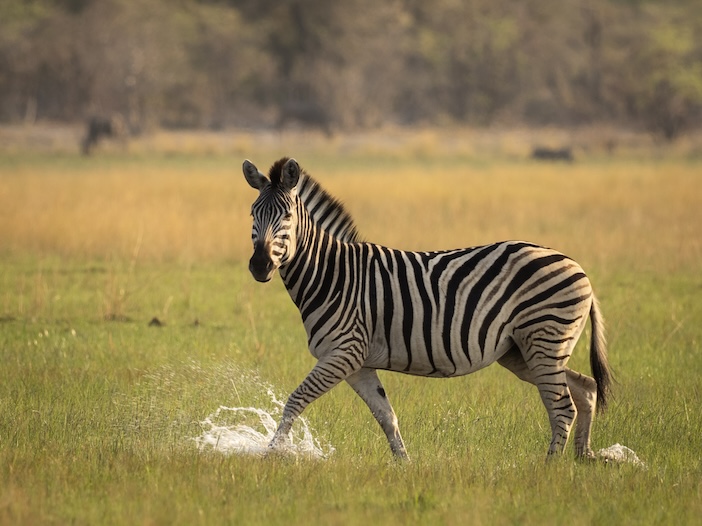
“Botswana’s 70% desert, but you’d never guess it looking at this,” says resident guide Teaser as he idles the Toyota LandCruiser through the floodplains. Spur-winged geese and wattled cranes step delicately between lily pads, the roots of which are a local delicacy. Spooked by the alarm call of a red-billed francolin, a dazzle of zebras breaks into a splish-splashing gallop. The muddy track we’re following soon disappears underwater. Chunky tyres get submerged, followed most of the bonnet. Teaser seems unfazed. “We’re part car, part submarine,” he jokes.
As he goes onto explain over a bush breakfast of warm banana bread, fresh papaya and black coffee, the story behind this ecosystem is an epic to rival Africa’s Great Migration. Summer rains falling in Angolan highlands some 600 miles away are borne across two international borders by the mighty Okavango River. Five months later, reaching northern Botswana, the flood-pulse unfolds like a vivid blue-green fan, tripling the delta’s size to almost 6,000 square miles, until its journey finally ends in the sands of the Kalahari Desert. “The transition is amazing. That’s why people call the Okavango ‘the jewel of the Kalahari’.”
The phenomenon creates a topsy-turvy sort of seasonality, in that the Delta floods during Botswana’s ‘dry’ season; I arrive at its tail-end, in September, when rain-making rituals are underway in nearby farming communities, yet the waterways are swollen and teeming with animals that have been drawn in from more arid outlying areas.
“And you,” Teaser asks, “will you go for a dip later?” At first, I assume he’s just living up to his name, but he insists there’s a creek that’s hippo and croc free, reminding me that a perk of staying in a private concession rather than a national park is the freedom to step outside the vehicle. So, on our evening drive, I bring my swimsuit. Once we’ve parked up, I peel off my khakis, cling to the side of the LandCruiser and give the opaque, brown water one final, fretful scan, before lowering myself into the Spillway.
Its coolness is irresistible. My toes sink into silky mud. Strange, really, that one of this safari’s most affecting moments doesn’t involve wildlife-spotting at all, but a more elemental sort of communion. This is what I think as they rise over my shoulders, fill my ears, lap at my scalp – those raindrops that fell in Angola half a year ago and found their way to this corner of the Kalahari.
Estella was a guest of The Luxury Safari Company. The starting price for a similar itinerary is £7,000 per person inclusive of return flights from the UK. For further information, please visit theluxurysafaricompany.com.
Wildlife photography by George Laing