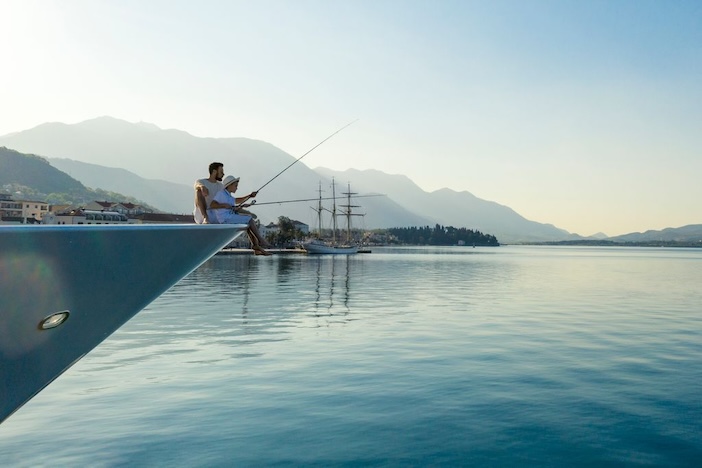
Umesh Patel checks in at Porto Montenegro, a former Austro-Hungarian naval base and Yugoslav shipyard that has since swapped gunships for superyachts, and finds a corner of the Adriatic now rather more concerned with tax breaks, spa treatments and a good night’s sleep…
Death and taxes. My friend Gavan likes to remind me they’re the only two certainties in life. Yet if there’s anywhere that seems intent on delaying one while easing the burden of the other, Montenegro might just be it.
Forbes has described Montenegro as positioning itself as Europe’s first “longevity-oriented state”, with healthcare, preventative medicine and wellbeing at the heart of that ambition. Investors, meanwhile, are likely drawn to something far simpler: low taxes.
Home to around 600,000 people – roughly the population of Sheffield – Montenegro is emerging as the Mediterranean’s next luxury destination. Not with the glamour of the Côte d’Azur or the polish of Dubai, but something more restrained, shaped as much by the landscape as by its architecture.
That transformation is most apparent at Porto Montenegro.
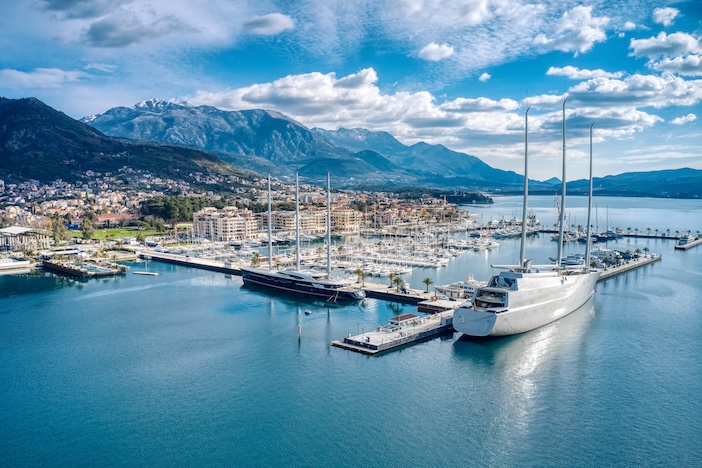
Montenegro is small enough that distances are short. Porto Montenegro is just a ten-minute drive from Tivat Airport. The road opens onto the UNESCO-protected Bay of Kotor, where the marina emerges gradually, hemmed in by mountains. What was once a naval base for the Austro-Hungarian Empire and later Yugoslavia is now one of the Adriatic’s most striking waterfront settings.
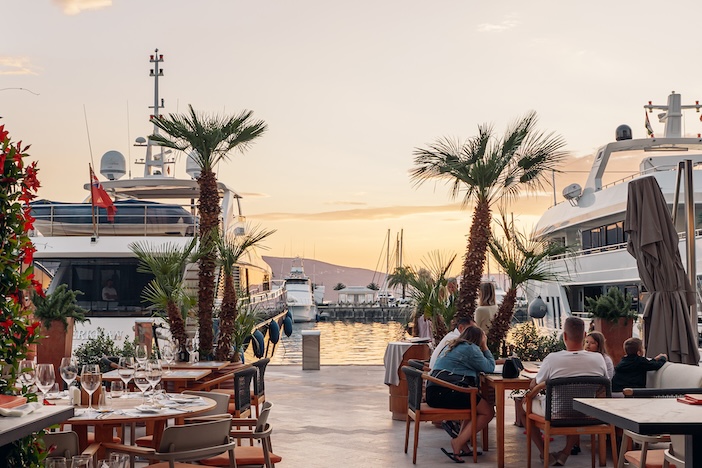
Today, superyachts line the quays and restaurants spill onto the promenade, with luxury properties rising behind them, overlooking the bay. There are 480 berths, with plans to increase that number to 850. It’s also the world’s only marina with a platinum rating for superyacht facilities.
Behind much of this is the Investment Corporation of Dubai, which has invested more than €560 million to date. The expansion has largely been driven by overseas buyers, with property ownership often bringing the added benefit of temporary residency.
Montenegro, meanwhile, has been attracting a growing number of British residents. It’s not difficult to see why. The cost of living is lower, the tax framework is favourable and property remains relatively accessible by Mediterranean standards. Plus, there’s the landscape itself.
A short walk to Boka Place brings you to one of the residential blocks where a show flat for Vero & Versa, Porto Montenegro’s newest development, is open.
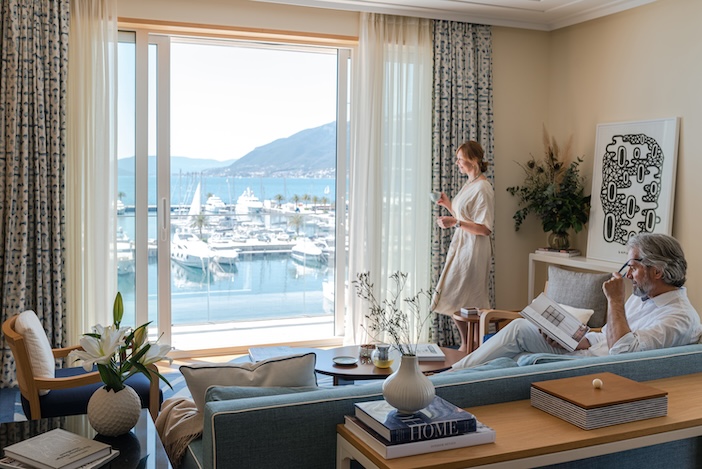
Inside, the teal and jasmine-white palette sets a calm tone. It feels so comfortable that you’re almost tempted to walk over to the kitchen, make yourself a martini and settle onto the designer sofa. In the bedroom, a wicker breakfast tray sits on the bed, resting on a grey pashmina throw. Earthenware catches the late afternoon light. Yes, even though it’s staged, it’s done exceptionally well.
From the window, the reason for building here becomes clear. Across the road, a lone JCB clears the site, while beyond it the bay opens out in an uninterrupted view of the sea.
If ownership isn’t the immediate goal, SIRO Porto Montenegro offers another option altogether: managed apartments within the hotel, built around fitness and wellness. Rooms start from €230 a night.
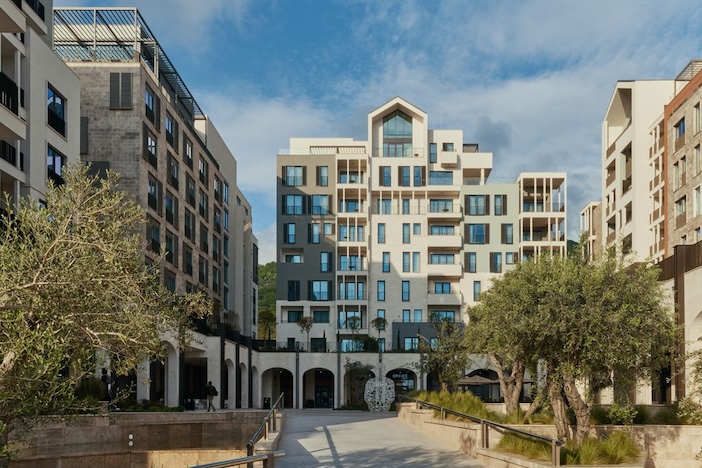
At its centre is the SIRO 360° Vitality Hub, a training and recovery centre with fitness facilities and an outdoor pool. The Recovery Lab sits within the Hub. It’s more clinical than spa-like, with white walls, black floors and a treatment table. Therapies range from cryotherapy to electrical muscle stimulation, focused on circulation and recovery.
I try a couple of them, hoping they might help blow away the cobwebs after my early morning flight. A “Do Not Disturb – Recharging in Progress” sign hangs on the door of my therapy room. Red light therapy comes first, lying still in a cocoon-like bed as a steady pulse of light does its work. Compression therapy follows: padded boots that feel not unlike a GP’s blood pressure monitor, gently squeezing and releasing the legs in a slow rhythm.

Nutrition is also key here. There’s an Italian restaurant with calorie counts noted on the menu and a Refuel Bar serving shakes and dishes designed for nourishment. For anyone in a hurry, there’s even a Japanese-style vending machine near reception, stocked with fermented vegetables and chia-seed desserts — not quite the crisps-and-chocolate machines I grew up with.
In the bedroom, the same philosophy continues, from the temperature-controlled mattress to the sleep technology designed to coax you awake gently. There’s even a pillow menu, geared towards recovery and support. A yoga mat sits neatly folded behind a cabinet door and stays there for the duration of my stay, while the Fitness Lab remains open for anyone inspired at three in the morning.
Another option is the Regent Porto Montenegro, particularly for those wanting to spend time in the marina and get a feel for the area before considering anything more permanent.
One of the moments that stays with me most from the trip is arriving there by private boat after a tour of the Old Town. As you draw closer, the marina slowly reveals itself, the Regent Porto Montenegro sitting centre stage among a long line of yachts, framed by mountains that rise steeply behind it.
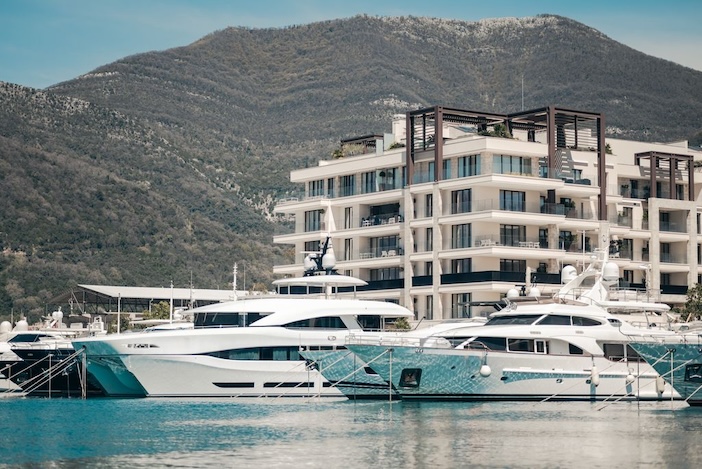
The hotel, designed by ReardonSmith Architects, the team behind the transformation of London’s former American Embassy into The Chancery Rosewood, has 86 rooms and two penthouse suites, many with terraces and outdoor jacuzzis, some with butler service.
While SIRO is built around fitness, recovery and a more disciplined approach to daily living, the Regent Porto Montenegro feels altogether more traditional, leaning towards classic luxury.
My suite looks across the infinity pool and out to the bay, the eye repeatedly drawn back to yachts moving through the marina. There’s a subtle nautical feel to the interiors too, as if you’re aboard a luxury cruise ship.
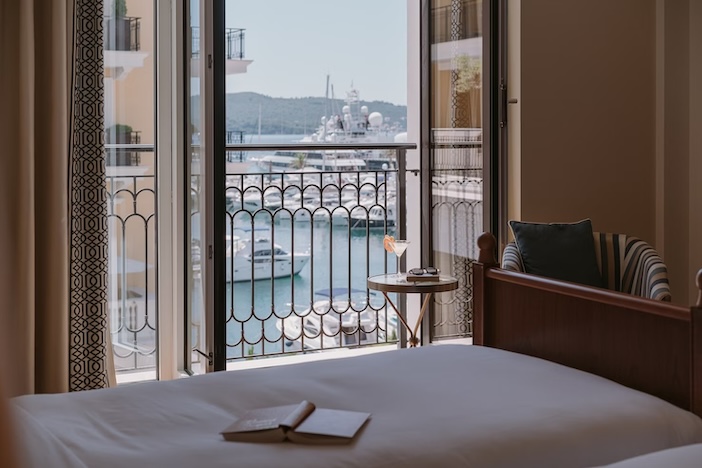
Spend enough time in Porto Montenegro and you’ll start to notice the smaller things. Labradoodles being walked along the dock, morning espressos on Venetian-inspired terraces and the occasional runner heading out along the waterfront. For all the investment and ambition behind it, the place feels less like a development and more like a village that has already found its mooring.
So when my friend next mentions one of his two certainties, I’ll just point him here.
Umesh flew directly from London Gatwick to Tivat with easyJet. For more details on flight schedules and prices, visit the easyJet website. British Airways is also now running its first direct London Heathrow to Tivat service, operating three times per week.
For more information about the marina and the Vero & Versa development (202 waterfront homes across two buildings, prices from €390,000, completion expected 2028), please visit Porto Montenegro www.portomontenegro.com.