In the first of a Chilean two-parter, Estella Shardlow swings by the Colchagua Valley for the feted, full-bodied red wines, but soon finds there are more reasons to linger among the vines…
The staircase below me spirals deep into the Andean foothills, as if a giant corkscrew has been twisted into the granite bedrock. Peering over the banister, I count six more levels beneath this one. A great metal pendulum sways slowly in the central void. It may sound positively Dantean, but far from facing a descent into the underworld, I’ve stepped into winemaking paradise. And it can be found 100 miles south-west of Santiago.
Cast away thoughts of Casillero del Diablo and other supermarket plonk; Chilean winemaking has been establishing an ultra-premium arm over the past couple of decades, with Clos Apalta at the forefront. Four of its past vintages have received a perfect 100 points from leading critic James Suckling and, in 2008, it became the first Latin American label to win Wine Spectator’s ‘wine of the year’. A totem of the estate’s lofty ambitions was the showstopping winery, designed by renowned Chilean architect Roberto Benavente Riquelme.
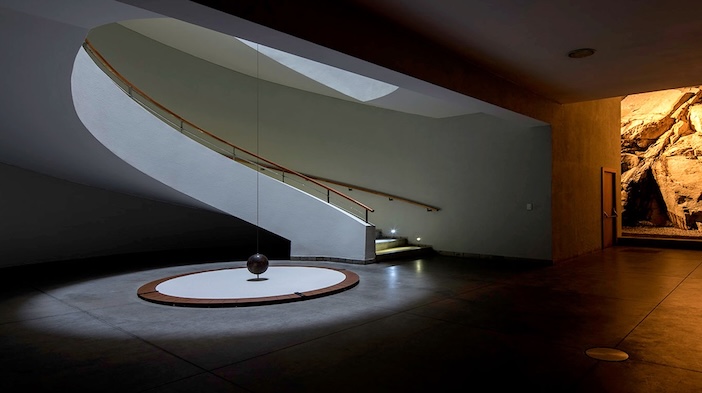
My husband and I are visiting in late May, a few weeks after harvest, but the sweet tang of fermenting grapes still hangs in the air. As we set off down the coiling, conch-like white staircase (the Guggenheim New York’s atrium springs to mind), Clos Apalta’s technical director Andrea Leon tells us there’s a lot of substance behind the building’s evident style. “The gravity-flow design means the wine moves gently from one stage to another without needing to use mechanical pumps,” she says. The method results in fewer harsh, bitter compounds, greater freshness and lower energy consumption. “Each level has a different function.”
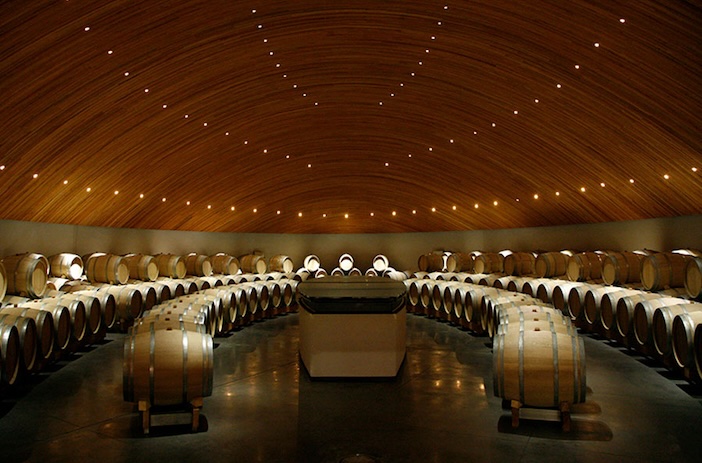
After grapes have been destemmed and sorted at ground level, they drop through openings straight into fermentation vats. The next few subterranean floors are noticeably cooler and dedicated to ageing, with rows of French oak barrels resting in cathedral-like silence beneath vaulted timber ceilings.
The final layer is kept under lock and key, down a set of metal steps. In the gloom, we make out exposed, craggy granite walls down which waterlines trickle, helping naturally regulate temperature and humidity, and row upon row of dusty bottles, their corks wrapped in Clos Apalta’s royal-blue capsules. This is the owner’s private cellar. The family in question, the Bournet-Marnier Lapostolles, are scions of French liqueur dynasty Grand Marnier. Sixth-generation descendent Alexandra founded Clos Apalta in 1994 (though some of the vines planted on the land date back to the 1900s), aiming to bring Bordeaux-style winemaking prowess to Chilean terroir. Her son Charles is now at the helm.
A lift whizzes us back up to the sun-drenched rooftop, planted with agaves and native shrubs, for a vantage point of the estate. Some 60 hectares are spread across a horseshoe-shaped valley close to the Tinguiririca River. Autumn has cast the southeast-facing slopes in a ruby glow. Andrea points to the blue-grey ridges of the Andean precordillera. “These hills protect the grapes from the harshest sun, so even at the height of summer it stays quite lush.” In fact, the microclimate is so pronounced that Apalta is a standalone Denomination of Origin within the wider Colchagua Valley.
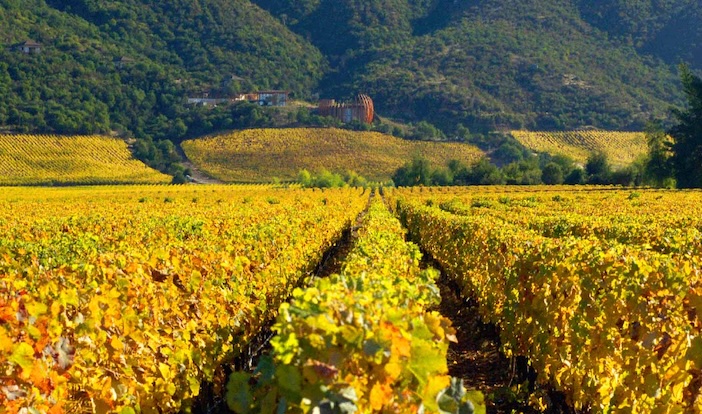
Naturally, our tour culminates in the tasting room. Velvety, inky-dark, bursting with cherries and currants plus a crack of black pepper – these are the full-bodied blends, dominated by Cabernet Sauvignon and Carmenère, for which this region is best known. But there are surprises, too. A pale, dry rose and a Sauvignon Blanc–Sémillon full of subtle melon and grassy notes, both hailing from the family’s other wineries. Overall, more than sixteen grape varieties are grown across their estates.
Swilling my final glass of red a little too vigorously, I manage to splatter the contents all over my cream linen trousers and promptly blush a similarly scarlet shade for being so clumsy. “Don’t worry, it happens a lot,” Andrea laughs reassuringly. “The team’s very experienced at getting stains out.”
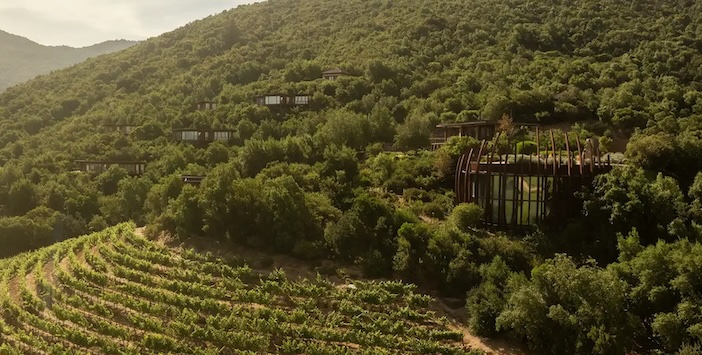
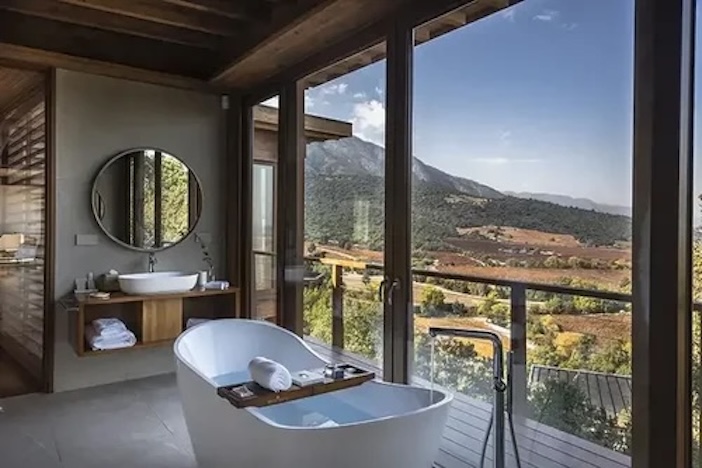
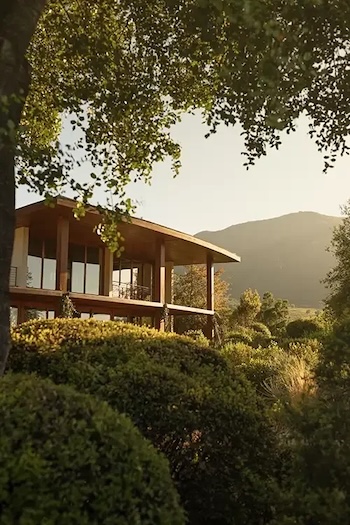 Thankfully, neither my husband nor I need to shoulder the burden of being the designated driver on this occasion. We’re staying one of Clos Apalta’s six hillside villas. Each is named after a grape variety; ours is Syrah. No mere post-wine-tasting crashpads, these are sprawling, stilted, timber structures with floor-to-ceiling windows, wraparound terraces and private infinity pools. It’s a formula that puts me in mind of Maldivian overwater suites – only instead of turquoise ocean underneath us, it’s a sea of vines. The warm, ruddy grain of native raulí wood clads the high ceilings, walls and floors, while textiles in the estate’s signature peacock blue add the occasional dash of colour.
In the bathroom, we coo appreciatively at the under-floor heating and earmark the freestanding oval tub for a post-supper bubble bath (for now, I fling my wine-stained clothes in there to soak). But first, there’s a sunset horseback ride. Looping around the estate’s southern perimeter, we’re able to admire the winery façade from afar, noticing how it resembles a gigantic wine barrel with the staves prised apart. The 24 wooden beams soaring into the sky represent the number of months that Clos Apalta’s flagship wine spends ageing in French oak before release.
As for the villas, despite their generous proportions inside, they somehow camouflage into the tree-covered hillside, their windows gleaming at us like the eyes of furtive woodland creatures. Sunset appears like a splash of Carmenère across the horizon while we hack along the dirt paths at a leisurely pace, my chestnut mare, Bonita, making regular stops to munch on vine leaves.
No judgement here – I’m similarly greedy during our stay. Given Clos Apalta’s French roots, I’d had high hopes for some haute cuisine and in Chef Leonel Díaz, who’s been a fixture here for over a decade, they’ve found a true local talent. The breakfast buffet is a thing of beauty: miniature dishes of homemade kefir cream cheeses, translucent slivers of cured salmon arranged in ruler-straight rows, a glistening slab of honeycomb. There’s only one other couple staying at the estate this weekend and they seem to have slept in even later than us, so it’s up to me to be brave and break into this pristine spread.
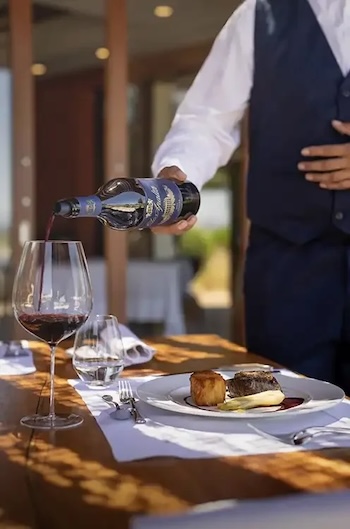 Come evening, the atmosphere shifts to moodily romantic, with a crackling log fire to keep the autumnal chill at bay and lamps made of repurposed wine bottles casting pools of light on the snowy-white tablecloths. Appetisers are served hearthside in the drawing room, snuggled on plump linen sofas, before moving through to the dining room for the day’s personalised set menu. Ceviche and heirloom tomato gazpacho followed by rosemary salmon, beetroot risotto and beurre blanc, and a pisco-spiked crème brûlée for pudding – so reads one edition. With my name and the date printed at the top alongside Clos Apalta’s crest, it’s a worthy souvenir to take home with me, alongside our wine tasting notes and a field guide to the estate’s flora and fauna.
This booklet accompanies us on a morning hike along one of the estate’s marked trails. We pop tiny, sweet black grapes into our mouths from the post-harvest second flowering and notice how, up close, the vine leaves aren’t purely crimson but flecked with golden patterns. In the native forest, which covers more than half of Clos Apalta’s land, we hear a woodpecker’s telltale tapping and spot a hawk circling high above the canopy. All this, we realise, is the benefit of lingering for a few nights rather than briefly dropping by for a tour and tasting – different facets of the estate gradually reveal themselves, much like descending through each layer of the winery itself.
Our departure is at an eye-wateringly antisocial hour – there’s a domestic flight to catch from Santiago – but in a fitting final flourish of hospitality, the night porter hands over a box of breakfast pastries for the road and conjures up my cream linen trousers, impeccably laundered, pressed and hanging neatly on a wooden hanger, as though they’d never been anywhere near a glass of Carmenère.
For more information about Clos Apalta, including details of winery tours, please visit closapalta.com, or see closapaltaresidence.com for more details about accommodation.