Hugh Fearnley-Whittingstall brings his sustainable ethos to the glass with a vibrant new collaboration in the Languedoc — as Rachel Fellows discovers, these are wines designed as much for pleasure as for principle…
A smiley face awaits anyone about to pop the cork on a bottle of the new River Cottage wines, made in collaboration with the Languedoc’s Domaine Gayda. Cork art is nothing new of course, with some estates devoting precious time and money to elaborate ciphers and illustrations, but there is something wonderfully happifying about this simply depicted emoji greeting prospective drinkers of the new River Cottage range – a reflection of the honest and excitable intentions behind the liquid itself.
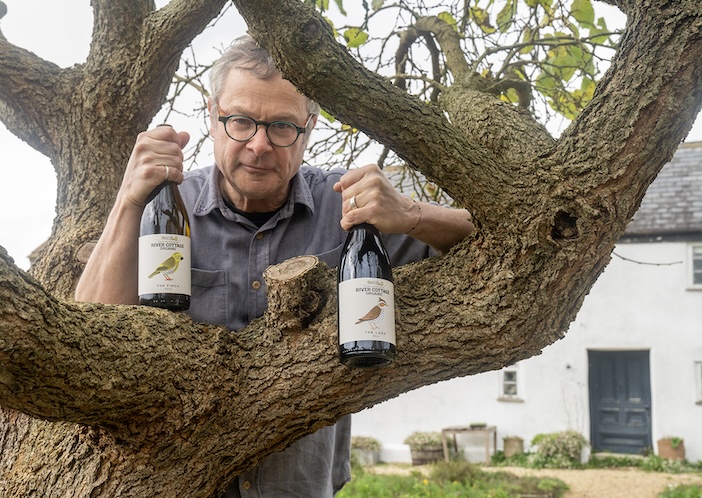
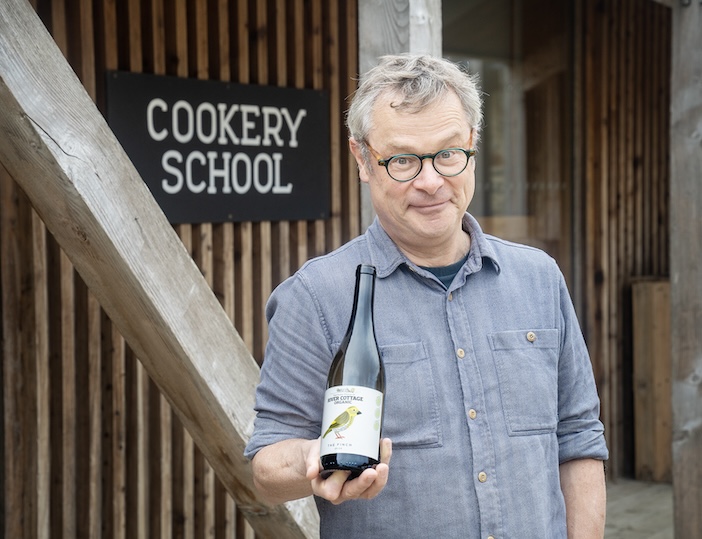
On a drizzly Monday afternoon in March, Hugh Fearnley-Whittingstall of River Cottage hosted journalists, foodies and friends at his famed organic farm and, with the help of winemaker Vincent Chansault, introduced the four wines that have launched his new club, Hugh’s Organic Wine Circle.
Well-priced, delicately executed, full of flavour and easy drinking in the best way, these are jolly bottles made under a sustainable ethos that sits seamlessly alongside Hugh’s own, well-documented commitment to plant-based, seasonal food.
“I come from a family that is half French and now I actually have French citizenship,” Hugh told us. “That’s an extra, exciting reason to be working in France on the wine. But we had this very exciting invitation to Gayda, and I could see from everything that they were doing that the environmental story was amazing, the conscientiousness over planting and restoring and keeping edges and rough areas between the vines, all chimed very much with River Cottage.”
These cheery corks on the River Cottage wines are all the more obvious since the bottles come unencumbered by foil caps – a sustainable nod aiding both carbon footprint reduction and recycling. There has also been an effort to reduce the weight of the glass bottles, which come in under 600g – the team acknowledges that there is scope to reduce this further, whilst having to ensure safe transit (the Sustainable Wine Roundtable’s Wine Bottle Accord, supported broadly across the global industry, recommends a target of under 420g).
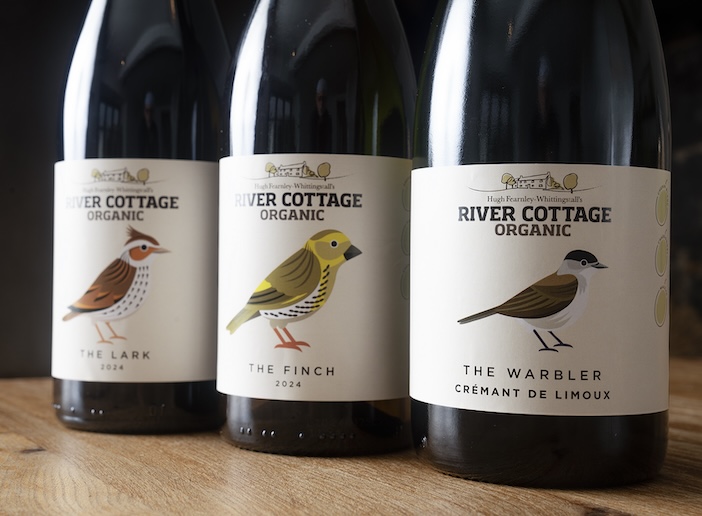
With each wine named after a species of bird found on the Gayda estate, every bottle bears a QR code linking to the Merlin Bird ID app from Cornell University’s Cornell Lab. Hugh entertained some enthusiastic ideas of creating his own app to enable such further study, before realising that this really rather reliable option already existed; the department swiftly agreed to the affiliation.
Beyond such technological novelty, biodiversity is an integral part of Domaine Gayda’s operations.
“It’s not just a ‘nice-to-have’,” says Vincent, “but an indicator of soil health – an indicator of how the grapes are going to do. And it’s improving year on year.” He explains how, in recent years, a loss of hedgerows and cover in vineyards typically means a declining bird population – and yet, at Domaine Gayda, birds are “flourishing”, pointing to strong biodiversity and a healthy environment for both flora and fauna. The land between Gayda’s vines is allowed to cultivate (weeds and all), with cover crops used to enrich soils further, an olive grove planted on the estate, and more.
Birds are a mutual passion between the teams, with Hugh describing Gayda’s Managing Director Tim Ford as “a proper twitcher, a hardened bird nerd.” Tim was thus tasked with matching the name of each wine to its respective feathered friend. Better him than Vincent mind you, who admits to being unable to distinguish bird calls: “they all sound the same!”
Winemaking in the Languedoc-Roussillon
The Languedoc, in the south of France, is a region capable of producing wines with big flavours – and big alcohol levels. Located in Brugairolles, close to Spain, Domaine Gayda enjoys both a warm Mediterranean climate and moderating Atlantic influences, helping to retain comparative freshness in the resulting wines in addition to concentrated tastes. Combined with vines planted at levels of 200-300 metres above sea level and a careful approach in the vineyard (canopy management to shade the grapes from too much sunlight, for example), this means wines of complexity, interest and texture but also, crucially, a lightness of touch.
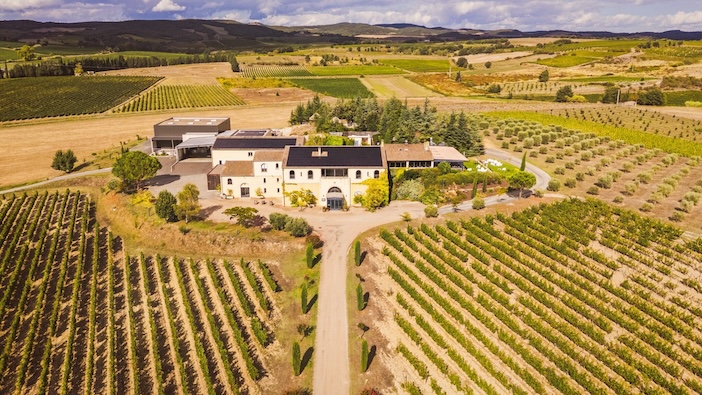
On a site dating back to 1749, the 20-hectare Domaine Gayda was established by Anthony Record and Tim in 2003. Loire native Vincent joined in 2004, the three friends having met at Boekenhoutskloof in South Africa. The trio also boasts the guidance of Marc Kent, a renowned figure on the South African scene and a leading force in the ascent of Boekenhoutskloof’s popular Chocolate Block and Porcupine Ridge labels. Domaine Gayda has steadily built a reputation for what it calls “modern French winemaking” – rigorous monitoring in the vineyards, cool grape crushing and “infusion-style” long fermentations in the solar-powered winery; the use of concrete eggs, amphora and clay jars in addition to oak foudres.
Today, Gayda’s red Chemin de Moscou, a Syrah, Grenache and Cinsault blend, is its calling card – silky, spicy and delightfully intense. And yet, at 14% ABV, it is not the type of wine Hugh wanted for River Cottage.
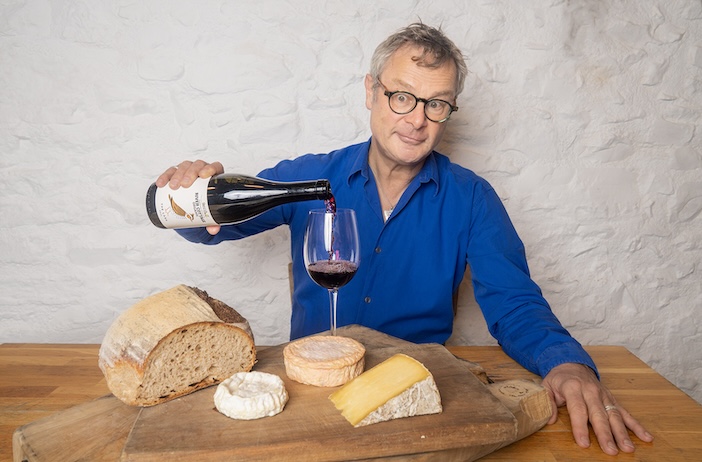
“I was a little anxious to be in the Languedoc because, travelling around, I always try and drink local, but the reds in particular are heavy-hitting – 14 and a half, super tannic, great, big, enormous bottles of sunshine. Amazing. But that isn’t the wine I love to drink. I have certain prejudices. I definitely didn’t want [ours]to be a 14. I wasn’t wild about that. [I just wanted] something that was soft but really structured, lots of fruit.”
The wines
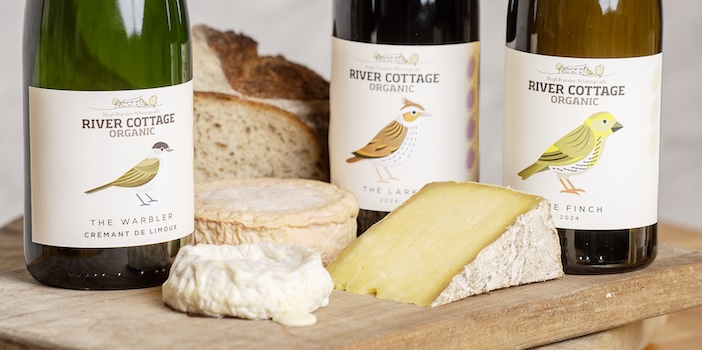
 Hugh was keen to use the Cabernet Franc grape in the River Cottage red blend and yet the alcohol levels of Gayda’s remained robust. Some early-harvest Mourvedre from a high vineyard was Vincent’s answer and, as Hugh recalls: “I said, ‘Well, let’s whack a load of that in and see what happens next. That’s how scientific and sophisticated my winemaking skills are!” The result, made with equal proportions of Mourvedre and Grenache Noir, with Syrah and Carignan “has structure and complexity, but not a feeling that you’re going to regret it. So I’m super delighted.” Named after the woodlark, The Lark is supple wine full of black berry and violet notes. It’s a balanced red to complement – not overpower – the style of food for which River Cottage is known.
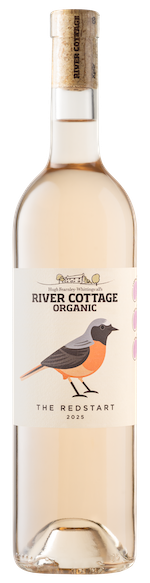
The Redstart rosé, however, does include a majority of Cabernet Franc, topped up with Mourvedre and Grenache, in a pale and bright Provençal style. An ebullient strawberry and raspberry crunch is layered with orange blossom and vanilla, its creaminess making it perhaps the most versatile of the lot for pairing. The name references the “flush of pink” on a redstart’s tail, in honour of the red grapes which take the lead.
The Finch is a textured white made from Grenache Blanc, Macabeu (a classic Roussillon varietal) and the high-acidity Chenin Blanc, which, according to Vincent, “shakes everything up”. A zesty wine with a mineral edge, the savoury, saline finish has a tea-like nature, almost nutty, providing intrigue over simple fruitiness.
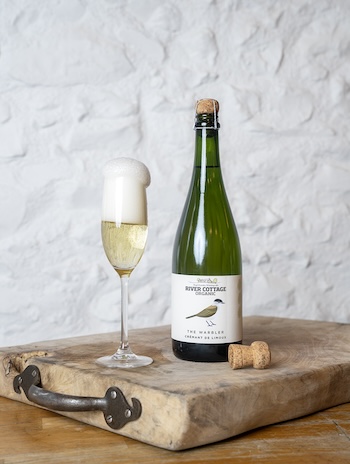 Finally, a zero-dosage Crémant de Limoux onomatopoeically named The Warbler (owing to the sound of the bubbles) is made with the help of small-scale local sparkling producer Château Marco. A dominance of Chenin Blanc (60%) over Chardonnay helps steer the wine away from austerity, and so the sugar is not missed. Indeed, there is a gorgeously toasty, burnt sugar darkness on the finish, perhaps aided by the little dose of the native Mauzac grape.
These wines are all made with minimal intervention, including as little sulphur as the team can get away with. The domaine itself is fully organic (certified in 2011), and the 10-15 nearby growers from whom it also buys grapes have all now managed to convert to organic methods too.
This commitment to organic viticulture is “logical” according to Vincent. Not least for selfish reasons: “I did it for my own health – I eat a lot of grapes and I didn’t want any chemicals I couldn’t pronounce in them.” He also explains that 90% of the work in making good wines is done in the vineyards – “the cellar is the easy bit,” he laughs.
For the River Cottage wines, Hugh credits Vincent completely, telling his recently assembled crowd that “Vincent has worked really hard and I’ve had a lot of fun.” They make a highly entertaining double act, their shared eagerness nothing if not contagious.
Popping a cork should always be a joyous event – the source of a little fluttering of jubilation at the very least. And as one looks down at the smiling faces on the corks of the River Cottage range, it’s hard not to mirror the emotion.
For more information about Hugh’s Organic Wine Circle and the wines featured, please visit www.rivercottagewinecircle.net.