Inside the former trading floor where cotton capital, football wealth, serious cocktails and northern wine culture now meet, Douglas Blyde checks in to find a city already several moves ahead…
The BBC’s economics editor, himself Manchester-raised, recently asked whether the city might offer Britain a model for growth. Spend forty-eight hours here and the question stops sounding rhetorical. Hotels busy midweek. Bars full. Old mills reworked. Offices lit after dark. Cranes above Victorian brick. The city has the unnerving air of somewhere whose plan is working. It may yet export the plan nationally as Andy Burnham, its mayor, manoeuvres with increasing openness towards Downing Street.
Few embody this mood more fully than Thom Hetherington, whom I met between the hospitality safaris he hosts across the city. Founder of Landing Light consultancy, chair of Manchester Art Fair, and critic for Manchester’s Finest, Hetherington operates as guide, connector, and civic accelerant. He speaks about Manchester not as a province awaiting discovery, but as a city already moving faster than the people describing it.
 Piccadilly Station still delivers arrivals with all the tenderness of an ejector seat. Manchester assumes you can cross a road unaided. If you require seduction, Bath remains available. Walking from Piccadilly past Chinatown and the river, the striking thing was the absence of grime. A man stood fishing, which said more about the city’s recovery from industrial filth than any municipal press release.
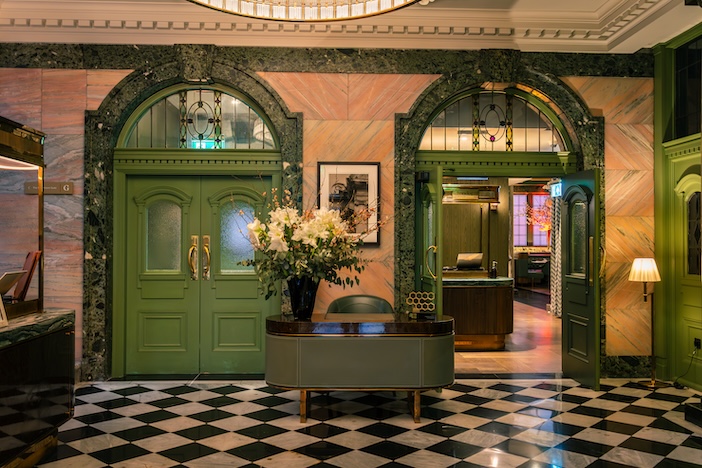
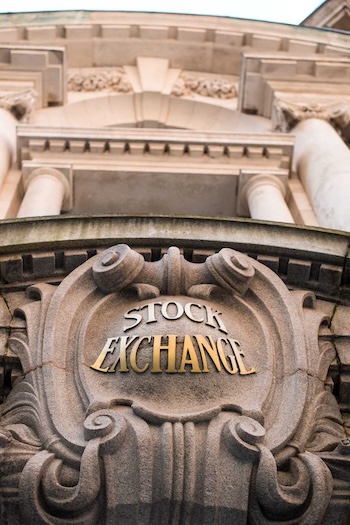
The approach was not towards some newly sanitised quarter with hanging filament bulbs and a microbrewery in a former glue factory, but into the old financial centre itself — Stock Exchange Hotel, where fortunes were once shouted across a trading floor and are now absorbed into marble, checkerboard floors, dark timber, ironed copies of the Financial Times, and champagne at check-in. The brickwork still appears to perspire output. Before restoration, trees had reportedly rooted themselves through the roof, as though nature had grown tired of derivatives trading and attempted repossession.
Opened in 1906 in full Edwardian Baroque confidence, the building could easily have become unbearable in conversion. Instead, it has survived the operation with unusual poise. Ownership by Ryan Giggs and Gary Neville tells you more than first appears — not because footballers owning hotels is unusual, but because the property reflects something recognisably elite-athletic: control of tempo. The interiors, by Istanbul-based Autoban, avoid boutique-hotel idiocy. The light switches could be understood without instructions. No designer detail waited in the dark to break a toe.
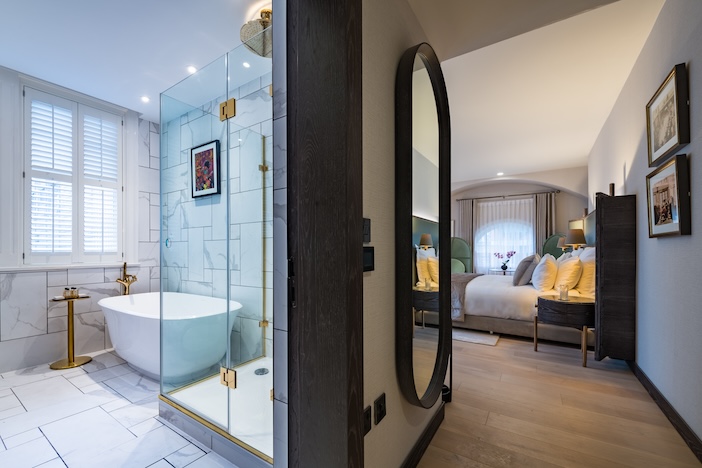
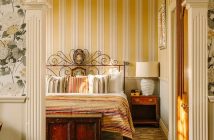
My Norfolk Suite overlooked a building recently acquired by the ownership group, now being converted into further suites and a spa. The room included photographs of former Stock Exchange employees — the human infrastructure behind all those vanished trades. Mercifully, the hotel avoids turning itself into a football shrine. No framed signed shirts. No Ronaldo cushions. Only the near-constant drone of vacuum cleaners disturbed the illusion, moving through corridors with the persistence of financial anxiety itself.
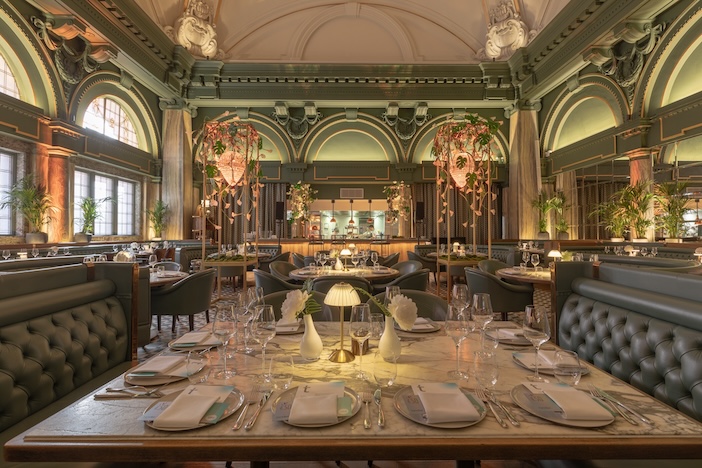
Breakfast arrived on fine china at Tender, in a dim dining room where the building finally seemed rested. Staff possessed the warmth Manchester still does better than most luxury markets — friendliness without rehearsed intimacy or hospitality-robot eye contact. Tender, overseen by Niall Keating, the Stoke-born chef who earned two Michelin stars before thirty, occupies the former trading floor. By breakfast it feels composed and private; by evening it becomes a different proposition entirely.
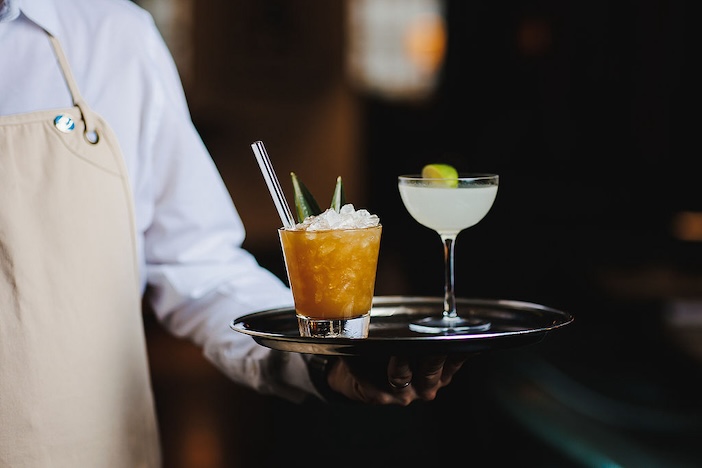
Rafael Santo, the Portuguese sommelier, has helped pull the property’s drinks into sharper territory. Bartender Aaron Greenhalgh opened proceedings with ‘White Rabbit’ — dry vermouth, absinthe, Italicus bergamot liqueur and blood orange foam: floral, springlike, mildly hallucinatory without becoming exhausting. Later came ‘Hedgerow’, built around Sauvignon Blanc and a bell pepper reduction painted directly onto the glass.
Entrance to Sterling, below, comes through an enormous vault door. Bar manager Yadney Fernandes produced a ‘Seasoned Martini’ of Beefeater, Schofield’s Dry Vermouth, salt, pepper, olive oil and chilli — savoury, cold, tautly controlled, with enough chilli to tighten the edges without disturbing the balance. Fernandes moved with the elegance of an animate statue, martinis arriving with near-silent precision.
Dinner with Hetherington at Winsome carried the atmosphere of an unofficial summit. The restaurant channels St. JOHN in spirit — stripped-back confidence, serious cooking without decorative panic. The table operated according to the increasingly northern assumption which says good restaurants should allow conversation to unfold slowly.
Manchester Finds Its Glass
The real summit began at lunch at Portfolio Champagne Boutique & Wine Bar, where a Coravin Paulée gathered sommeliers from across the north. Co-hosting alongside Coravin founder Greg Lambrecht meant spending an afternoon with the man who changed wine service globally by asking a simple question: why should tasting a bottle destroy its future?
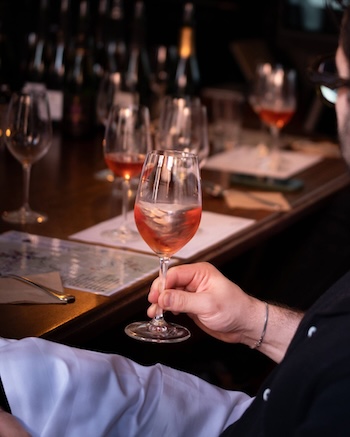 Cameron Foster, owner of Portfolio, spoke militantly against narrow flutes, banning them in favour of broader stemware capable of amplifying aroma. Among the bottles, Santo arrived carrying 2022 Encruzado Código de Origem Dão by Tiago Macena — mineral, textured, calmly assured, selected by somebody more interested in conversation than label theatre. From Telmont came magnums to establish baseline seriousness. Then Breaky Bottom Cuvée Reynold Stone Brut 2010 — Sussex chalk, uncompromising acidity, and, since the death of its maker Peter Hall, an ever more cultish bottling.
Best of all was Laherte Frères’ Côteaux Champenois Les Meulières 2020, brought south by Vanessa Stoltz of Pine after a three-hour journey — still red Meunier from Champagne, less a wine than an intellectual ambush. Then came Mendoza Garnacha from Ver Sacrum, selected by Phil Crozier, the man who helped make Malbec famous. His presentation earned actual applause — not polite trade patter, but the warmer sound of a room recognising somebody who had helped change how Britain drank Argentina.
After the trade lunch came the public Coravin Guide tasting, where I chaired a panel with Kelly Bishop — musician and host of Manchester Wine Tours — and Simon Woods of Manchester Wine School, with bottles from Wines of Lugana. An artisan champagne bar full of engaged drinkers discussing preservation, terroir and service would have seemed improbable in Manchester not so many years ago. Now it felt less like novelty than evidence.
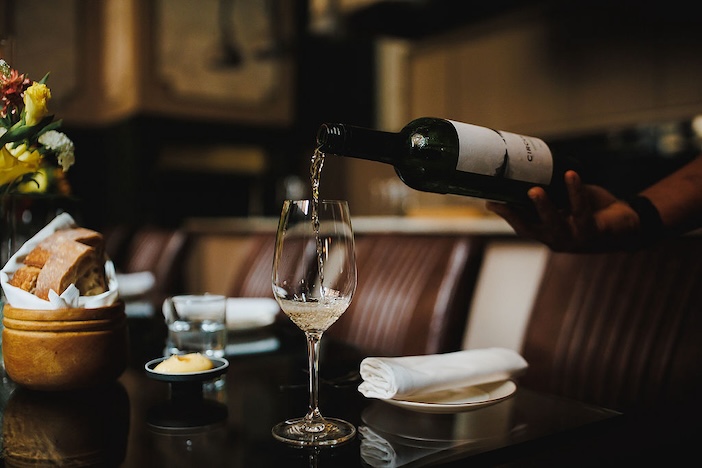
At one point, Lambrecht described how Coravin became unexpectedly tied to recovery itself. Following an accident in which he broke his neck, he began revisiting bottles previously accessed through Coravin, trying to reconstruct evenings and friendships through wine. Bottles became prompts, fragments of biography waiting to reconnect. Coravin ceased being technology and became something stranger: a route back into lost evenings.
At checkout, chariots of flowers swept past through the lobby, blooms moving with the brisk confidence of incoming capital. The hotel, like the city, was already rearranging itself for the next arrival.
When departure came, Piccadilly Station remained exactly as before — hard-edged, functional, impatient. Manchester does not believe in farewell scenes. It simply returns you to the rail network slightly altered. Back in London, a taxi queue was arguing with itself beside rubbish at the kerb.
Stock Exchange Hotel – 4 Norfolk Street, Manchester, M2 1DW. Fore more information, please visit www.stockexchangehotel.co.uk.