
Three years on from a six-month stint living in Lisbon, Estella Shardlow returns to find the city blooming — with new hotels, restaurants and wine bars to add to her well-thumbed little black book…
Surely one of life’s greatest joys is returning to a foreign city that you know intimately. There’s still that frisson of novelty; this is not home, at least not anymore, and as such you’re detached from such quotidian concerns as commuting, bills and grocery-shopping. But neither are you assuming the role of wide-eyed tourist, slavishly following a map down unfamiliar streets to dutifully tick off a sightseeing checklist. Instead, the repeat visitor slips on the metropolis like a favourite shirt (the one you save for special occasions) and trots off to their tried-and-tested haunts.
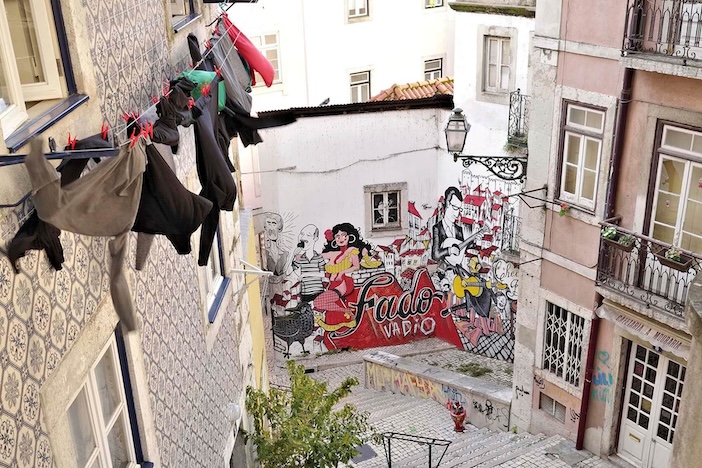
Photo courtesy of Visit Lisboa
This is my relationship with Lisbon. I spent six glorious months living in the Portuguese capital in 2023 and have been back half a dozen times since then, reviewing some of its finest hotels for The Arbuturian in the process. Each trip will include the following rituals: people-watching in the leafy, locally-beloved square of Praça da Flores, a glass of wine in hand from hole-in-the-wall bar Black Sheep; Reformer Pilates classes at Prescription and yoga at The Kynd Space; Marquise da Møbler’s cardamom buns for breakfast; al fresco writing sessions at Jardim das Amoreiras’ old-school quiosque cafe; a wander around the botanic gardens; and stocking up on beautifully packaged toiletries and stationery in A Vida Portuguesa. When a random craving for tuna tartare struck, I knew to go to Rocco. The perfect pastel de nata? Manteigaria’s are made right before your eyes and served oven-warm. My Lisbon little black book was, frankly, bulging.
Yet, my latest Portuguese pilgrimage this summer showed that the city’s culinary and hospitality offerings have by no means peaked. The New York Times concurs: “Lisbon is blooming, and booming,” the paper declared in a recent profile on the destination. Not bad for Europe’s second-oldest capital. More pages must be added to my aforementioned LBB. Read on for my pick of the new-kids-on-the-block, which all have the flavour of modern classics.
Where to Stay
Few would notice that there’s a hotel on Rua das Trinas. The hillside neighbourhood of Lapa is no tourist hub, after all, but instead, an elegant, slightly sleepy enclave for diplomatic embassies, affluent Lisboeta families and creative expats like Manolo Blahnik. But the observant passerby may notice that between the prettily tiled townhouses a gate has been propped open, wrought iron letters spelling out the name Villa Dorothéa.
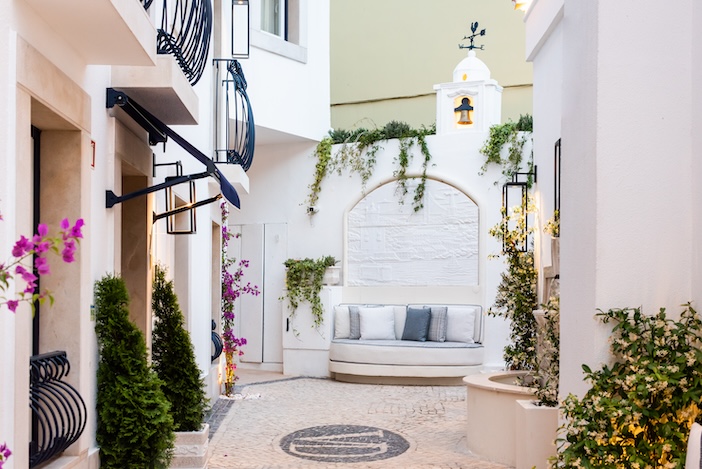
You could advance down this alleyway – it is, after all, a public right of way – passing a post box, an ancient-looking stone fountain and a street sign bearing the name Rua dos Pescadores to reach a small, sunlit courtyard. Children’s laughter and squeals carry from the neighbouring school playground. There’s no reception desk to speak of, but make no mistake, you’re now standing in the “lobby” of Lisbon’s newest and most original hotel.
Everything is spick and span: the stonework gleaming, olive tree saplings bedding in and the smell of fresh paint in the air alongside the blooming jasmine. The site, however, has old bones. Its owner, French-Moroccan businessman Jacob Perez Toledano, flicks through archival materials on his phone – first, a signed deed from 1879 granting local fishermen permission to build their homes on this land, followed by photographs showing the dilapidated, abandoned state of the same buildings when he bought them a decade ago. Following painstaking renovations, there are now 20 guest rooms scattered across five separate cottages, reminiscent of the Italian albergo diffuso model that strives to disperse and embed tourists more deeply in the community.
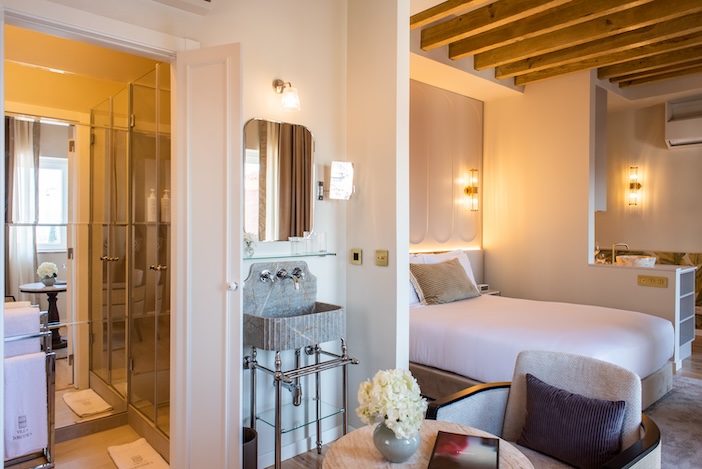
Villa Dorothéa’s guests are encouraged to patronise local independent businesses rather than holing up in on-site facilities. Flicking through the selection of novels and art tomes in my suite, I find handwritten notes from staff at the city’s first English-language bookshop, Salted, who curated the hotel library. A quick word to the hotel concierge via WhatsApp and I’m booked into the yoga studio across the street. Breakfast brings strong, smooth coffee from nearby roastery Filtrô, fresh loaves from artisan bakery Pão do Pastor and conversation with one of the hotel’s neighbours who’d been eagerly observing its decade-long restoration.
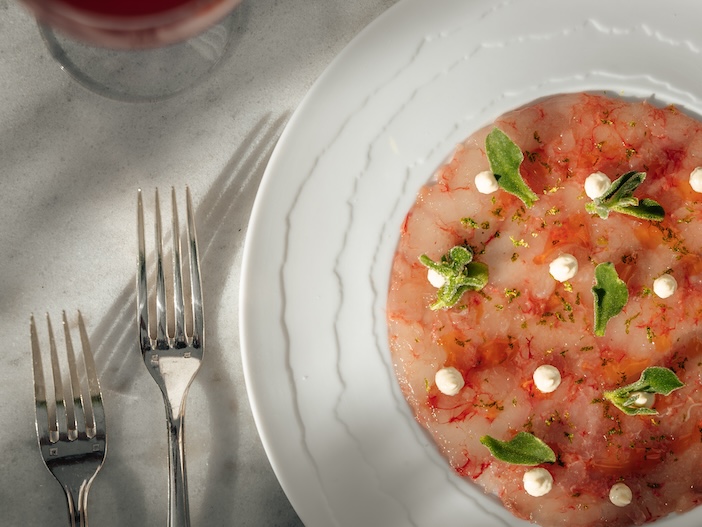
Evening is an equally convivial affair at The Secret, Villa Dorothéa’s bijou gastro-bar. After chatting to a pair of Lebanese guests over chilled rosé on the suntrap terrace, perfectly positioned for watching sunset over the River Tagus, my friends and I decamped to the conservatory-esque interior for a series of decadent sharing plates – Beef Tartare with confit yolk and a black beer and mustard ice cream; violet prawn carpaccio; Tuna Tataki, topped with champagne sauce – cocktails inspired by Portuguese epic poem Os Lusíadas, and the ambience of an intimate house party.
There may even have been a round of tequila shots (the good stuff, mind: Clase Azul Reposado) before plunging into the streets of Lapa, where the annual Santos Populares festivities were unfolding. Not since the heady summer of 2023, when I rented my own apartment in Lisbon, have I felt so at home.
Where to Eat
With more than 500 miles of Atlantic coastline, there’s no shortage of delicious fresh seafood in Portugal, yet the options for where to eat it tend to fall into two camps: no-frills neighbourhood tascas or Instagram-friendly small plate joints. JNcQUOI Fish, refreshingly, is neither. Service is as polished as the weighty silverware, the monochrome interiors unapologetically lavish, apparently inspired by the National Palace of Sintra. Its menu is a roll-call of the nation’s classic dishes – cod bacalao, clams “Bulhão Pato”, lagareiro-style octopus – presented in an unusually sophisticated guise, without stripping away their identity.
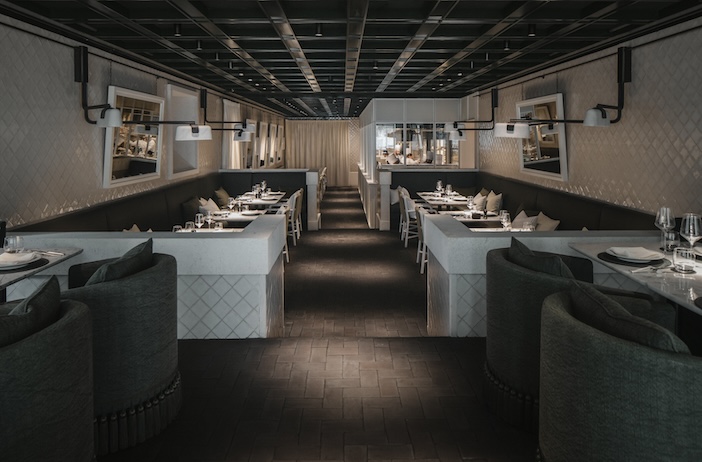
JNCQUOI has become a byword for luxury in Lisbon, with an ever-expanding empire of food and fashion venues. Fish is part of a trio of new ventures that’s taken over a townhouse on Avenue Liberdade (think Portugal’s answer to Regent Street crossed with The Mall). Downstairs, there’s The Mirror Bar, a darkly glamorous basement drinking den, and 10-seat counter restaurant Table, a tasting menu-only, 10-seat counter restaurant that scooped the ‘Opening of the Year’ award from Michelin Guide Portugal 2026. As a pescatarian, though, Fish was calling to me.
As if the name weren’t clue enough, the central open kitchen leaves no question which food group is star of the show: there’s a whole fishmonger’s worth of daily catch displayed on ice, suspended in a glass curing cabinet or sizzling over charcoal grills. I gawped at scarlet prawns and rubied slabs of tuna as I passed by, before settling into an emerald velvet banquette by the window, with a view onto the avenue’s Sunday craft market.
My intention to stay off the sauce at this lunch swiftly vanishes when faced with the illustrated cocktail list, each of the signature drinks heroing a single ingredient; I opt for ‘tomato’, a clear, tequila-based tipple infused with both tomato water and reduction. This sees me through the menu deliberations, opting to start with a tower of white crab meat and avocado, a buttery, classic combination cut through with shards of fresh citrus fruit and salty pearls of caviar. Portuguese vineyards account for about half the leather-bound wine list and my choice of an Azorean white wins the approval of the sommelier, agreeing the volcanic minerality will complement my rich seafood dishes.
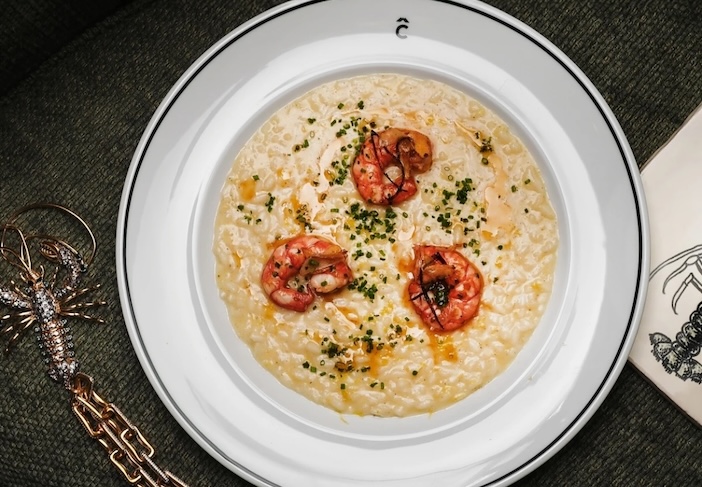
The main event is wet rice, a Portuguese staple, which arrives rich with tomato and herbs in a little copper saucepan upon a cork placement, ready for spooning onto a plate of grilled sea bream topped with red shrimp tartare. After all this, I plead for a light pudding and am pointed towards a fluffy cheesecake slathered in silken vanilla mascarpone sauce and berries coulis, accompanied by a tawny port.
At the opposite end of the dining spectrum, Pizzeria Patife is tiny, rowdy and rammed. But the sourdough bases and inspired gourmet toppings make it well worth joining the inevitable queue and then squeezing into a stool at the stainless-steel counter. Patife’s 48-hour fermented sourdough bases emerge blistered from the oven, achieving that elusive balance between pillowy and chewy. Toppings are imaginative, generous and shift with the seasons – think: peach, ricotta, guanciale, sage and honey, or courgette, burrata and mint, for summertime.
Where to Drink
“Just when I thought Lisbon couldn’t get any more trendy natural wine bars…” I joke to my local friend Francisca when we meet at Nata. Attractive hipster clientele spilling onto cobbled streets? Check. Pared-back interiors with plenty of concrete, raw plaster and reclaimed tiling? Check. Nattily branded wine labels, their cloudy contents in shades of orange, amber or dusky pink. Check.
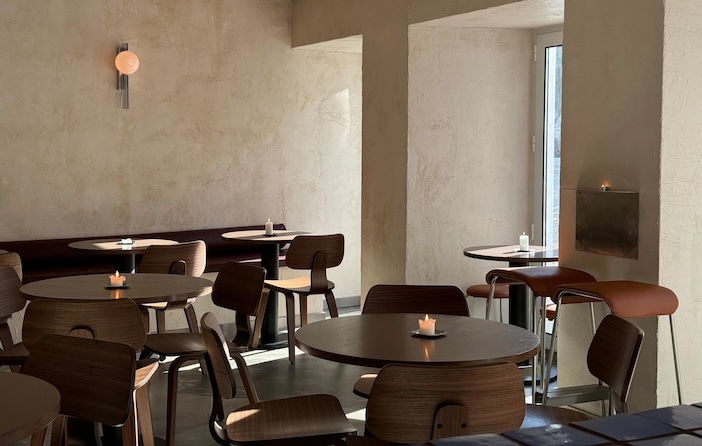
Nata pitched up in the bohemian Anjos neighbourhood a year ago and swiftly became a favourite for its programming – everything from kitchen takeovers to live jazz sessions, ice cream pop-ups to DJ sets, oyster tastings to bikini customisation – as much as its tipples. The current menus are scrawled on mirrors. I happily surrender decision-making to wine pro Francisca (her family owns the longest-running Port house, Van Zellers & Co) and we sample our way from Bairrada in central Portugal to Slovenia. Big, buttery green olives, pickles and focaccia with goat cheese and honeyed apricots provide sustenance.
Some might groan at the overt trendiness, but not I. For those of us who live in the sticks, where ordering a glass in a local bar usually means an uninspiring toss up between chardonnay and sauvignon blanc, a vibey bolthole like Nata and its ever-changing selection of interesting niche wines from small European producers is a sight for sore eyes. One of the reasons, in fact, why I keep going back to Lisbon.
For more information about Lisbon, including details of what’s on, tips for travellers, and to start planning your trip, please visit the official tourism website at www.visitlisboa.com.
Header image: View at sunset from Castelo Sao Jorge (courtesy of Visit Lisboa)