Four trips in a year and counting — for Kerry May, Berlin isn’t a fling, it’s a full-blown love affair. From Cold War relics to hedonistic hideaways, protest parks to punky riverfront bars, she explains why the German capital keeps luring her back for more…
I was recently asked if I had a lover in Berlin. It wasn’t an unreasonable question — I had just booked my fourth visit in a little over a year. This isn’t the first time I’ve fielded such enquiries; someone else suggested it might be the kinky clubs drawing me back. But the truth is rather less scandalous and far more consuming. Berlin itself has me hooked.
I’d wanted to go for a long time, intrigued by this city which was the centrepoint of some of the most significant twentieth-century history. What did it look like, this city which was once devastated by bombs from our own country? How had they rebuilt and what remained? Were the scars of Cold War division now invisible, or do obvious differences between east and west remain? Was it still “poor but sexy”? Was it typical of the famed German efficiency and rule-following?
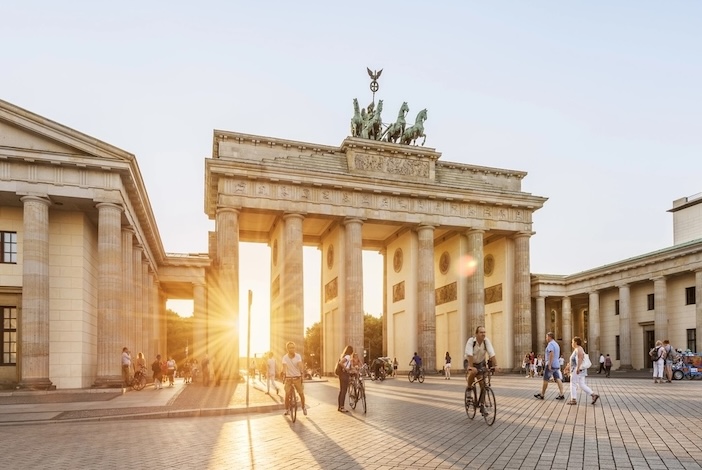
Brandenburg Gate (photo by Dagmar Schwelle)
My first visit was a breathless whirlwind of the usual major landmarks — the Brandenburg Gate, the Reichstag, the Memorial to the Murdered Jews of Europe, Alexanderplatz, Checkpoint Charlie and a sombre visit to Sachsenhausen concentration camp, just an hour north of the city.
I came home feeling I’d barely scratched the surface. I had questions about the pink and yellow pipes weaving through the streets above the traffic. I found myself sucked into the somewhat cynical marketing of the Ampelmann (green crossing man) but enjoyed it nonetheless. It was winter and I’d not had the chance to enjoy the many parks and outdoor activities.
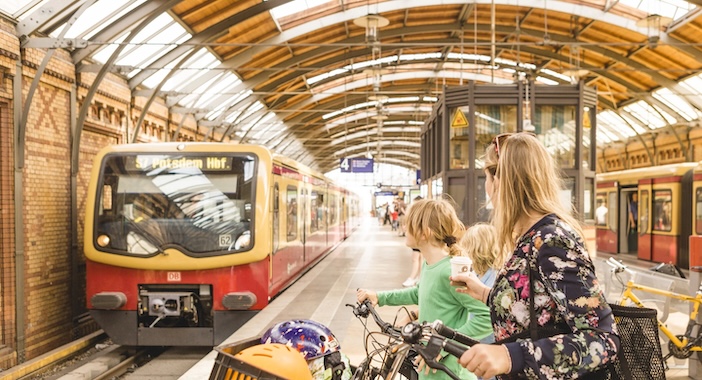
Berlin’s ausflug (photo by Thomas Kierok)
The public transport system felt wonderful — bus drivers who waited when they saw me sprinting to the stops, subway stations you can just walk in and out of without ticket barriers thanks to a trust system (fare evasion is still an issue), and a lack of uniformity in the station designs that makes them interesting, diverse and photographic. Perhaps it’s my inability to speak German, but it seemed like there was less mass advertising there too.
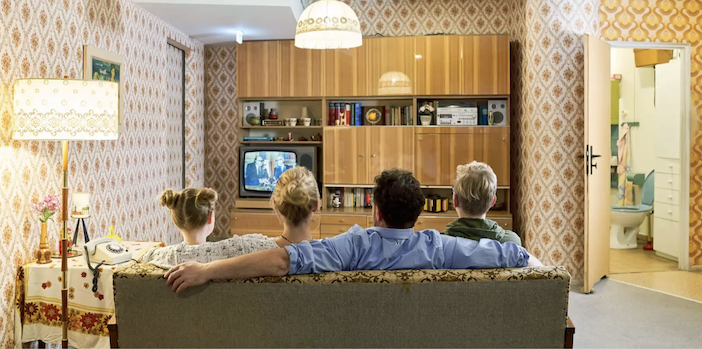
The DDR Museum opened my eyes to the realities of life in the German Democratic Republic, with a perfect mix of information and hands-on history. You can pretend-drive a Trabi, sit in a Stasi cell, explore a typical DDR apartment knowing your neighbour’s would be identical…but also learn how women’s equality flourished in that era (through necessity, sure, but it was still progress), understand how elections were fixed, why allotments became so important and how the allure of the West drew so many to risk their lives crossing the Wall.
I also visited a spa, throwing myself in at the deep end of free-body culture on day one of my visit, getting naked around some Berliners and understanding why that was important too.
Another thing I loved whilst whizzing all over the city was the prevalence of art. There are more galleries and museums than you can shake a stick at, but for me the street art was the real draw. Not just the East Side Gallery and the innumerable tags and pictures which adorn walls wherever you go, but gritty areas like RAW-Gelände on old railway yards, interactive pieces, and the creativity which has been allowed to blossom all over the city — evident in Kreuzberg, Haus Schwarzenberg and the scattered kunstautomats dispensing tiny artworks from repurposed vending machines. Art is alive and well here, and it hasn’t all been put in a museum or commercialised. At Mauerpark fleamarket I found Popsynth Troubador performing a cheeky song on his keyboard whilst wearing his trademark silver helmet.
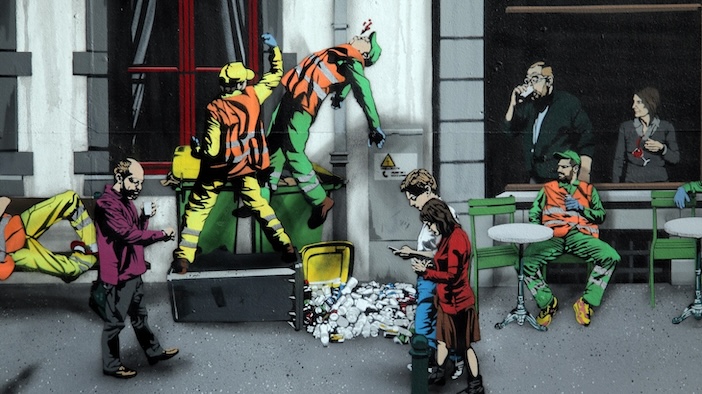
Berlin Street Art (photo by Original Berlin Walks)
So you see I left Berlin after my first visit feeling there was a whole world of creativity, freedoms and history still to be discovered. Eight months later I was back with Stirling.
This visit was precisely scheduled. Did I have an Excel spreadsheet of all the places I wanted to visit, with locations, opening times, prices and whether they offered a discount with the (well worth it) Berlin Welcome Card? Yes, I did. Did I plan the days with attractions in the same area so we could avoid zigzagging across on the U-Bahn? Again, yes. If I was uptight about my planning it was only because I was so hungry to see as much as possible. Luckily Stirling is used to this and didn’t complain. In fact, he loved it as much as I did.
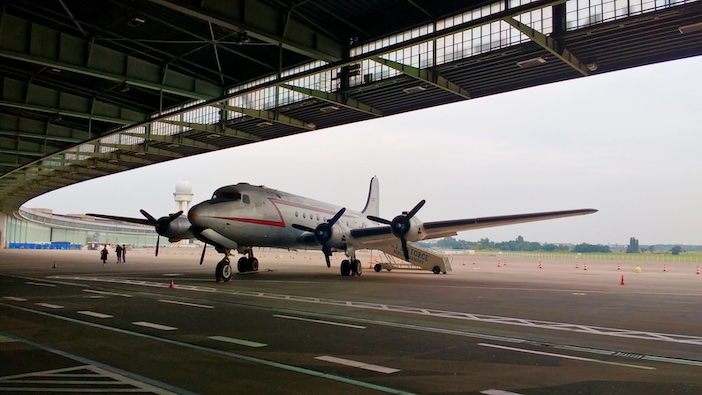
Digging a little deeper this time, we enjoyed an incredible tour of Tempelhof Airport, disused since 2008 but with the runways repurposed for a public park enjoyed by skaters, picnickers and dog walkers, alongside community gardens and housing for asylum seekers. The terminal is a delight of golden-age design, and the tour allowed us behind the proverbial curtain — to luggage conveyor belts and even a hidden basketball court built to dispel boredom for the US Air Force once based there. Ticket halls, car rental booths and hangars were fascinating to see devoid of crowds.
We learnt more about the Berlin Airlift saving West Berlin during the Soviet Blockade, all the while thinking, “This place would absolutely be luxury flats if we were in London.” And why wasn’t Tempelhof destined to the same fate? Because citizens’ action group 100% Tempelhofer Feld drove a referendum in 2014, in which 64% of voters opted to keep it as it is, throwing developers’ plans into disarray and securing the much-loved green oasis for Berliners and tourists like us. Power to the people.
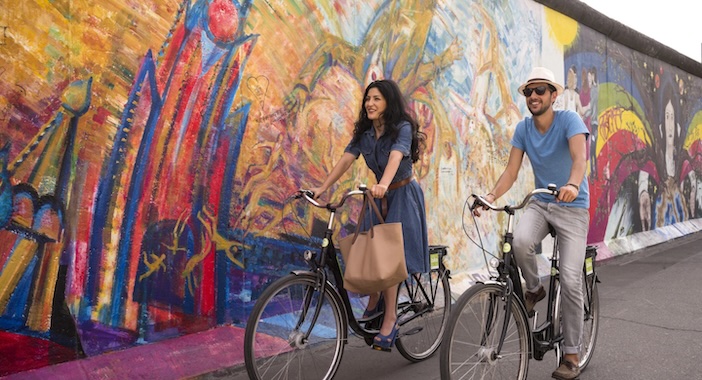
East Side Gallery along the Berlin Wall (photo by Philip Koschel)
I just love how Berlin has retained so many tangible testaments to its varied past. You can explore subterranean bunkers, get right up close to a flak tower, wander an old Soviet listening outpost at Teufelsberg, step through a border crossing booth in the Tränenpalast, literally walk the path of the Wall, feel tiny amongst grand socialist architecture at Alexanderplatz or on Karl Marx Allee, explore a concentration camp and touch the desks of power in the Stasi Museum. And that’s before we even mention Cecilienhof Palace or the House of the Wannsee Conference, neither of which I’ve made it to yet.
My history teacher’s utopia aside, Berlin has other attractions too. The part of me that is still young and rebellious was drawn to places that look as though they’ve never seen a planning permission form. I’m referring to Holzmarkt 25 and similar establishments which appear to have been formed by little more than garden sheds, chain-link fences and a determined neighbourhood collective, but which absolutely thrive with bohemians, artisans and tradespeople serving drinks, food and handicrafts.
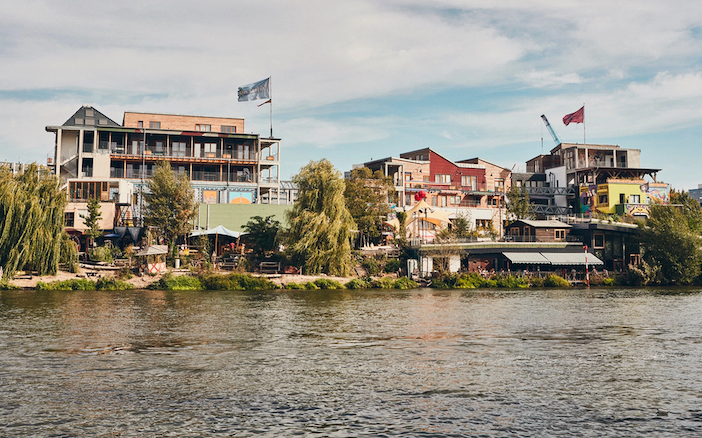
Holzmarkt seen from the Spree (Photo © Studio Eyecandy/Holzmarkt 25, courtesy of VisitBerlin)
The first time we visited Holzmarkt, enticed by the view from the train, it was decked out with a lit-up altar, fire pits and fairy lights, marquee tents and painted skulls, indicating we had stumbled into the lovechild of Glastonbury Festival and Cinco de Mayo. The toilets are plastered with stickers — another common sight in this city where people express themselves with the most portable art imaginable. Throw in a tattoo vending machine, riverside seating, a photoautomat and a teledisko booth and you’ve ticked all my boxes for a sensory-delighting, dopamine-pounding location. We had drinks, hit the photobooth and squeezed into the teledisko to jump up and down to Rage Against the Machine. So yes, Berlin makes me feel particularly free.
For a more curated experience, there’s a seemingly endless museum offering. On this trip we explored the Humboldt and Deutschlandmuseum, immersing ourselves in exhibitions that tackled Germany’s past and present with creativity and candour — from interactive displays asking visitors to consider issues like gentrification, fast fashion and security, to sweeping room-by-room journeys through the country’s history, complete with clever use of sound, film and reconstructed spaces that make you feel as though you’re stepping through the decades.
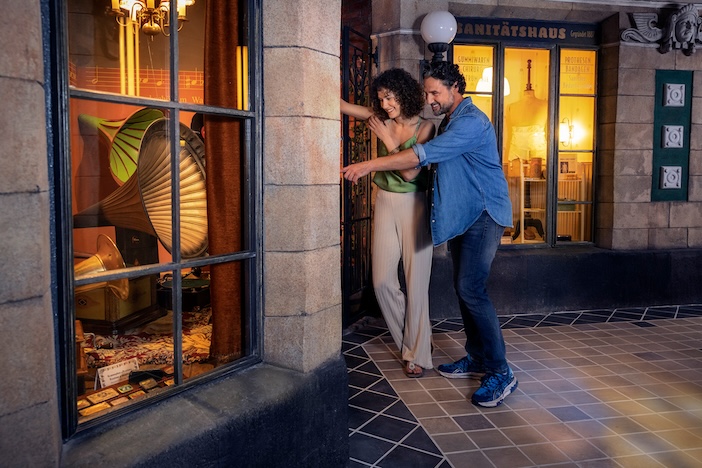
A reproduction of the ‘Roaring Twenties’ of the Weimar Republic at Deutschlandmuseum
The Weimar decadence, the gut-twisting horror of the Second World War, the rubble-strewn aftermath, the tension of the Cold War and the euphoria of reunification — all presented in ways that manage to be informative without being overwhelming. Even when busy, these spaces held my attention and reminded me why Berlin remains such a vital place for understanding Europe’s story.
I’m waffling away here, rambling on like a drunken relative at a Christmas party, but that’s how I feel about Berlin. It’s endlessly interesting, the food is good, the people are (mostly) very friendly (Laura Ramoso’s bit about the “Berlin waitstaff who literally don’t care about you” was far too on the money based on my last visit), there’s tonnes to see and do, kink clubs if you’re so inclined, naked spas if you’re just dipping your toes in the proverbial water, and a general vibe of “let’s have a good time whilst also recycling properly”.
What’s not to love? The lover in Berlin is Berlin itself — and I’m smitten.
For more information about Berlin, and to start planning your trip, please visit the official tourism website at www.visitberlin.de.
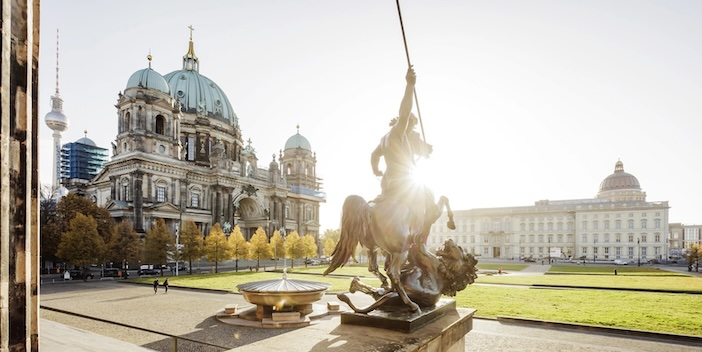
Header photo: Berlin Cathedral by Mo Wuestenhagen
Photos courtesy of VisitBerlin.de