In which Simon Rumley continues his Washington State wine odyssey, swapping Seattle for Snoqualmie Falls, the Yakima Valley and the unexpectedly glamorous town of Walla Walla…
For those who don’t know it, Washington State is Twin Peaks territory, and on the way to the legendary Walla Walla, we stop at the waterfall that opens the TV series’ iconic credit sequence. Thirty-one metres taller than Niagara but a lot less wide, Snoqualmie Falls is nothing short of stunning, hypnotic and, if you’re a fan, evocative. At its top still sits the Great Northern Hotel, where Agent Cooper stayed and which Audrey’s father owned. Refurbished, it’s now an upmarket spot called the Salish Lodge & Spa, but its low ceilings and wooden beams still recall the original. No robins were spotted in the vicinity, and Twin Peaks memorabilia was also surprisingly sparse — though given the series’ subject matter, that’s perhaps no bad thing.
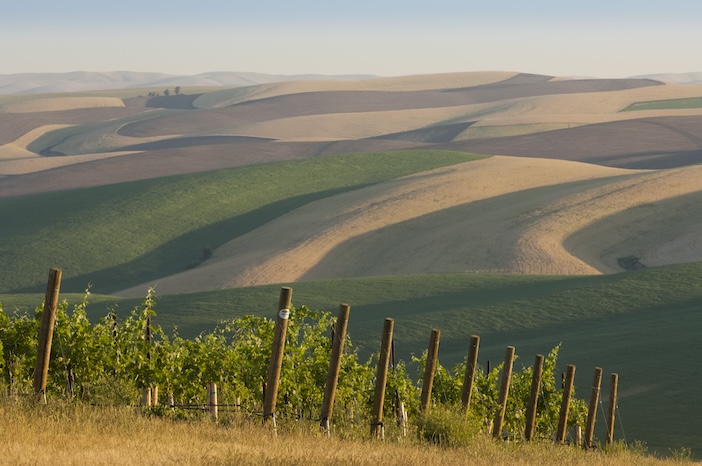
At some point, the tall pine forests and swirling mists of fictional Twin Peaks give way to a practically bald, wide-open landscape of green fields and gentle hills. We check out Two Mountain Winery, Dineen Cellars and Gilbert Cellars, all in or around Yakima and its beautiful valley, where fly-fishing, hiking and white-water rafting are part of the after-work landscape. Few, if any, of the state’s wineries can match the vintage of the Hedges Family Estate in Benton City, though.
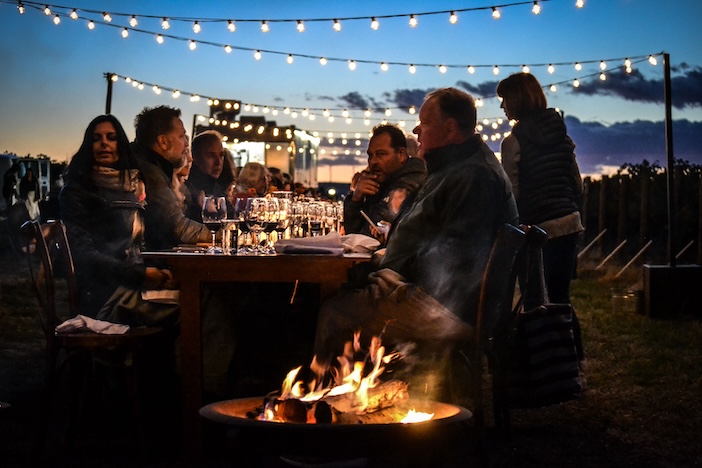
In 1976, Tom Hedges of Richmond, WA, married Annie-Marie Liégeois of Ossey-Les-Trois-Maisons, Champagne. They returned to Washington, but it took another ten years to export their first shipment of Cabernet-Merlot to Stockholm, and a further two to purchase fifty acres on Red Mountain. Since then, the business has expanded steadily and is now a 100% Demeter-certified biodynamic concern, co-run with the couple’s children. Closing in on their eighties, the energetic and charming Hedges seniors have become de facto elder statesmen, not only for their own brand but for Washington wine in general, and they throw an undoubtedly mean party. They live in a French-style chateau designed by their son and treat our whole group like returning heroes. There’s a magnum of champagne, there are speeches, there are stories about the Second World War, there’s some of the best steak I’ve ever tasted, and there’s even talk of opera singing that never quite materialises. As the evening progresses, conversation rises to a raucous pitch — a sure sign that no one is spitting any more.
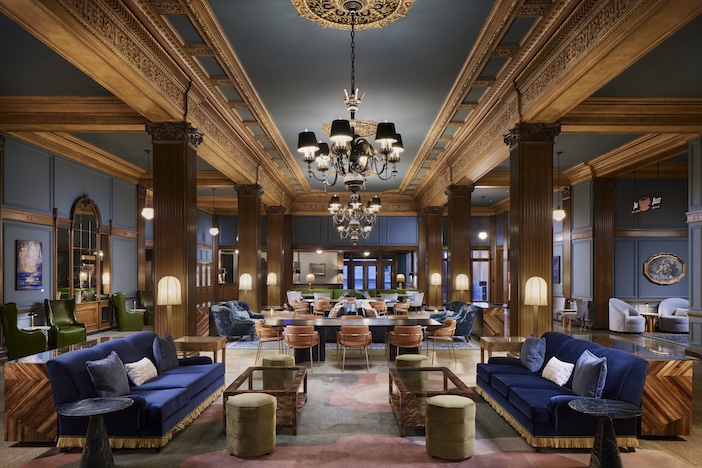
We spend two nights at the historic Marcus Whitman Hotel in Walla Walla. Slap in the centre of town, the short, stubby building looks as though it’s been lifted from 1920s New York and placed in exile, yet it still towers above the city’s other architecture. Inside, it recalls The Great Gatsby — dark, brooding, but charming. Full of leather chairs and sofas to converse or canoodle in, a real fire burns in the second reception, and art deco touches give the rooms a flamboyant twist on the contemporary. Celebrating its centenary in 2028, this hotel is an institution, and past guests including Louis Armstrong, Shirley Temple and Dwight D. Eisenhower prove it.
Until recently, Walla Walla was most famous for its high-security penitentiary, home to notorious murderers like Gary Ridgway, the “Green River Killer.” Nowadays, wine is giving the town a new lease of life, and along Main Street, almost every other space is a restaurant or a wine-tasting bar. Even Twin Peaks’ own Special Agent Dale Cooper (Kyle MacLachlan) has muscled in with his own winery. We don’t have time to visit his Pursued by Bear vineyard, but we do visit or engage with Avennia, Kiona Vineyards, Vital Wines, Seven Hills Winery, L’Ecole No. 41, Echolands, Bledsoe, Syncline, Grosgrain Vineyards, COR Cellars and Betz Family Winery. We eat chorizo paella with Spanish-born, now Washington-resident, Jesús Martínez Bujanda at his stunning Valdemar Family winery, where, on the way to the dining space, a desiccated vine hangs at the top of the stairs. With its horizontal cordons and vertical trunk, it resembles a crucifix and states, more eloquently than any winemaker could, that wine-growing is its own religion.
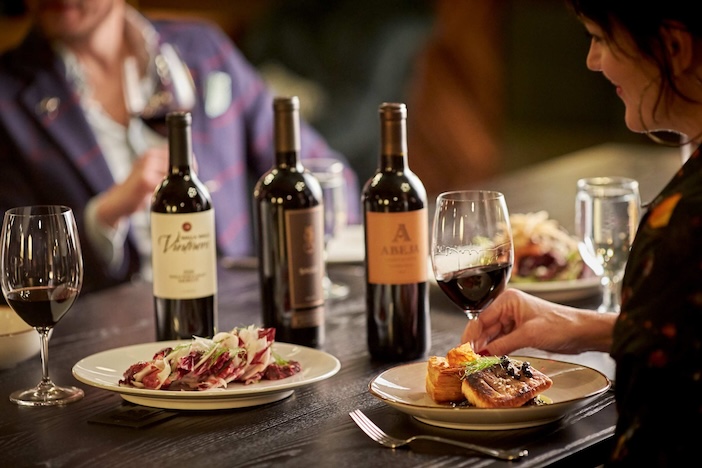
We continue tasting an average of thirty to thirty-five wines a day, so that around day four or five, something strange happens. Maybe my palate has become more sophisticated; maybe it’s palate fatigue. Maybe it’s that I don’t like the wine, or that I’ve simply drunk too much; maybe it’s a survival instinct kicking in. It goes against my nature, but I decide it’s finally time to spit. I grab a nearby spittoon and do the dirty deed — too hard, in fact, and some splashes back in my face. It feels strange but oddly grown-up, like something of an accomplishment: not drinking the wine just because it’s there. Then I notice everyone else has cup-sized personal spittoons, and I worry I’ve gobbed into the wine bucket. I look around the table for disapproving glances but find none, and squirm in my seat for the rest of the tasting.
We eat excellent pizza for lunch with Walls Winery owner Mike Martin and his general manager, Ben Kaehler. Mike brings up the penitentiary and describes how elder inmates are sometimes escorted, in uniform and handcuffs, to the local optician — but one wine grower who very nearly ended up in Walla Walla is McIntosh Forrence, co-owner of Le Doubblé Troubblé winery. A self-professed ski bum, he met his co-owner, Chris Stiffler, while hitting the powder at Tahoe, and found himself one night at a gig in Walla Walla’s YMCA. Slightly bored, he persuaded a bunch of fellow gig-goers to climb up to the roof to continue the party. Unimpressed local residents called the police, and the building was surrounded by flashing lights and pointed guns. Lucky for him — and lucky for local wine lovers — McIntosh smooth-talked his way out of arrest, and continues his party spirit by holding wine pop-ups in ski-lift car parks around the region.
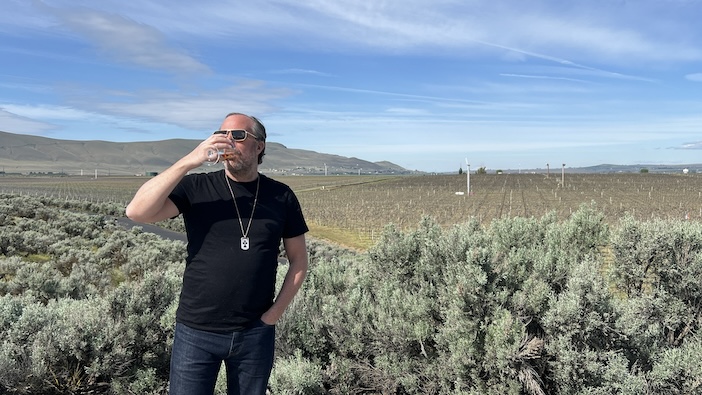
Much of the technical talk about winegrowing shoots over my head; it could be in Dutch, or double Dutch. It’s a steep learning curve, and over the week I hear about — and occasionally attempt to discuss — things I had no idea even existed: volatising esters, racking, over-racking, egg fermenters, diurnal shifts, caliche, phytotoxicity, drooping brome, trellis systems, the phenolic impact on acidity, maceration periods, proportional grafting, mono-cropping, phylloxera, nematodes, nematicides, malolactic fermentation. The list is endless, and by the end of each day, all I really want is a clean, cold beer. Nonetheless, I learn a lot — including the fact that I don’t love Cabernet Sauvignon. On our penultimate afternoon, something strange happens. I don’t know what possessed me; it just slipped out: “This white tastes of apples.”
“That’s exactly what I was thinking!” one of the wine masters confides, before upping my ante by naming the specific variety of apple he had in mind.
Still a long way to go, then — but after an enjoyable and intense week, some of the grape work has obviously rubbed off. And for that, I am pleased, and even a little proud.