The Arb’s golfing aficionado, Rob Rees, finally gets to play one of Europe’s best courses almost 20 years after he first wrote about it, predicting it would become a world beater. Let’s find out how he got on…
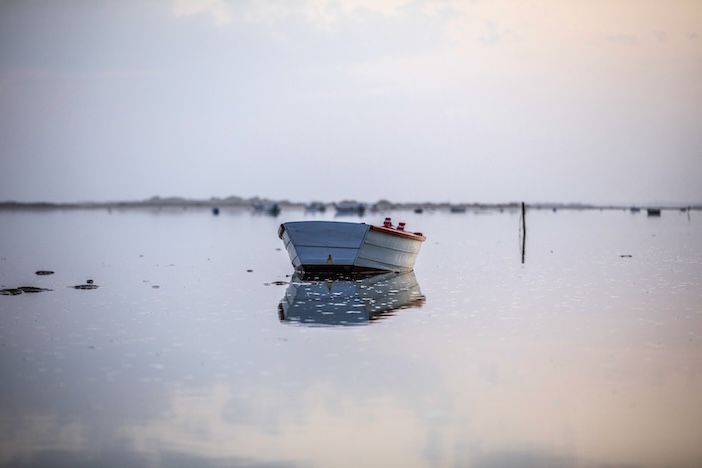
I always forget how quickly the Algarve sheds its skin once you turn east from Faro airport. The roundabouts and hypermarkets fall away and suddenly the winding road is edged with salt marshes and water channels that flash silver in the sun. In the shallows of the Ria Formosa, fishing boats bobble quietly through the inlets. This is a different Algarve — calmer, greener, more authentically Portuguese.
You pass through working Olhão, its markets still selling what came off the boats that morning. Fuseta follows, low-rise and sea-facing, a place that hasn’t tried to reinvent itself. Then the beauty that is Tavira, always slowing my pulse. Elegant without effort, bound by Roman bridges and cobbled streets, it hums gently with real life: old men talking politics in the shade, friends lingering over coffee, laundry fluttering above tiled façades. Tavira isn’t your chocolate box, curated, chintzy tourist fishing town — it’s properly industrious and lived in.
Beyond town, the Atlantic retreats behind barrier islands, dunes and wide beaches, reached by ferry rather than promenade. At Praia de Cacela Velha, the sand runs pale and long, the dunes rise softly behind, and the sea changes colour with the tide. A handful of beach restaurants scatter tables straight onto the sand, grilling fish landed hours earlier, clams opening in garlicky steam, wine poured cold and without fuss. It’s time for shoes off, and forgetting about counting time.
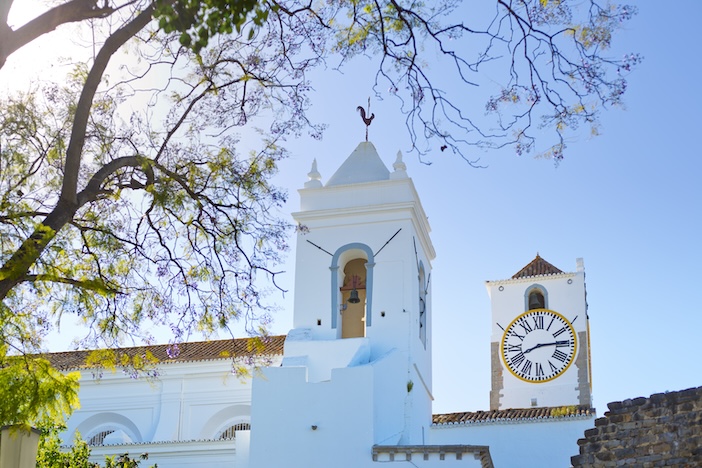
Turn inland and the landscape shifts again. Salt marshes give way to citrus groves, cork oak, olive trees and gentle hills, lifting towards the Serra do Caldeirão. Villages here are modest, proper places — whitewashed, unhurried, tied to markets, seasons and ordinary working Portugal. Life happens at its own pace.
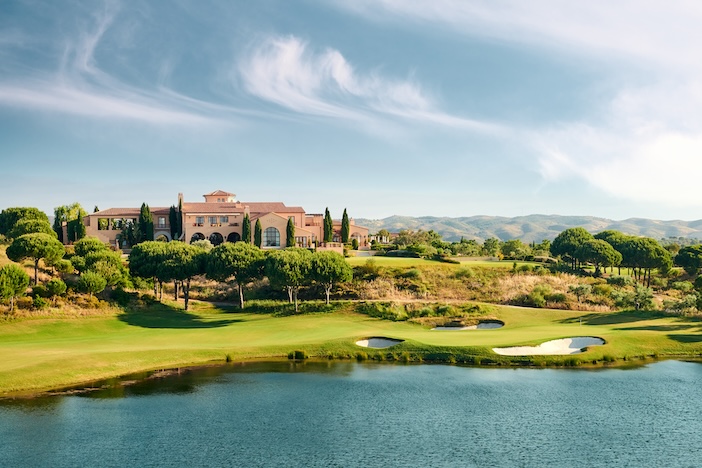
This is exactly why Monte Rei belongs here. It’s one of the most unfettered, authentic golf course locations imaginable. It has consistently ranked as the number one course in Portugal since its opening in 2007. The final approach climbs into the hills and the golfing estate opens out — more than 1,000 acres of rolling countryside, expansive but never ostentatious. Under new ownership by Arrow Global, Monte Rei feels exclusive and assured and now at the point of a major refresh.
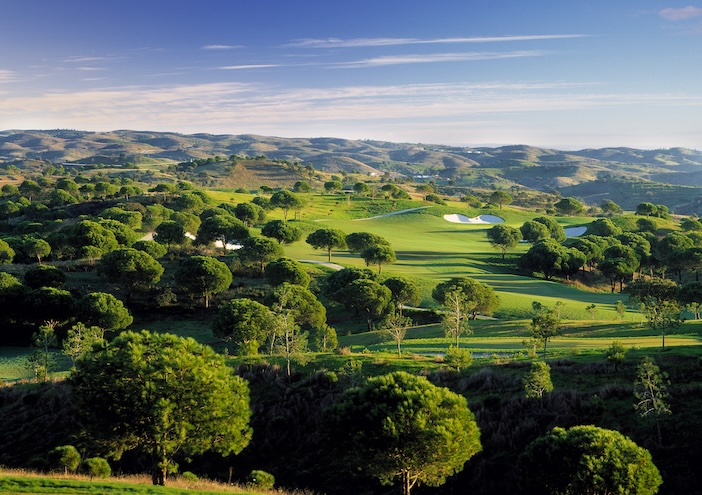
I first wrote about this course in 2006 before its opening, predicting it would become as great a new global golf course as both Loch Lomond in Scotland or Royal Westmoreland in Barbados. I was right…but it was now time to find out for real by actually playing it…despite two rained out attempts over the last twenty years to get out onto this hallowed turf.
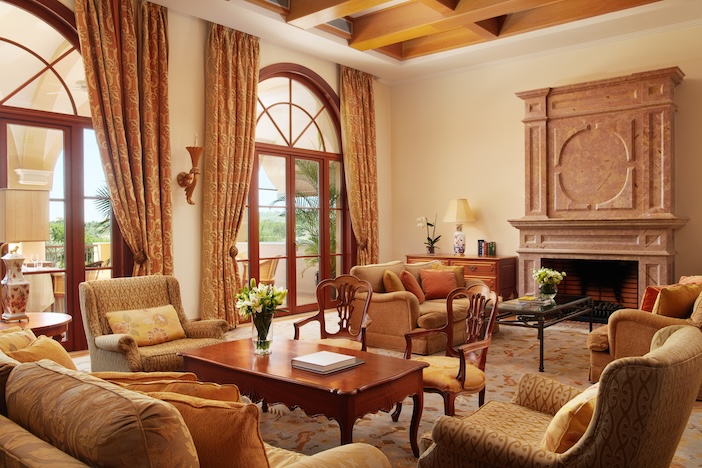
Monday morning weather looks good before huge gathering storms are due to roll in. My base is one of the Monte Rei rental apartments, and they are a revelation. Designed with golfers in mind, they are spacious, elegant and supremely comfortable: big terraces overlooking fairways, light-filled living spaces, contemporary kitchens and beautifully judged interiors. They work just as well for couples as for families or groups, and the sense of privacy is real. This isn’t hotel living — it’s the luxury of feeling temporarily at home in a remarkable place.
Mornings begin at The Clubhouse Grill, where breakfast is exactly how it should be: generous without excess, relaxed without sloppiness. Proper coffee, warm bread and pastries, fruit, local honey, eggs cooked to order. You eat looking out over the course as the dew lifts and the first groups drift quietly to the tee. No rush, no theatre — just the sense that the day has been set up properly.
Then there’s the golf. The Jack Nicklaus Signature North Course remains the finest in Portugal, and one of Europe’s most intellectually satisfying designs. Nicklaus’s vision here was clear: let the land lead, reward strategy, and ensure the course remains endlessly playable. Fairways are generous, but angles are everything. Greens are bold, contoured and superbly defended, demanding imagination and nerve rather than brute force. The terrain is undulating, with significant elevation changes that require strategic shot-making, suiting my short driving game perfectly.
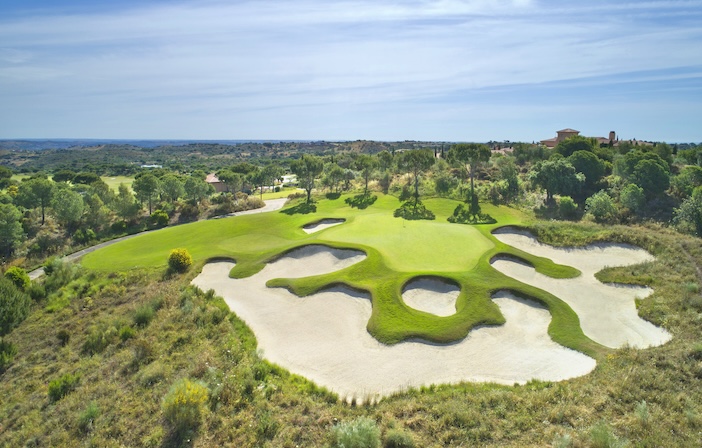
Six holes, in particular, capture Nicklaus’s architectural intelligence and his understanding of how golfers actually think. The 3rd, a par 4, presents an immediate choice from an elevated tee: hug the left for the best angle into the green and flirt with trouble, or play safely right and face a longer, more awkward approach — the green is subtly tiered, rewarding those who thought ahead. It’s classic Nicklaus risk-reward, delivered early and without apology.
The 4th, a beautifully flowing par 5, tempts aggression off the tee but punishes impatience, its landing zones narrowing the further you try to bite off and its green complex cleverly protected — Nicklaus encourages ambition, then asks you to earn it. The 7th is a short par 3 over water that is all about commitment: the wind is rarely what you think it is, so pick the club, trust it, swing. Hesitate and the lake waits. Elegant, nerve-testing and unforgettable.
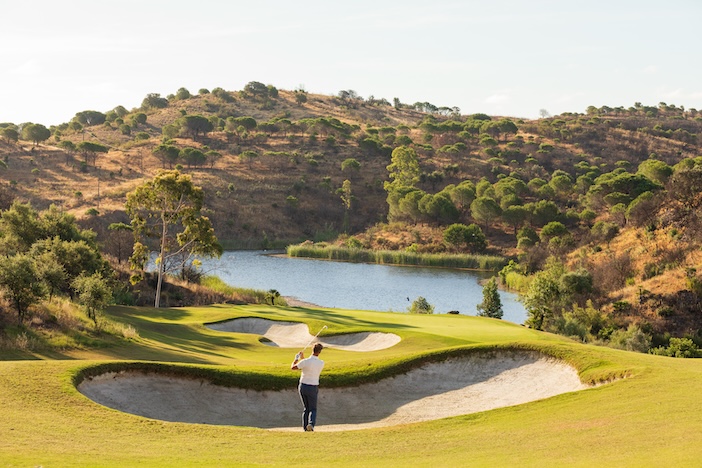
After the turn, the 10th offers a strategic reset — visually open, but subtly dangerous, where the best drive isn’t the longest but the one that leaves the cleanest angle into a green that slopes and sheds shots with quiet ruthlessness. The 15th, one of the most underrated holes on the course, asks the tee shot to shape with the land before the approach plays into a green that sits beautifully in its natural surrounds; it rewards control, balance and touch.
And the 18th, a magnificent closer sweeping back towards the clubhouse, is where long hitters eye the green in two, only for water, bunkers and a narrowing fairway to sharpen the decision — lay up, and placement becomes everything. With the clubhouse terrace watching on, it’s a finish that feels properly theatrical.
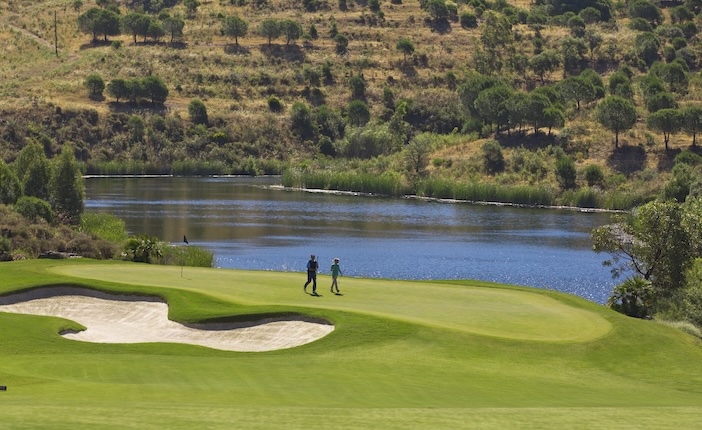
The conditioning, as you’d expect from a course of this standard, is immaculate — firm fairways, true greens, sculpted bunkers. Equally, service matches it stride for stride: clubs cleaned, shoes polished, water appearing exactly when you want it. It’s polished and classy without being fussy.
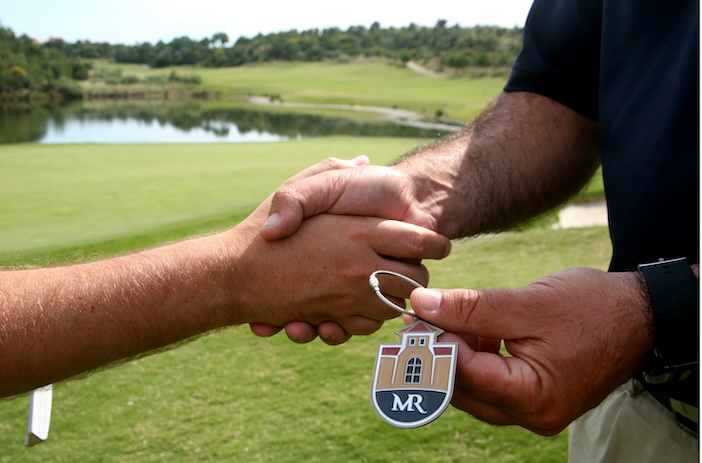
One of the nicest touches was being approached by the caddy master as I sunk my putt for bogey on the 18th green. He handed me a beautiful metal bag tag with my name engraved on it. The perfect memento for the perfect golfing morning. I played to my 18 handicap – huge satisfying, plotting my way around this magnificent course.
Lunch on the terrace afterwards feels earned. Piri piri chicken with rice and salad; grilled prawns slicked with Algarve olive oil, tomatoes that taste of sunshine and chilled whites from nearby vineyards. Food here celebrates the region and the provenance is as local as you can get.
The future at Monte Rei is equally compelling. Plans are advancing for the South Course, which will add a second championship layout and cement Monte Rei’s position as one of Europe’s great multi-course estates. Arrow Global’s wider portfolio of golf investments brings experience, ambition and financial muscle, but crucially, there’s no sense of haste. The priority is excellence, sustainability and longevity.
Compared with the Golden Triangle – busy, glossy, gated, relentlessly busy – this eastern corner of the Algarve feels restorative. Here, dunes and salt marshes replace tourist hotels, villages retain their everyday rhythm, and golf is allowed to just belong naturally. For me the perfect golf holiday is about slowing down, chilling after your round, enjoying good food, a decent book and appreciating the authenticity of the locale.
Monte Rei doesn’t just offer world-class golf and luxury. It offers relief from the maddest corners of the busy mainstream Algarve and proper space, calm and authenticity. That may be the most compelling luxury of all.
For more information, including details of accommodation, tee-times and packages, please visit www.monte-rei.com.