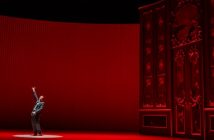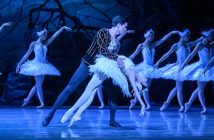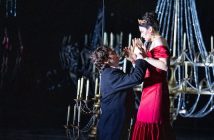
As Glyndebourne’s sun-scorched lawns brace for a new production of Richard Strauss’s Ariadne auf Naxos, Larry catches mezzo-soprano Samantha Hankey between rehearsals to talk trouser roles, calendar Tetris, and the small mercy of a week off for antiquing. Hankey sings the Composer in Laurent Pelly’s new staging, opening this summer alongside Rachel Willis-Sørensen’s Ariadne and David Butt Philip’s Bacchus…
How’s your time in the UK so far – apart from the fact we’re in a heatwave?
Well, up until a couple of days ago, they’ve been keeping me pretty busy in rehearsals…
Of course, it’s a new production, isn’t it? That’s exciting. To set the scene, can you give us a very quick précis of Ariadne auf Naxos?
Sure. A wealthy individual has hired a number of performers for a fabulous evening, a dinner party, and at the last moment decided that instead of having two separate performances, a comedy and a tragedy, he wants them to perform simultaneously, so they can wrap things up quickly and catch a firework display. The comedy troupe is more amenable to this, whereas the classical side, the tragedy side, Ariadne, are a bit horrified and not sure how they’re going to pull this off.
My part, the Composer, is particularly devastated because this is his big masterwork, but in the end they put on something pretty spectacular, and there’s a happy ending.
Great summary, and sorry to put you on the spot there. How has it been interpreted this time? Is there a particular theme to it, or an era it’s set in?
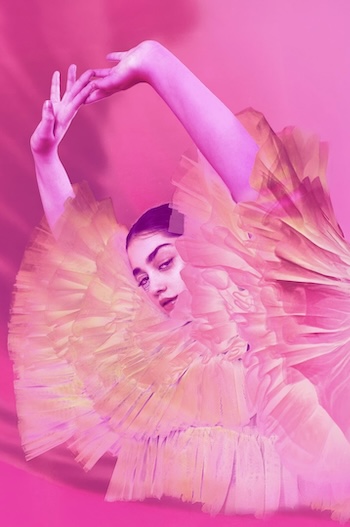
Ariadne auf Naxos concept art (Leire Cavia/Stocksy. Image design by Louise Richardson)
I’m not sure how much I’m allowed to divulge!
Of course, no spoilers…
I’ve done a few other Ariadnes, though, and I’d say this one is perhaps a bit more fantastical.
Well, on that note, you’re reprising the role you played earlier this year in Vienna. Is that how you came to be cast here at Glyndebourne?
Oh, no, that’s a really short turnaround — opera contracts come years in advance!
Ah, sorry, I’m showing my ignorance here…
It’s okay — maybe things are done at slightly shorter notice in the UK [laughs]. But it was pretty standard, Glyndebourne reached out to my agent and said they were putting on a new Ariadne and would like to cast me as the Composer. Usually that’s how it comes about. Or my agent is in touch with opera houses and asks what operas they have coming up in future seasons that are suitable for my repertoire.
So it’s a coincidence of sorts that you played the part in February in Vienna, and now here at Glyndebourne in the summer…
I’d say it’s this giant calendar Tetris — who reaches out first, and then you block three months to be here at Glyndebourne, and other things get requested. Can I fit that in? Does it work in advance?
So, the Composer — that’s what’s known as a “trouser” role, isn’t it? A male part typically played by a soprano or mezzo like yourself. Why is that? If the part is male, why not write it for a male voice?
Well, that comes down to the music, and matching the parts to the voices you need – as you would instruments in an orchestra. Strauss had a great preference for female voices, you can look at his other operas and see he absolutely loved writing for women, specifically the blending of women’s voices, which is often — after Baroque music — why we start seeing composers writing trouser roles for women: they feel the blending of female voices is more beautiful, or it simply fits what they hear in their head. There’s also the practical matter of young men’s voices changing — it makes more sense for a woman to play the role than a fully grown man who’s a bass-baritone.
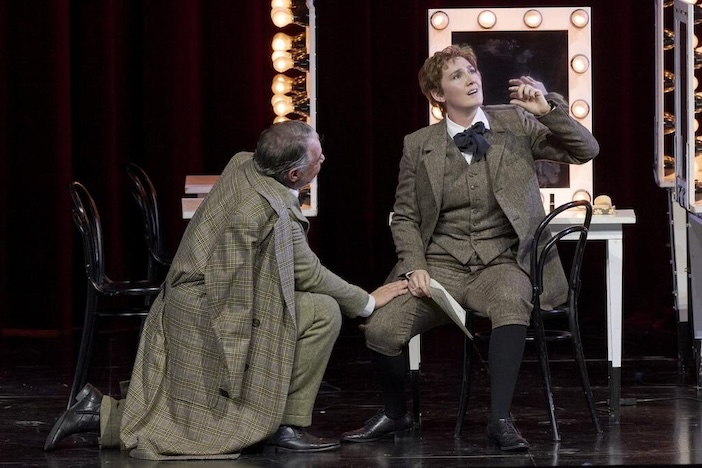
Samantha Hankey as The Composer in Ariadne auf Naxos at the Vienna Staatsoper (photo by Michael Poehn)
And if you’re casting by voice first and fitting that into the story, then you can see why.
Yes, it’s actually a distinctive choice by the composer to want women in these parts, even though the libretto has cast the character as male.
Was it originally a soprano role?
When Strauss was writing, the idea of mezzo and soprano was a much looser mentality, which gave more flexibility. It’s become very rigid over the years. When he originally wrote the role, it was for a soprano named Lotte Lehmann, who’s very well regarded, very iconic — if you don’t know much about her career, I’d highly encourage you to look her up, she’s amazing. She was involved in his other works, too, but it wasn’t until the 1950s that mezzos started singing the role of the Composer.
Is there anything particularly about the role that you enjoy, or anything particularly challenging?
I’d say it’s one of the more challenging roles by nature of how short and condensed it is. It’s definitely a sprint — very intense singing for a very short period of time. It sits in a much higher register, and because it was originally written for soprano and only later taken over by mezzos, I actually find it quite comfortable, because I lie in that Fach territory. I also enjoy how dramatic a character he is — these extreme fits of joy, rage and despair. Getting to finally do a new production of Ariadne is nice, because I get to explore that more.
Excellent — and are you finding a contrast with how you’ve performed the role previously?
Yes, I’ve done a more modern production and a more traditional one, and both had their strengths, but it’s interesting working with Laurent [Pelly], as this is his second time doing an Ariadne auf Naxos — he has a history with the piece. He’s trying to reimagine it again twenty years later, and going against some of the more traditional elements.
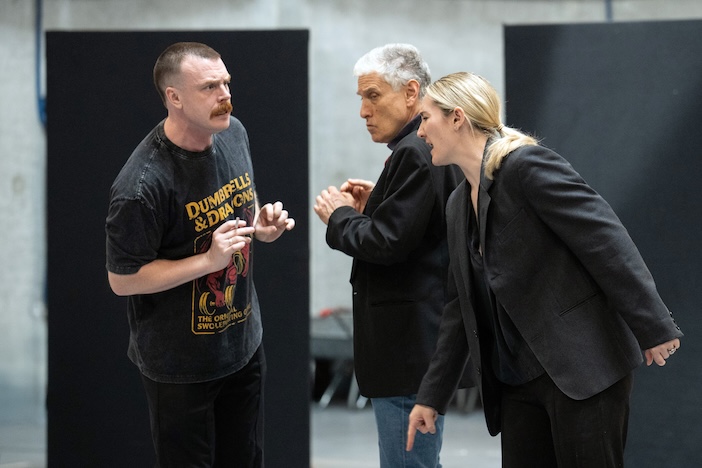
Rehearsal of Ariadne auf Naxos, June 2026 (© Glyndebourne Productions Ltd. Photo: Richard Hubert Smith)
One thing I can say is that I don’t touch a single prop. As the Composer I’d usually have a pen and paper, messing around with pages and editing scores — the acting part, I suppose. But this time there’s a lot more imagination.
Is there a particular section you’re looking forward to?
It’s really just an intense thirty minutes, but there’s a scene, the duet with Zerbinetta — although it’s not really a duet, we don’t sing in harmony, but it’s considered the duet — that was the first bit of Strauss I ever sang with an orchestra, and every time I come back to it I feel this settling; it feels so familiar. It very much started guiding me, almost ten years ago, to realise that Strauss is where I feel comfortable. That was a lightbulb moment for me — I was singing in Cenerentola at the time, in San Francisco, and had been fighting and fighting for Angelina to feel natural. Then I did this duet, and it all locked into place.
You found your space…
Yeah, and it’s nice coming back to that.
Related to that — is there a particular moment you’d call your breakthrough? Career-wise, when things started to open up?
 It’s funny, because I think we’re always looking for those moments — someone goes on America’s Got Talent and gets discovered, say — but in my experience it hasn’t happened that way. It’s been more organic. I’ve been really lucky that there’s been a series of big moments that have continued to guide me down this path.
Was it in 2018 you won the Glyndebourne Cup? Can you tell us about that?
Oh, yes, it might have been 2017. It was an all-Mozart competition. In the finals I sang from La Clemenza di Tito, and something from La Finta Giardiniera.
In terms of breakthrough moments, did that open any doors for you?
Sure, that’s one of them. There was a series of competitions that were really important. I treated competitions as an effective way of auditioning — the juries are often involved in casting, so it made more sense to try to reach more people and audition at the same time. It also introduced me to the UK.
And you’ve been back to Glyndebourne since then…
Yes, I was here four years ago, for Alcina.
What’s the draw of Glyndebourne for you?
It’s nice just getting to perform for a different audience. My work takes me all over the world — I get to experience different cultures, different languages in many cases, different traditions.
I was just looking through your season so far, and it’s quite a schedule — Vienna in February for Ariadne, then Monte Carlo for Così Fan Tutte the same month, then Tales of Hoffmann in Berlin, then Naples for an evening of opera, back to Vienna for Rosenkavalier, not to mention Tokyo… do you take a holiday?
[Laughs] Yes, I’m trying to plan one. But the opera season actually starts in September — for opera companies, we tend to look at a season like a school calendar, so the 25/26 season for me started in Tokyo. What’s important is that we’re entertainers, and usually people want to be entertained on their time off, so Decembers tend to be very busy with holiday concerts…
And it’s the outdoor festival season in the summer…
Yes, and this is coming to the end of the season.
What do we have to look forward to next season?
Well, 26/27 I start in New York, back at the Met playing Dorabella in Così Fan Tutte…
Oh, excellent — you’ve played her before as well, haven’t you?
Yes, she’s one of my more performed roles. There’ll be a live cinema broadcast too, for anyone who can’t make it to New York.
When you’re performing roles you’ve played often, how much are you interpreting based on the nature of the production?
All the time — it’s very nuanced. Sometimes the conductor will want a phrase delivered a certain way, and that changes what I did in the last production; whether to take a breath before a word, add an ornamentation, take longer on an appoggiatura, or put appoggiaturas everywhere. Sometimes there are very specific requests.
And that’s the appeal for the audience, too — that’s why it remains such a draw, because you see different interpretations…
 Exactly. Particularly with Mozart, there’s a different flexibility than with Strauss. Because I perform the two quite regularly, I don’t have the choices in Strauss that I have in Mozart — I can’t add extra notes, I don’t have as much to overlay onto the music, which is expected with Mozart, for me to put my own spin on it. Whereas with Strauss, the only real choices I have to make are in the delivery of text and dynamics. It also changes based on the collaborators in the room — the conductor, the director, your colleagues — and it adapts given the place…
The setting, as in the acoustics?
Sure, but also different tastes, and different theatres.
What about new parts, is there one you haven’t played yet that you’d love to?
Sure, many. As far as Mozart goes, I’ve yet to perform Sesto — I’d love to do that someday. I’d also love to play the Countess in The Marriage of Figaro. Dramatically she’s a really interesting character, and vocally I think she’d be a very comfortable fit.
That’s for the producers out there, reading this! And your schedule, where next after the Met?
So, starting at the Met for Così, then I go to Berlin, to the Staatsoper Unter den Linden, for Rosenkavalier. In January I’m back in Munich for revivals of Don Giovanni as Elvira. February I do another Ariadne in Chicago, another Rosenkavalier in Houston in April and May, and then Così again in Santa Fe next summer.
That’s a repertoire and a half already.
Yeah, it’s really nice that I have my roles. And I’m happy that this coming season I come back to a lot of my beloved theatres, especially closer to home — it’s always nice being in the States.
So, while you’re here in the UK, have you had much chance to see anything of it?
I actually had the last week off, because my part’s only in the prologue, so we’d finished the staging of that, and I’ve been driving all over. I’ve been doing quite a bit of antiquing — having a great time looking at curiosities and beautiful old things.
Oh, really?
Yeah, I’ve been to Brighton a few times — I like it there, excellent food. And Petworth.
Oh, lovely — yes, Petworth’s charming. You’re in the right place for antiquing, for sure. And in this unseasonable heat, I’m sure that’s to be endured. Well, this has been fabulous. Lovely to speak to you, Samantha. Thank you for taking the time.
Thank you — and if you’re coming to see the show, come by and say hi.
That would be lovely. Thank you again, and best of luck with the run.
Ariadne auf Naxos runs at Glyndebourne from 19 July – 29 August 2026, directed by Laurent Pelly and conducted by Robin Ticciati, with the London Philharmonic Orchestra. The cast includes Rachel Willis-Sørensen as Ariadne, Samantha Hankey as the Composer, David Butt Philip as Bacchus and Alina Wunderlin as Zerbinetta. Visit www.glyndebourne.com for tickets and more information.
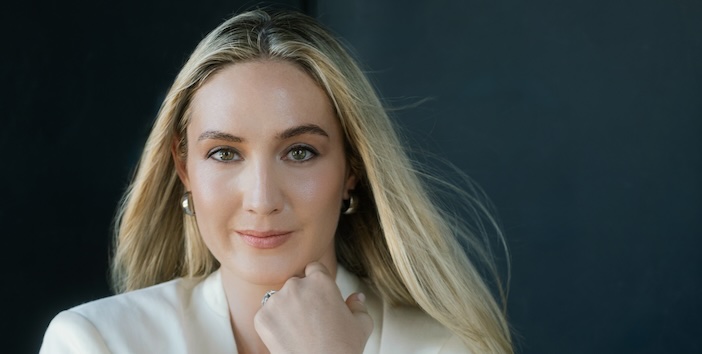
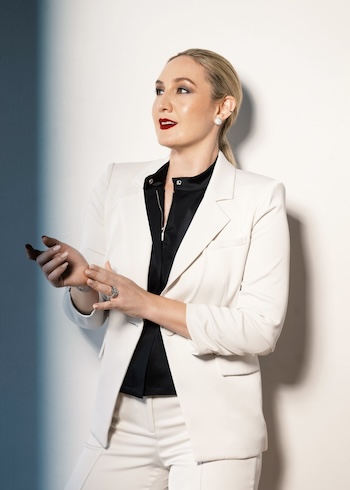
Portrait photos by Chris Gonz and Famous