In which Larry takes a twin-prop into the Dolomites and eats his way from a three-star chef’s manor house to a farmhouse kitchen, skiing just enough in between to justify it…
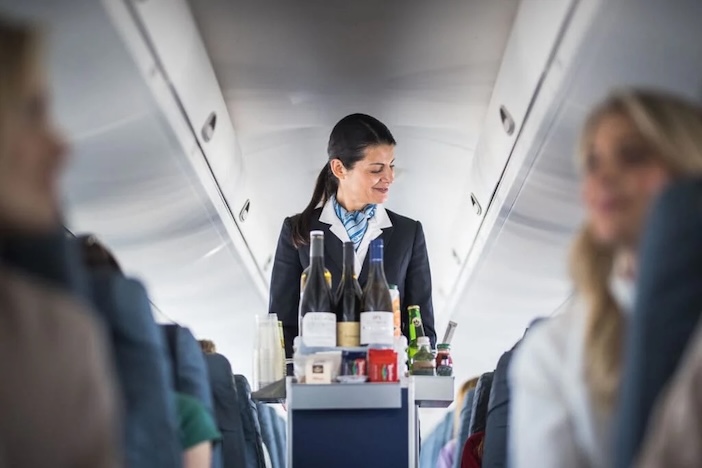
My introduction to South Tyrol begins somewhere over the Alps, courtesy of the snack trolley. SkyAlps, the region’s own small airline, in a manner befitting the 1950s flies twin-propeller planes into Bolzano, and in place of the usual pretzels it offers a packet of curious, cumin-scented, rusk-like discs that looks built to outlast the flight, and quite possibly the decade. I nibble, I ponder, I pocket the rest.
That evening it reappears, this time at the hands of one of the most revered chefs in Italy, if not the world. ‘Schüttelbrot,’ Norbert Niederkofler tells me, ‘Shaken bread.’ It is how mountain households made bread last through the winter, and it is, he explains, his whole philosophy in a single crispbread: use what the mountain gives you, waste nothing, and make it keep. He calls it Cook the Mountain, and it turns out to be the thread running through every meal of my trip.
South Tyrol takes its food very seriously indeed. A province of little more than half a million people, it holds 21 Michelin-starred restaurants – only Naples and Rome have more. Even here, though, Niederkofler stands slightly apart. He won three stars at St. Hubertus in San Cassiano, then moved his team down the valley to Brunico, where his new restaurant, Atelier Moessmer, went from opening to three stars – and a green one for sustainability – in four months. Nobody had done that before. It has been a fixture on the World’s 50 Best list ever since.
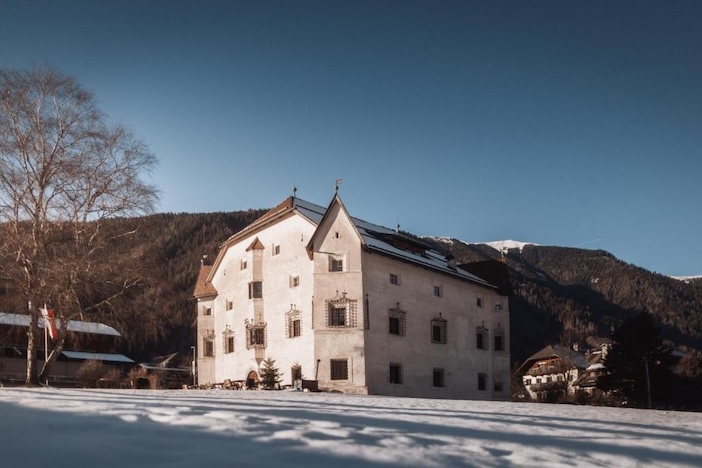
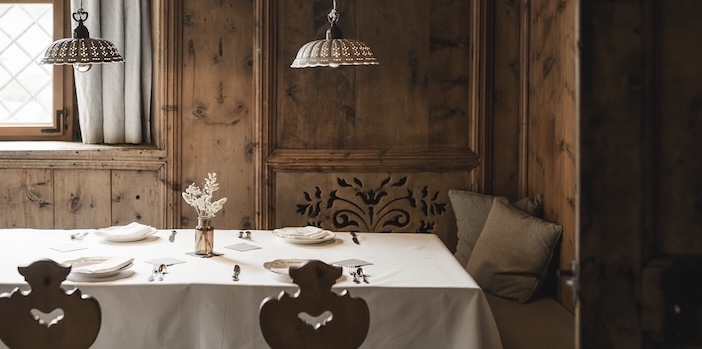
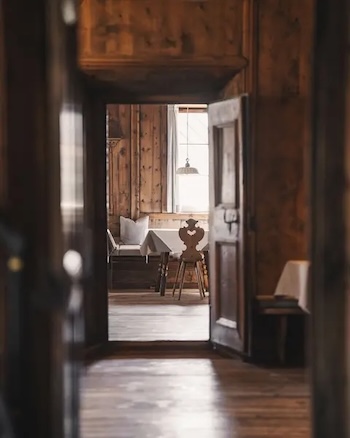
Ansitz Heufler, his latest venture, is a gentler proposition. It’s a 16th-century merchant’s house in the village of Rasun, all wood-panelled stube, vaulted ceilings and original windows and fireplaces, restored so lightly you’d think the previous owners had just popped out for a pint of milk. ‘It’s not about having a restaurant,’ he tells me, ‘it’s about a home. I wanted a living room in the mountain.’ He pitches its ten rooms as a stay in a noble house rather than a hotel, and you believe him. This is working countryside, a region of family-run hotels where every chalet seems to keep some livestock in the garden and the nearest thing to a chain is the one on the gate. I can’t help wondering how long before the marketeers catch on and it all gets Disneyfied. Not yet, mercifully.
Where Niederkofler’s Brunico dining room is a temple, this is a kitchen table; sharing plates served on home crockery, family-style. The rules, though, are just as strict. No citrus, no olive oil, nothing that doesn’t come from the mountain. His produce comes from some forty farmers, practically within walking distance, with no middlemen. ‘We are the link between the producer and the consumer,’ he says. ‘We want to tell their story.’
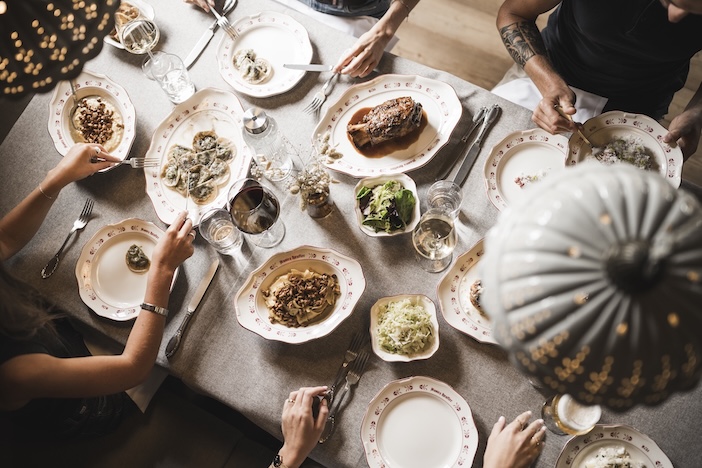
And what a story the Graukäse tells. This ‘grey cheese’ was once the poor man’s cheese of the valleys, made from whatever was left once the butter had been churned; now it’s a protected Slow Food treasure, and here it goes into a risotto with just the right amount of funk and umami. Alongside it comes a crisp Kerner, a cross of Riesling and the local Vernatsch, and the pairing is a revelation. South Tyrolean wine is one of the region’s better-kept secrets, partly because, like the Swiss, the locals drink so much of it themselves. Vines are everywhere – you notice them on the drive up from Bolzano, squeezed into every garden as though a back lawn would be faintly embarrassing.
 A Pinot Blanc arrives with calf’s head and salsa verde, a dish that sounds braver than it eats, and a Pinot Nero from Michael Puff, a 30-year-old producer from Appiano working on a tiny scale, is poured with Alpine char, Bozner sauce – Bolzano’s chive-flecked egg sauce – and Savoy cabbage stuffed with Berggenuss cheese. The rustic streak runs right through to pudding: a proper Kaiserschmarrn, the torn, sugared pancake, with berry compote, and Buchteln, jam-filled buns pulled apart by hand, with homemade ice cream. With them, a Rosenmuskateller that smells, as its name promises, of roses.
Just when I think we’re done, the waiter produces a wooden crate, clinking with homemade schnapps: pear, mint, even beetroot. I stick to a local brew of sixteen mountain herbs. It tastes distinctly medicinal, which, given the Kaiserschmarrn, feels like the point.
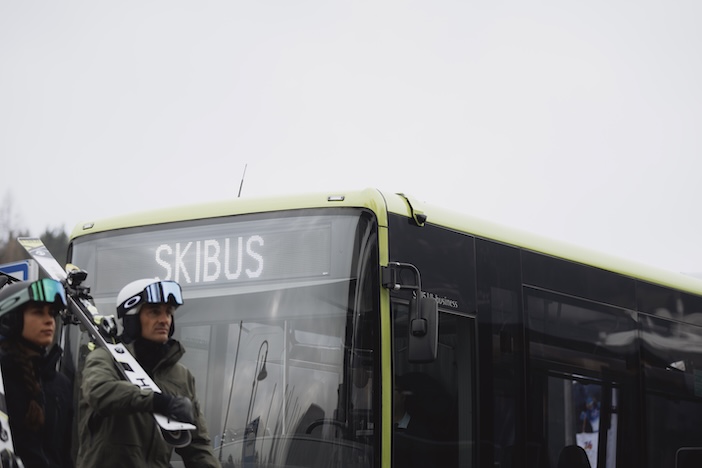
A meal like that needs working off, and fortunately Kronplatz, one of South Tyrol’s best-known ski areas, lies on the doorstep, with 121km of pistes. The Olympics are still in the air here, too: the biathlon at the last Winter Games was held just up the Antholz valley from Rasun, and the signs are still up. It’s all very inspiring, though not quite inspiring enough to have me skiing uphill with a rifle on my back. I take the bus.
Kronplatz is serious about its snow – some 760 snow cannons, fed by reservoirs filled with spring meltwater, with around 80 per cent of the water recycled – so the Cook the Mountain mindset clearly extends to the slopes. It extends to lunch, too. Among the 42 mountain huts, each with its own character, Niederkofler has another outpost at the summit: AlpiNN, beside the Lumen museum of mountain photography, for those who like their carbonara di montagna with a little more finesse. The flammkuchen is tempting, but then I spot the mountain ramen, and I’m sold.
One of the joys of skiing here is that you needn’t stay put. A single Dolomiti Superski pass covers some 1,200km of pistes across a dozen areas, so you can decamp to another valley entirely, and my culinary piste map points next to the Eggental, just outside Bolzano. Nova Levante – Welschnofen, if you’re asking in German, as most people here do – is a charming, quiet, cobbled village at the foot of the Carezza ski area.
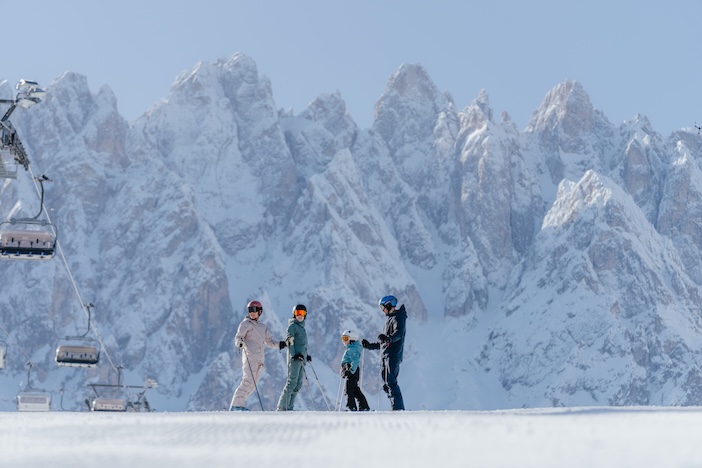
Carezza is a more modest affair than Kronplatz, at 40km of slopes, but there’s a great deal to like. The pistes are more like trails, winding through the tree line, and you can cross the valleys on blues, which makes it ideal for families and mixed abilities. And the scenery does the rest. At the top of each run you’re brought up close to the jagged teeth of the Rosengarten massif – the rose garden of King Laurin, who, legend has it, turned his roses to stone, and they still blush pink at sunset. The views are so good the ski map marks the photo points for you, and there are via ferrata routes across the peaks that must rank among the most enviable anywhere.
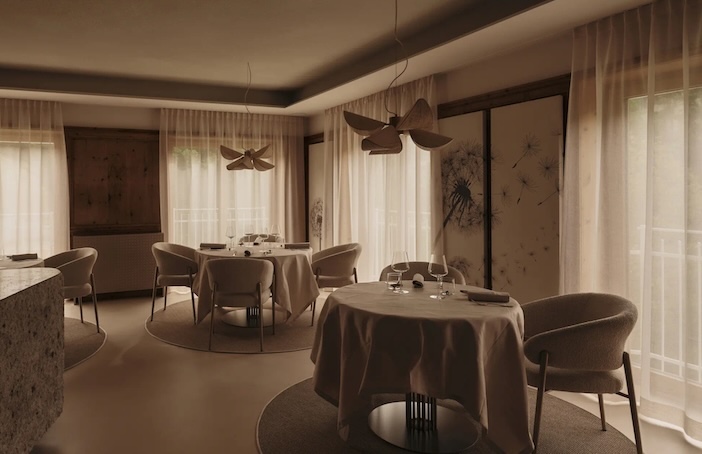
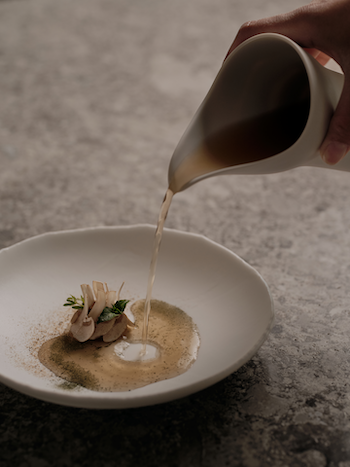 Back in the village, Cook the Mountain takes on a finer accent. The Johannesstube is a 16-cover backroom restaurant inside the Hotel Engel, led by chef Philip Lochmann and known for its modern, vegetable-forward Alpine cooking. If Niederkofler is about what’s available in season and within reach, Lochmann takes it a step further: winter is for pickling and preserving, so his dishes reach beyond the season, and in doing so the ingredients change their character – and what he can do with them.
It’s cooking with the workings shown. Dishes arrive alongside their ingredients, and the chef pulls out jars of botanicals for us to sniff and rub between our fingers. The amuse-bouche is a vegetable ‘essence’, infused using koji and dressed with a white asparagus leaf. Bread isn’t so much a course as a performance: a dark, traditional potato sourdough, delivered with the most extraordinary condiments, a butter ‘candle’ among them.
The wines keep things just as local. A Chardonnay comes from a poultry farmer who resurrected the old vines on his land; it has a gloriously farmyard nose and is an ideal match for trout tartare with buttermilk and wood sorrel. A structured, floral Sauvignon Blanc proves a classic partner for Lochmann’s signature ‘hay’ soup, a dish he first created at chef school. And a char poached in mountain herbs comes with a Dolomiti that puts an experimental spin on a classic – aged in amphora, and herbal enough to meet the fish halfway.
It would be easy to dismiss all this as a fine-dining conceit, but sustainability isn’t a gimmick here. It’s simply how the place works. Smallholdings are everywhere, every household seems to keep chickens and grow its own vegetables, and everything is seasonal by default. At Kronlechnerhof, a farm set against a backdrop of peaks, half of the capacious barn houses half a dozen cows; in the kitchen, I make Knödel with the farmer’s wife. The milk comes from the cows in the next room, the eggs from the chickens in the yard, the butter is churned on site, the spelt is the farm’s own. It’s The Good Life on steroids, and I’ve rarely felt so thoroughly out-housewifed.
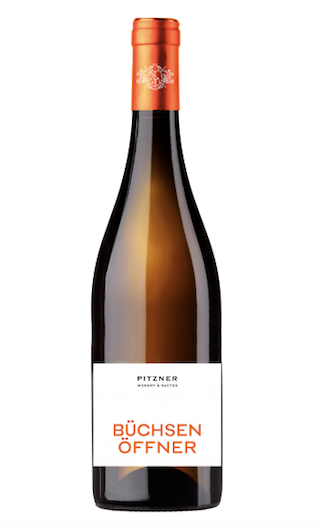 And if you want to dig deeper into the wine, the vineyards are only too happy to oblige, each with a story to tell and each playing with its methods. Pitzner sits in the shadow of Karneid Castle, just outside Bolzano, on a farm that once served as the castle’s armoury – the name comes from the old word for a gunsmith – and where the Puff brothers now make wines with rather more charm than firepower. Their sparkling Vernatsch rosé, made by the tank method, like Prosecco, from grapes grown on traditional pergolas, is floral and peachy. Their signature, the cheekily named Büchsenöffner – ‘can opener’, a nod to the farm’s gunsmithing past – blends Muscat with a little Pinot Grigio; on the nose it’s sweet and fruity, all Sauternes, and then on the palate it’s bone dry. Even the classics are given an edge by the terroir: the Sauvignon Blanc is fresh and grassy, with more minerality than the ones we’re used to.
With producers like these, and restaurants this determined to celebrate the region, you could spend a whole trip without straying from South Tyrol – and why would you? Best of all, SkyAlps lets you carry up to six bottles on board, the vineyards issuing a sticker that waves them through security. So I fly home much as I arrived: rattling over the Alps in a twin-prop, six bottles at my feet and, in my pocket, the last of that Schüttelbrot. It is, after all, made to last.
Larry was a guest of South Tyrol Tourism. For more information about South Tyrol, and to start planning your own culinary piste, please visit www.suedtirol.info.
SkyAlps flies from London Gatwick directly to Bolzano, with up to four flights a week and fares from around €150 each way. As part of the ticketed offering, passengers can enjoy complimentary South Tyrolean wines and regional treats onboard. For routes, fares and baggage allowances, including its wine-friendly bottle policy, please visit www.skyalps.com.
Larry stayed at Hotel Autentis where rooms start from €120 per night. Rooms at Hotel Engel gourmet & spa start from €148 per night.
Larry skied Kronplatz and Carezza on the Dolomiti Superski pass. For lift passes and piste maps, please visit www.dolomitisuperski.com, www.kronplatz.com and www.carezza.it. The Dolomiti Superski Pass starts from £67 per day.
For tastings and visits at Pitzner, please visit www.pitzner.it.