Two billion books, two great detectives and one very well-informed poisoner: at the British Library, a new exhibition marks fifty years since the death of the ‘queen of crime’. Rosalind Ormiston reviews…
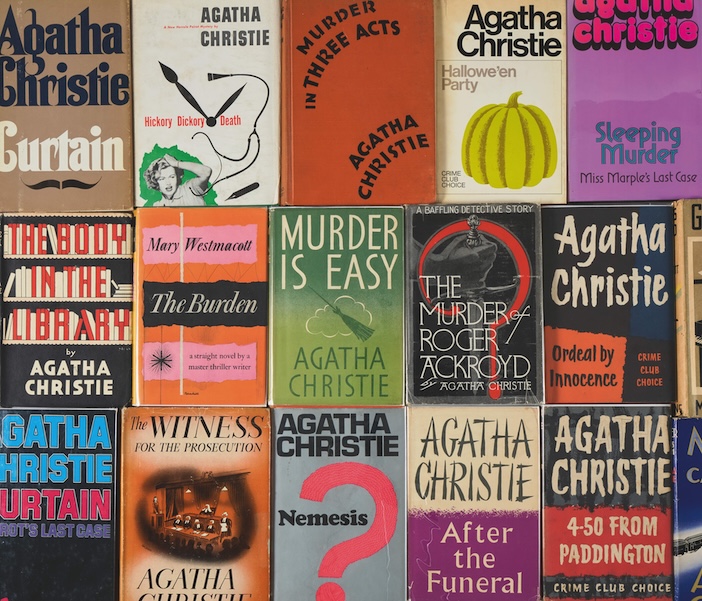
This year marks fifty years since the death of the novelist Agatha Christie on 12 January 1976. By then Dame Agatha Mary Clarissa Mallowan, née Miller (known by the surname Christie from her first marriage), had written 66 detective novels and 14 collections of short stories, introducing crime-fiction fans to the memorable sleuths Miss Marple and Hercule Poirot. With two billion copies of her novels sold, the British Library has created an exhibition showing how she achieved her ‘queen of crime’ status. From her early years to her life as a major celebrity, it is a sleuth’s guide to becoming a writer as good as Christie.
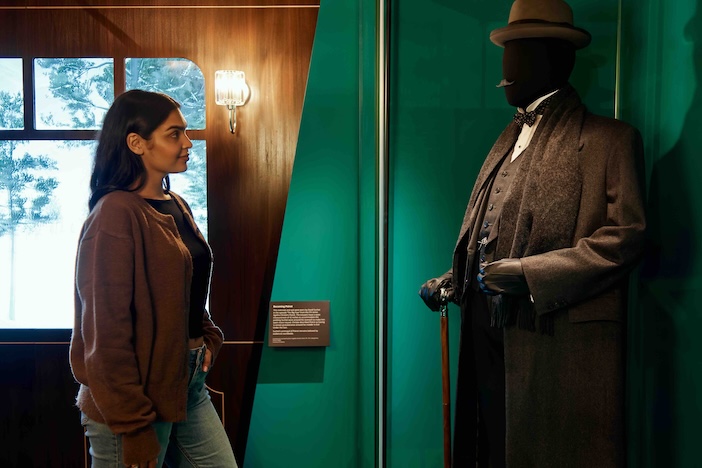
Agatha Christie: A World of Mystery reveals the aspects of her life that mirrored the stories in her books, including the plot twists and the knowledge of poisons, and is something like an ABC of how to write a crime novel. Lead curator Lucy Rowland has laid out the facts in a captivating exhibition. It opens with one of Christie’s notebooks, listing six questions, each with space beneath it, that were the basic elements of her plot constructions: Who? Why? When? How? Where? Which?
From there the exploration of Christie’s life and work begins, stepping into the affluent country house in Torquay, Devon, where she was born in 1890. Her wealthy family life is laid out in photographs, paintings, objects and room settings, and the connection to her novels is immediate: country villages inhabited by people like Miss Marple, and comfortable country houses with housekeepers, housemaids, chauffeurs and gardeners.
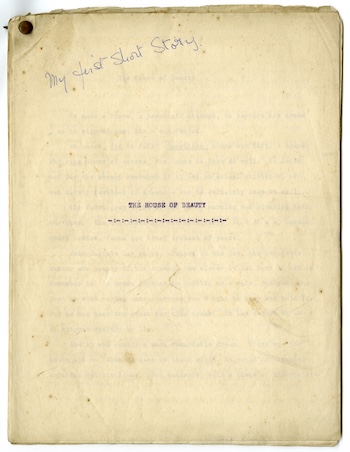 Her writing of crime stories began in childhood, when Agatha’s elder sister Madge (Margaret) challenged her to write a detective story. She did, and it sowed the seeds of her future career. Christie said that her breakthrough came during the First World War, when she volunteered as a nurse at the Red Cross Hospital in Torquay. Assigned to a pharmaceutical department, she acquired a knowledge of drugs and toxins that she said changed her life, and that gave credibility to her criminal plots. Her research notebooks on poisons are on display. Her first novel, The Mysterious Affair at Styles (1920), featuring the Belgian detective Hercule Poirot, was published more than a century ago.
Agatha’s first marriage, to the military officer Archibald Christie in 1914, produced one child, Rosalind, before ending in divorce in 1928 because of his infidelities. Christie wrote many of her detective novels in this period. Her second marriage, in 1930, to the archaeologist Sir Max Mallowan, was a close relationship that lasted until her death. His excavations at the Sumerian city of Ur, and elsewhere in Iraq and Syria, allowed Christie to travel with him and use the settings for novels.
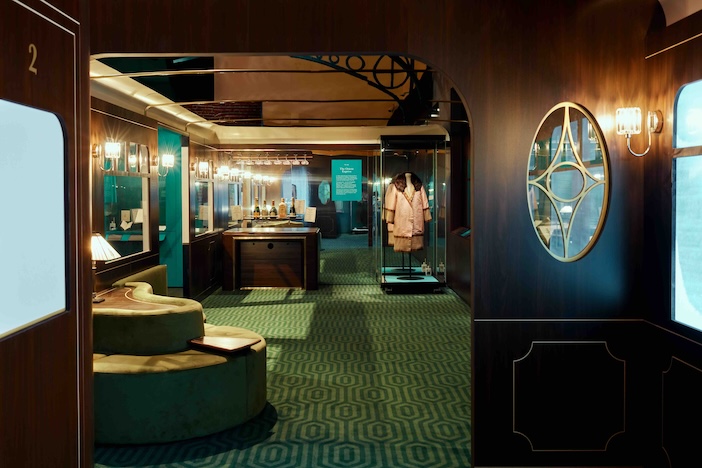
These and others, such as Murder on the Orient Express (1934), again featuring Poirot, her chief source of income, are conveyed in the exhibition. It’s fitting that Great Western Railway is supporting it, since so many of Christie’s novels involve train travel. The exhibition continues through to her lasting fame, with books adapted for plays and films.
On exit, the British Library shop is filled with copies of Christie’s detective stories and the accompanying book Agatha Christie: A World of Mystery (2026), which, with contributions from notable writers, reveals in detail how she used events in her personal life to create fictional characters known worldwide. For aspiring writers, young and older, the exhibition shows exactly the ingredients needed for the perfect ‘whodunnit’, and this ‘walk’ through her life highlights why she remains so popular today.
Agatha Christie: A World of Mystery runs until 20 June 2027 at the British Library, London (96 Euston Road, London NW1 2DB). For more information, please visit www.bl.uk.