Truly historic London restaurants are few and far between, yet the closing of the 200-year-old Simpson’s-in-the-Strand in 2020 during the pandemic has turned out, not only to be a blessing in disguise, but a miracle thanks to renowned restaurateur Jeremy King joining forces with The Savoy Estate, to which Simpson has belonged since 1904.
Last in the headlines in 2024 when he relaunched another London dining institution, the celebrity-favourite Le Caprice in St James’s which King founded with Chris Corbin in 1981, although he might have been forced to rename it Arlington, it revives the spirit of a restaurant where the ordinary Joe could rub shoulders with film, rock and actual royalty, from Elizabeth Taylor and Mick Jagger to Princess Diana.
But King’s newest venture has topped even that and it seems only fitting that the monarch of London’s restaurant scene and one of the city’s best advocates of preserving important sites, has overseen every aspect of restoring Simpson’s to its former glory – and then some. The result is guaranteed to delight anyone fascinated by London’s past and desirous of experiencing historic venues as originally intended.
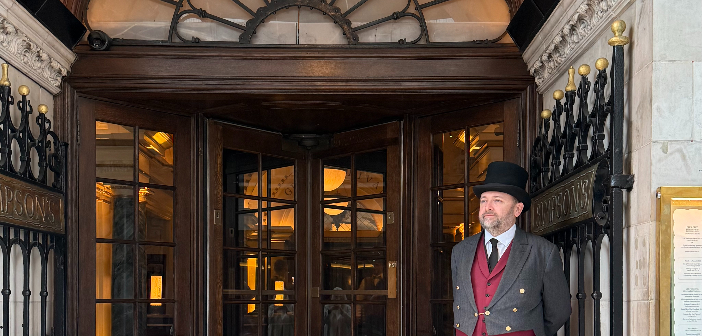
Featuring two glamorous restaurants and bars over 21,500 square feet, including an imposing Adam-style Assembly Room for private events of up to 100, guests are granted a spectacular first impression as they waft through the revolving doors, with the Art Deco lobby designed by architect Oswold Milne in the 1930s as gleaming as when it was first showcased.
The chequered stair carpets and handsome black and white tiled floor represents the building’s past life as the capital’s foremost chess venue and a history every bit as chequered and thrilling as the ‘Immortal Game’, which took place here in 1851 between Adolf Anderssen and Lionel Kieseritzky and is still regarded as one of the finest cerebral head to heads of all time.
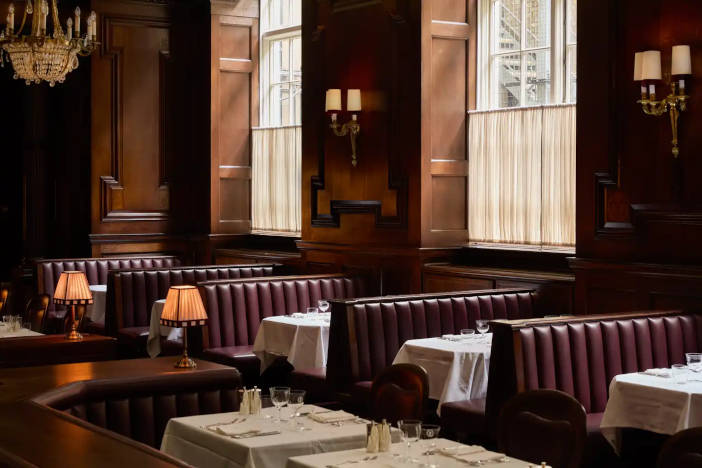
We dined in the wood-pannelled and chandelier-adorned Grand Divan, located through double doors on the ground floor and evocatively described as ‘the definitive English dining room’ where the most noticeable difference is the addition of suitably clubby brown leather banquettes and booths, banishing the desperately uncomfortable straight-backed mahogany dining chairs that were a fixture for so long.
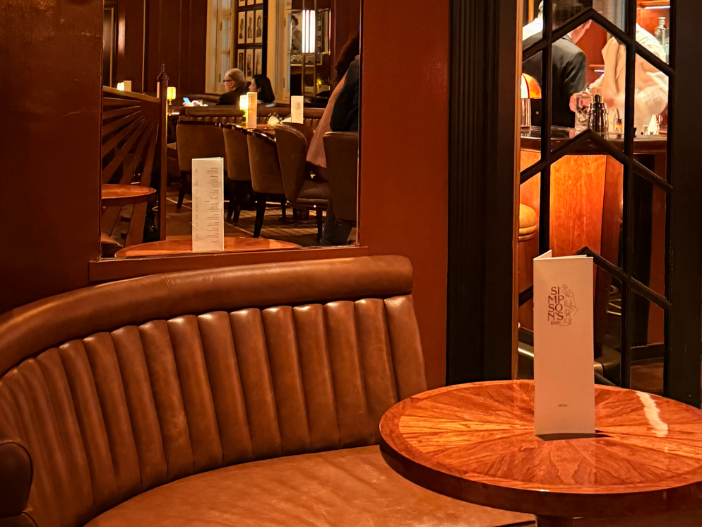
The recently opened Romano’s restaurant located directly above on the first floor offers ‘the lighter side of English dining’, just ensure that you allow plenty of time to sample an expertly-made aperitif at the adjacent Art Deco-styled Simpson’s, and perhaps a nightcap at Nellie’s Tavern in the basement; a low-lit affair capturing the seductive Prohibition speakeasy.
Regarded as one of the most prestigious dining houses in London from the mid-19th century onwards, when the great and the good came to Simpson’s for hearty British dishes and an atmosphere becoming a Pall Mall gentleman’s club, it’s incredible to think that you’re in the same room as giants of English literature including Charles Dickens and George Bernard Shaw, who, rather amusingly given his curmudgeonly reputation, was forced to shelter in the wine cellars because of a Zeppelin raid in 1917 during the First World War.
P. G. Wodehouse declared Simpson’s-in-the-Strand a “restful temple of food” and described one of his characters craving “roast beef, smoking hot, with Yorkshire pudding and floury potatoes on the side” in his 1932 novel, Hot Water. Prior to this, E.M. Forster borrowed Simpson’s for the backdrop to a scene in his 1910 novel, Howard’s End, with Merchant Ivory later shooting the restaurant on location for their 1992 Academy Award-winning British hit starring Emma Thompson and Anthony Hopkins.
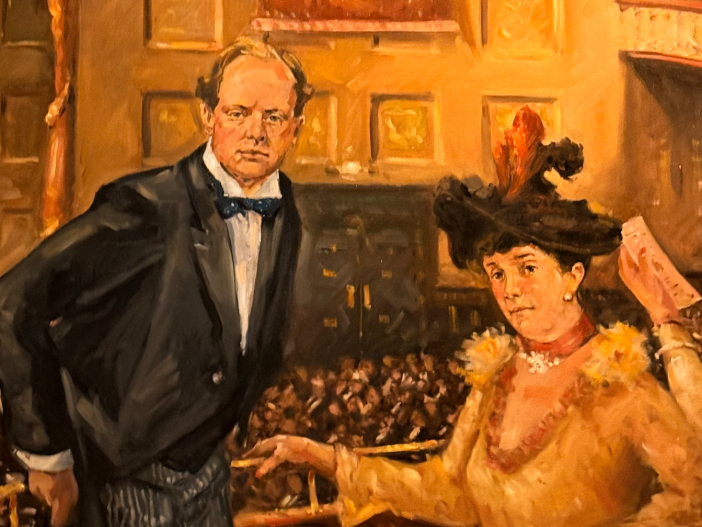
Before evolving into a restaurant famed for its roast beef, it began life in 1828 as a ‘Grand Cigar Divan’ offering gentlemen coffee, cigars and newspapers for one-guinea-a-year members or visitors paying a small fee. This remarkable venue has also hosted many of the most important political figures of the last 200 years including Gladstone, Disraeli and Winston Churchill who had a regular table by the fireplace in the Grand Divan and is the focal point of a large oil canvas located on the first floor landing. In fact, Simpson’s boasts so much history as to leave almost no time to discuss the food, but that would be unforgivable, as everything they do, they do incredibly well.
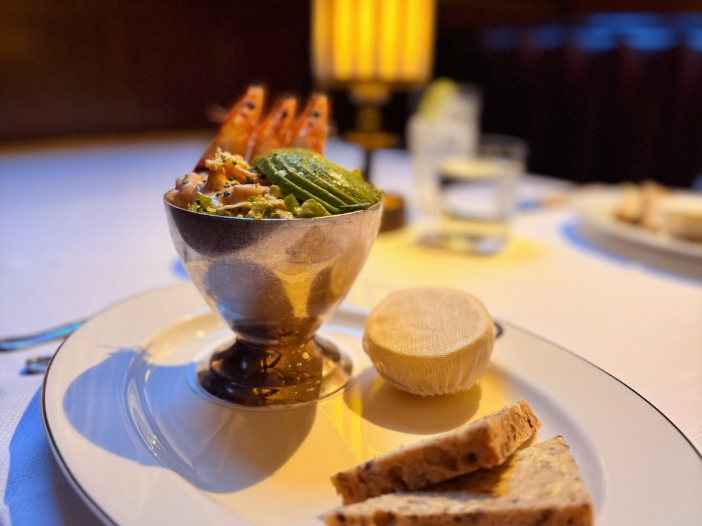
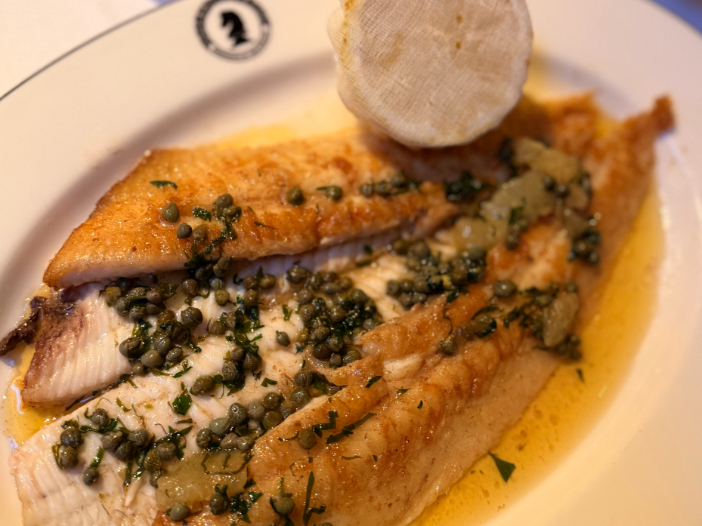
Just as I had hoped, King, in collaboration with Executive Chef David Stevens, has favoured tradition and even the simplest of dishes like the Grand Divan Prawn Cocktail are of such superb quality as to be memorable. My whole Dover sole meunière was faultless; immaculately cooked and boned with a toasty beurre noisette, caper sauce offering the perfect contrast to the milky white fish and sweet, seasonal British peas.
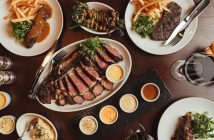
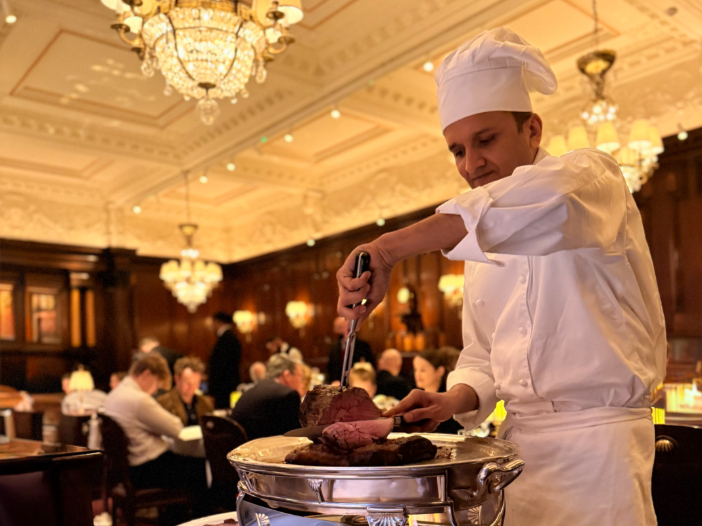
Many will and should be drawn to the Devonshire roast beef, grass-fed for 33 months and 28-day-aged; my husband certainly didn’t have to think twice and whom I have rarely seen so elated as when the chef-hatted carver pulled up at our table with his one-hundred-year-old silver heated trolley and began wielding his knife.
Employed at the restaurant before the recent hiatus, our carver was clearly delighted to be back and it was joyful to observe him slice so proficiently then seeing him, after presenting my husband with a generous plate of beef and helping him to a dollop of horseradish, dash off with his trolley, as eager to serve customers his supremely tender British beef as they were to taste it. Available 7 days a week and accompanied with gravy, the best roast potatoes and vegetables imaginable and a golden Yorkshire pudding not dissimilar in style to the hat worn by the carvers, a Simpson’s roast beef dinner is surely unsurpassable.
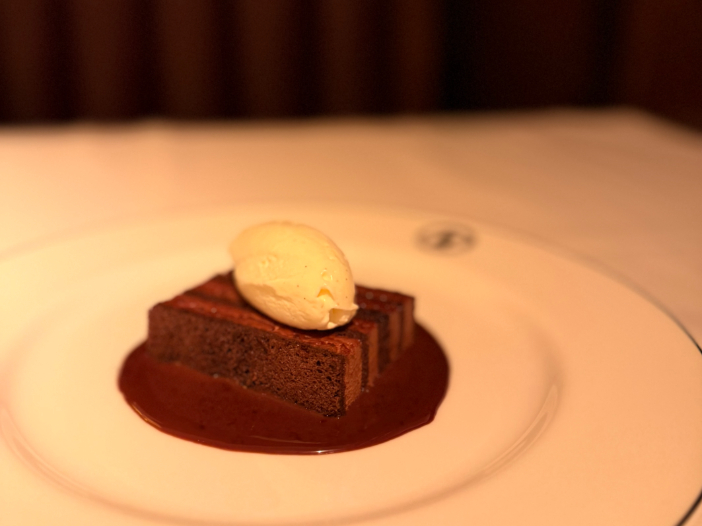
It’s good to see traditional ‘savouries’ such as gentleman’s relish on toast alongside puddings, and although we both ordered the chocolate marquise with dark chocolate sauce – as satisfying a conclusion to a fine meal as being strategic enough to declare ‘checkmate’ in two moves – there are far more old-fashioned options, from treacle tart and spotted dick with custard to rhubarb and apple crumble, clementine jelly and Trinity burnt cream, which takes its name from the college at Cambridge University where records suggest it was served as early as 1630, pre-dating the French ‘crème brûlée’.
It’s understandable for us to crave nostalgia in times of uncertainty, but this exemplary British fare is too good to be forgotten regardless. Nor should it be beyond the bounds of possibility that Michelin inspectors will consider reinstating the star awarded to Simpson’s in the first UK edition of the guide back in 1974. This was back when women weren’t permitted to dine in the Grand Divan and were relegated to their own ‘Ladies’ Dining Room’. It’s deliciously Orwellian that women first gained admittance in 1984 and that the clock above the Grand Divan’s entrance was fixed to the precise time (a Simpson’s tradition King has maintained) as if the world stopped and we’ve been dreaming ever since. Perhaps we have.
The Grand Divan at Simpson’s-in-the-Strand. Open for breakfast, lunch and dinner. For more information and reservations, please visit www.simpsonsinthestrand.co.uk.